Beginner cover makers
If you mainly sew cotton or light-to-medium cushion covers, manageable speed, simple bobbin loading and a way to pivot at corners may matter more than an extensive stitch menu. Brother lists these controls on its Innov-is A16.


For a shared workshop making mainly cotton cushion covers, look for controllable speed, straightforward controls and a zipper-foot option. If thicker furnishing fabrics and layered seams are routine, give fabric feeding greater weight and test the intended fabric stack on the exact machine. A workplace workshop also needs arrangements for suitable electrical equipment, maintenance and user training.
If you mainly sew cotton or light-to-medium cushion covers, manageable speed, simple bobbin loading and a way to pivot at corners may matter more than an extensive stitch menu. Brother lists these controls on its Innov-is A16.
For thicker textiles, layered seam allowances, zips or larger panels, assess how the exact machine feeds your material and how much room it gives you to handle it. Janome and Juki identify feeding and work-space features on specific models, but those features are not a substitute for a fabric test.
When several people use one machine, clear instructions, cleaning responsibility and fault reporting become part of the choice. For equipment used at work, the Health and Safety Executive advises checking suitability and condition and ensuring users are trained.
Start with the thickest intended fabric and seam construction, then check whether different users can set up and control the machine. Decide on closures and shared-use arrangements before comparing stitch counts.
| Concern | What to check | Who this matters to |
|---|---|---|
| Feeding layered fabrics | Try the thickest intended seam intersection. Check feeding controls and whether a compatible walking foot is available if needed. | If my covers use furnishing fabric and bulky seam crossings, I need the layers to move together rather than shift. Around 33% of consumers put feeding through layers first. |
| Easy shared operation | Check speed control, bobbin setup and whether users can be shown how to thread and shut down the exact machine. | When users have different levels of experience, I need controls they can learn without losing control of a seam. Ease of shared operation comes first for around 27% of consumers. |
| Safety and upkeep | Confirm who handles user checks, cleaning and faults. For workplace use, assess electrical suitability, condition and training. | If I am responsible for a shared machine, I need a workable way to spot damage and keep it maintained between users. Around 20% of consumers prioritise safe, supportable shared use. |
| Closures and finishing | Choose the closure design, then check for a suitable zipper foot or the required buttonhole function on the exact model. | For zippered or button-closure covers, I need the right foot or function for the design rather than extra decorative stitches. Around 20% of consumers put closures and finishing first. |
Cover making also involves corners, folded hems and sometimes bulky seams or zips. Brother’s buyer guidance puts fabric and project type at the start of the decision; Janome and Juki list feeding-related controls on particular models.
Request a demonstration with your thickest intended fabric and a seam intersection. Check whether the exact machine has the feet your closure design needs.
Brother says the Innov-is A16 can tackle multiple layers and heavier fabric such as denim. That does not establish how it will handle every furnishing textile, piping combination or compressed seam.
Check the exact model’s manual for needle and thread guidance, then test a representative cover seam before relying on a fabric claim.
The Health and Safety Executive says annual portable appliance testing is not a blanket legal requirement. For equipment used at work, maintenance must keep it in a safe condition, with checks appropriate to its use and environment.
Use the workplace’s risk assessment and maintenance arrangements. Include user checks, a way to report faults and prompt removal of damaged equipment from use.
Brother warns that lint in the bobbin area can affect sewing performance. In a multi-user space, routine care is easier to maintain when responsibility and fault reporting are clear.
Assign responsibility for cleaning and consumables, follow the exact model’s manual, and check accessory and repair arrangements before buying.
A fault can leave the shared machine unavailable while it is assessed or repaired.
Its UK-market domestic range includes approachable electronic machines relevant to workshops making straightforward covers.
Its domestic range offers a route for workshops assessing adjustable controls and room to handle cover panels.
Specific UK-distributed models are relevant where a workshop wants to assess fabric-feed control and space for larger work.
This compact machine offers basic seam and hem functions for straightforward projects. Check its fit for your intended cushion-cover fabric, closures and shared-workshop setup before choosing it for that work.
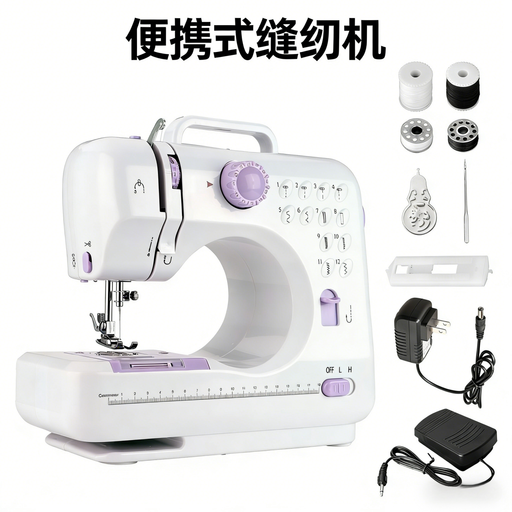 Image unavailable
The listed basic seam and hem functions may suit straightforward cover construction; test your intended fabric stack before relying on it for thicker layers.
The product description lists low and high speed settings, reverse stitching, a top bobbin, automatic bobbin winding, threading guides and a thread cutter.
If your covers need a zip or large panels, confirm the compatible zipper-foot options and available work space. Check UK power-supply compatibility and arrange user guidance and maintenance for shared use.
Not necessarily: a domestic machine may suit straightforward cotton or light-to-medium covers, while repeated thick seams or shifting fabrics make feeding capability more important. Test the actual fabric, seam crossings, needle and thread on the exact model rather than relying on a heavy-duty label.
Check fabric feeding, controllable speed, the closure accessories your covers require and enough room to handle the panels. Brother’s buyer guidance recommends starting with the fabric and project; model-specific controls and accessories can then be assessed against those needs.
The Health and Safety Executive says the Electricity at Work Regulations 1989 do not prescribe annual portable appliance testing. If the workshop operates as a workplace, electrical equipment must be kept in a safe condition; set maintenance and checks according to the equipment, its use and the environment rather than assuming one annual testing rule.
Assign responsibility for user checks, cleaning, consumables and fault reporting, and follow the exact model’s instructions. Brother advises disconnecting power before cleaning and warns that lint in the bobbin area can impair sewing performance; do not apply another model’s disassembly instructions to your machine.
Confirm the exact model’s guarantee and repair arrangements, compatible spare bobbins and feet, and how users can obtain help. Juki UK states that its machines come with a two-year back-to-base manufacturer guarantee and UK-based technical assistance; check the terms that apply to the particular machine and seller.