What matters when buying?
For occasional, lighter cushion work, establish foot compatibility and practical storage first. If bulky seam crossings are routine, give feeding and foot clearance greater attention; computerised controls are useful only where they answer needs you actually have.
| Concern |
What to check |
Who this matters to |
| Piping control |
Check foot compatibility with the exact machine and cord diameter, plus stitch placement beside the cord. Brother Sewing Shop specifies a maximum 6 mm cord for its F067 foot; that limit does not apply to every foot. |
If I need to follow cord neatly around a cushion corner, I want the foot and stitch position to let me guide the seam closely. Around 42% of consumers would put piping control first. |
| Bulky seams |
Check foot clearance and whether the exact model offers adjustable presser-foot pressure or feeding features relevant to your fabric stack. Try the intended layers together where possible. |
When several layers meet at a corded seam, I need them to move through the machine without losing control; around 33% of consumers would make thick-layer handling their primary concern. |
| Room and setup |
Compare published dimensions and weight with your shelf and work surface, leaving room for the pedal, fabric and accessories. |
If I must set up and store the machine in a small room, its size and handling need to work for me each time I sew. Around 25% of consumers would put that practicality first. |
Joybuy products for small-room sewing
This compact sewing-machine option may be worth considering where storage space is tight. Before choosing it for cushion piping, confirm foot compatibility and test how it handles your intended fabric, tape and cord together.
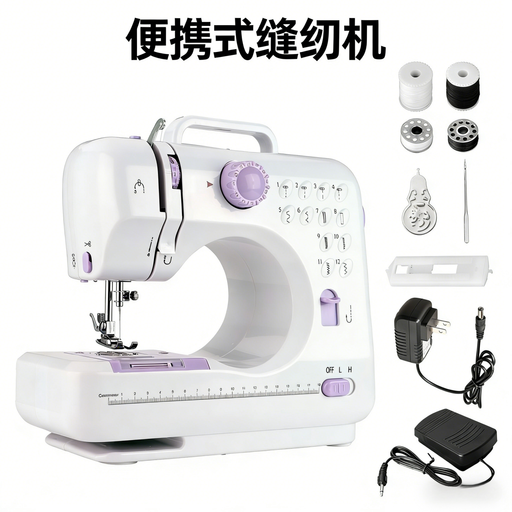 Image unavailable
IAGREEA Mini Portable Electric Sewing Machine, 12 Stitches, Dual Power, Purple
For a small craft-room setup, compare this portable machine's footprint with your storage and sewing space. Its listed features include 12 stitches, dual power and an LED light. Confirm that a suitable piping foot fits this exact machine and that your fabric-and-cord stack passes through it as needed; also check stitch-length and needle-position options if close placement beside the cord matters to you.
View on Joybuy
Common questions
Do I need a dedicated piping foot for cushion covers?
Not necessarily: a compatible adjustable zipper-and-piping foot may also let you sew close to the cord. Check the attachment and cord size for your exact machine and foot; Brother Sewing Shop specifies a maximum 6 mm cord for its grooved F067 piping foot, not for piping feet generally.
What should I test before sewing the cushion?
Sew a sample using the same outer fabric, piping tape and cord as the cushion. Check stitch placement, foot clearance and fabric movement at seam crossings, adjusting stitch length or foot pressure where the exact machine permits it.
Is a computerised machine necessary for cushion piping?
No. A mechanical machine can suit cushion piping if it accepts an appropriate foot and handles the intended seam stack. Computerised models can add controls: Brother Sewing Shop lists an electronic speed limiter for the Innov-is A16, while Janome UK & Ireland lists a speed-control slider for the 5060QDC.
What should I check about UK servicing and warranty?
Check the exact seller's warranty terms, repair arrangements and whether the machine version suits UK mains use. Juki UK identifies itself as a UK-based distributor offering servicing and support, but arrangements for any particular purchase should be checked with its seller.


