First-time school-project sewer
You want to make basic seams without learning a large set of controls. Straight stitching, a manageable setup and a way to secure seams matter more to this project than a broad range of decorative stitches.


For a straightforward drawstring bag made from light- to medium-weight woven fabric, start with a simple mechanical sewing machine and check that it offers straight stitching, reverse sewing and foot-pedal control. A compact machine may be easier to store, but the bag’s fabric and thickest seams matter; extra adjustments are more relevant if sewing will continue beyond the school project.
You want to make basic seams without learning a large set of controls. Straight stitching, a manageable setup and a way to secure seams matter more to this project than a broad range of decorative stitches.
You expect to put the machine away after the bag is finished. Check its weight and the space it needs in use as well as where you will store it.
The bag is a starting point for repairs, clothes or other craft projects. Easier threading and more fabric-handling adjustments may then be worth considering, even if the first pattern does not require them.
Check the teacher’s pattern and fabric list before choosing features: an ordinary bag and a lined bag with bulky seam intersections can place different demands on a machine. Then decide whether easy setup, storage or continued use is your main priority.
| Concern | What to check | Who this matters to |
|---|---|---|
| Simple setup and basic seams | Check for straight stitch, reverse sewing, foot-pedal control and a bobbin you can load using the instructions. | If this is my first bag, I want to get the machine threaded and sew the pattern’s seams without navigating functions I will not use. Around 44% of consumers put simple setup and basic seams first. |
| Storage and portability | Check the stated weight and dimensions, then consider the work surface and where the machine will be stored. | When I have little space, I need to put the machine away after the project, while still having room to guide the fabric. Compact storage is the primary concern for around 33% of consumers. |
| Continued use and thicker layers | Check the maker’s guidance for the intended fabric and the thickest seam; consider available pressure adjustments and included accessories. | If this bag leads to more sewing, I do not want to choose solely for its simplest seams when later projects may use different fabrics. Around 23% of consumers prioritise that scope for continued use. |
A small machine can be convenient to store, but that does not establish how it will handle a lining or several layers meeting at a seam. Singer recommends a full-size machine rather than its M1005 mending machine for thicker fabrics and more applications.
Identify the fabric, lining and thickest seam intersection before buying. Compare those requirements with guidance for the exact machine.
A drawstring-bag project can use standard seams. A larger stitch selection or embroidery function does not replace the basic controls needed to sew the assigned pattern.
Start with the teacher’s instructions. Check the required stitch, reverse function, speed control and bobbin setup before considering features for later projects.
The needle, moving parts and power cable require attention during use. The Design and Technology Association’s primary-school model risk assessment specifies close adult supervision for responsible Key Stage 2 pupils.
Follow the school’s instructions and supervision arrangements. Use a stable, well-lit surface, keep hair and loose clothing clear, and switch the power off before adjustments or a needle change, as advised by the Health and Safety Executive.
These model examples illustrate different priorities; their features should not be assumed to apply to every machine from the same brand.
The Brother L14S is an entry-level mechanical option to consider for basic seams and beginner projects.
The Sewist 725S is relevant if the school bag may lead to more sewing at home.
The M1005 is a compact mending machine to consider when storage and carrying weight are central concerns.
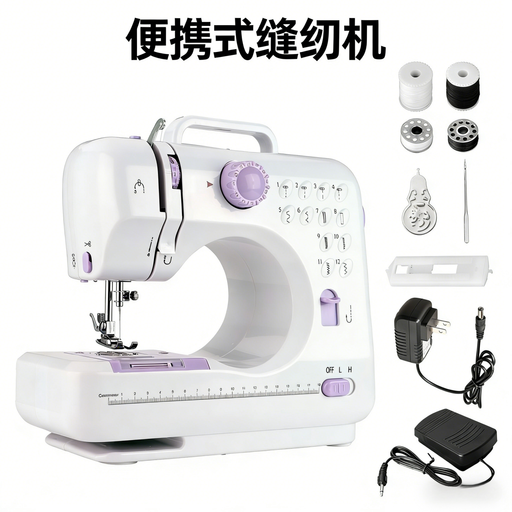
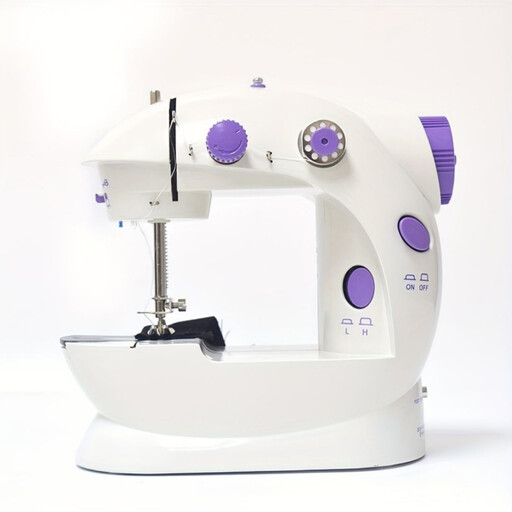
These two portable IAGREEA machines relate to making basic seams where storage space matters. Check each one against the school pattern: the machines have different stated stitch functions, and portability alone does not settle whether either suits the chosen fabric.
 No image available
Consider this portable model if the school pattern calls for basic seams and compact storage matters. Its listing describes reverse stitching and foot-pedal use; check the project fabric, lining and thickest seam against the machine’s instructions before choosing it.
The named variant has 12 stitches, dual-power operation and an LED light.
 No image available
Consider this compact model only after checking the school pattern’s stitch requirements. Its listing states that it has one fixed stitch type and no backstitch function, so confirm with the teacher whether the required seams can be made and secured as instructed.
The named version offers battery or plug-in power, specifies 4 AA batteries and includes thread shuttle cores, a spare needle and a threading device. Check the chosen fabric and bulky seams against its instructions. The product warning excludes use by children under 8; follow the school’s supervision arrangements for any pupil using a machine.
No overlocker is needed for the standard drawstring-bag construction described by The Sewing Directory, which uses a sewing machine. Follow the teacher’s pattern if it specifies different fabric or seam finishes.
A simple mechanical machine is a practical starting point for a first bag in light- to medium-weight fabric. John Lewis & Partners recommends uncomplicated entry-level mechanical machines for sewing newcomers; check that the exact model has the stitch and controls required by the school pattern rather than choosing by machine type alone.
Switch the power off before adjustments or a needle change, as the Health and Safety Executive advises. Keep the work area well lit and the cable clear of where people walk, and follow the machine’s instructions when threading it.
Do not assume independent use is appropriate. The Design and Technology Association’s primary-school model risk assessment says that only responsible Key Stage 2 pupils should use sewing machines under close adult supervision, with training before use. Follow the school’s arrangements and any age warning for the particular machine.