Volunteer coordinators training beginners
Organisers whose volunteers have different levels of experience may value straightforward threading, bobbin loading and pace control when people take turns at the machine.


For standard woven drawstring bags, a straightforward mechanical machine may be enough if it has the stitches and adjustments the project needs. If beginners will take turns using it, assisted threading and speed control may be more useful; for frequent thick or layered seams, consider a machine suited to that work and test it on the actual fabric before committing.
Organisers whose volunteers have different levels of experience may value straightforward threading, bobbin loading and pace control when people take turns at the machine.
For uncomplicated bags made from light-to-medium woven fabric, these groups may prefer a simple mechanical interface to electronic set-up aids.
Teams working with canvas, denim-like material or bulky seam intersections need to check how a machine handles their actual fabric, needle and thread combination.
Choose the type of machine around the bags you plan to make and the volunteers who will use it; then check its controls and test the intended fabric.
Consider it when: The group is making standard woven bags and can manage manual set-up.
Trade-off: Simple dials do not offer the assisted threading and speed control specified for the Brother Innov-is A16.
Consider it when: Several newcomers will share the machine and benefit from set-up aids and a controllable pace.
Trade-off: These controls do not replace instruction or a test of the project fabric.
Consider it when: Thick fabric or bulky, layered seams are a regular part of the project.
Trade-off: A heavy-duty description does not establish that a machine will handle every seam stack.
| Concern | What to check | Who this matters to |
|---|---|---|
| Beginner set-up and control | Check threading and bobbin steps, stitch selection and whether users can limit sewing speed. | When volunteers take turns, I want newcomers to set up the machine and sew at a manageable pace. Around 50% of consumers put beginner set-up and control first. |
| Standard-bag capability | Check for a straight stitch, reverse sewing and adjustable stitch settings for the intended woven fabric. | For batches of simple woven bags, I need suitable construction stitches without paying for controls our group will not use. Standard-bag capability comes first for around 30% of consumers. |
| Thick and layered seams | Test folded casings and seam intersections using the intended fabric, needle and thread. | If our bags use canvas or repeatedly cross several layers, I need to know the machine can sew those sections. Roughly 20% of consumers prioritise thick and layered seams. |
Brother and Singer describe machines intended for heavier materials, but those descriptions cannot establish how a model will sew your folded casing and seam intersections.
Test a representative stack with the intended needle and thread before committing to a production run or multiple machines.
A simple mechanical model may suit the bags while requiring more manual set-up than a machine with threading assistance and speed control.
If volunteers change frequently, compare the set-up steps and controls they will use, rather than choosing by the length of the stitch list.
The Health and Safety Executive says organisations should include volunteers in risk assessments where relevant and provide suitable information, instruction and training. Its sewing-machine guidance says to switch off power for adjustments and needle changes.
Arrange an induction and a session lead, check the work area and cables, and require power-off before adjustments or needle changes.
Janome's 2200XT illustrates a dial-controlled mechanical option for standard bag construction.
The Innov-is A16 represents an electronic option for groups that value assisted set-up and speed control.
The Heavy Duty 4411 is a mechanical option to examine when thicker material is a recurring part of the project.
These mini electric machines are options to examine for straightforward bag sewing. Before choosing either for repeated group use, confirm the available straight stitch and adjustments, then test the project fabric.
 No image available
For straightforward bag sewing, check that its stitch selection includes the straight stitch and adjustments your seams need.
The product name specifies dual power and an LED light. Test the intended fabric and folded seams before choosing it for repeated sessions.
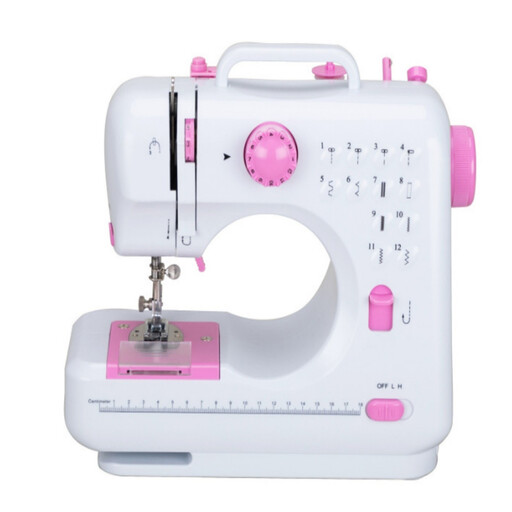 No image available
For straightforward bag sewing, confirm that its stitch selection and adjustments suit the seams your group plans to make.
The product name specifies dual power and an LED light. Test it on the intended fabric, including bulky intersections, before relying on it for a batch.
A basic machine can be enough for standard light-to-medium woven bags if it provides a suitable straight stitch and the adjustments your seams require. Test any folded casings or bulky intersections on the intended fabric before relying on it for a batch.
Threading assistance, accessible bobbin loading and speed control can make shared set-up easier. Brother specifies these features on the Innov-is A16, but every volunteer still needs instruction on the machine they will use.
Plan an induction and assess the work area before volunteers use the machines. The Health and Safety Executive says organisations should include volunteers in risk assessments where relevant and provide suitable training; its sewing-machine guidance says to switch off power for adjustments and needle changes.
Check the exact model's warranty coverage, the retailer's repair arrangements and who will organise servicing for the group. Janome says most of its sewing machines carry a two-year parts-and-labour warranty, but confirm the terms for the machine and seller you choose.