First-time craft-fair bookmark maker
If you are learning basic seams and making a modest batch, concentrate on understandable stitch selection and threading before considering a large menu of creative functions.


For fabric bookmarks with straightforward seams and a few decorative finishes, start by checking whether a mechanical machine has the stitches and controls your design needs. If you expect to make repeated batches, a computerised model’s threading and cutting conveniences may be worth considering; either way, check the exact machine against your fabric layers, required presser feet and UK electrical setup.
If you are learning basic seams and making a modest batch, concentrate on understandable stitch selection and threading before considering a large menu of creative functions.
If you will sew the same design many times, compare how easily you can select stitches, thread the needle and finish each seam. Those repeated steps may matter more to you than additional stitch patterns.
If visible stitching or labels are part of the finished design, identify the effects you will actually use before choosing a machine for its wider stitch range.
Plan one bookmark’s seams and finish first, then decide whether batch convenience or decorative options justify more controls; check electrical compatibility on the exact version you intend to buy.
| Concern | What to check | Who this matters to |
|---|---|---|
| Repeatable batch workflow | Compare threading, stitch selection and any thread-cutting control on the exact model. | If I am finishing many bookmarks, I want repeated setup and seam-ending steps to be manageable. Around 38% of consumers put batch efficiency first. |
| Simple core sewing | Check the stitches needed for your seams, the selection controls and whether stitch length is adjustable. | When I am learning with a simple design, I would rather understand a small set of controls than manage functions I will not use; around 31% of consumers prioritise core sewing. |
| Decorative personalisation | Match planned borders or labels to the model’s actual stitches, lettering functions and included feet. | If visible detail distinguishes my bookmarks, I need the machine to make the finishes I have planned. Decorative personalisation comes first for around 23% of consumers. |
| Layered fabric details | Compare presser-foot clearance and the maker’s needle guidance with a sample stack of your chosen materials. | When my design includes thicker layers or trims, I need to know whether I can sew that stack as intended; around 8% of consumers put layer handling first. |
A wider stitch selection gives you more design options, but it does not establish that a machine will suit the seams or fabric layers in your bookmark. Extra patterns have little value if your design uses only a few.
Write down the construction seam and each visible finish, then check the exact machine’s stitches, adjustments and included feet against that list.
A CE or UKCA mark does not tell you whether the particular listing has the mains rating, plug and instructions needed for your intended UK setup. Great Britain and Northern Ireland also have different product-marking arrangements.
Check the machine and adapter ratings, plug, instructions, seller identity and written warranty terms for the version being supplied.
A machine offered in more than one electrical version needs a version-specific check before purchase. County Durham and Darlington Fire and Rescue Service advises online buyers to check for 230V, 50Hz compatibility and a three-pin UK plug or charger.
Confirm the rated mains input and supplied plug with the seller rather than relying on the machine’s appearance or a description of its low-voltage adapter output.
An unsuitable electrical version may require a return or leave the machine unusable in your intended setup.
The Innov-Is A16 and A65 are computerised models to compare if threading and stitch selection are frequent parts of your bookmark workflow.
The Start 1306 and M2405 are mechanical models worth examining for straightforward bookmark construction.
Janome UK & Ireland presents mechanical starter machines alongside more feature-rich models, giving makers a way to compare manual and digital controls.
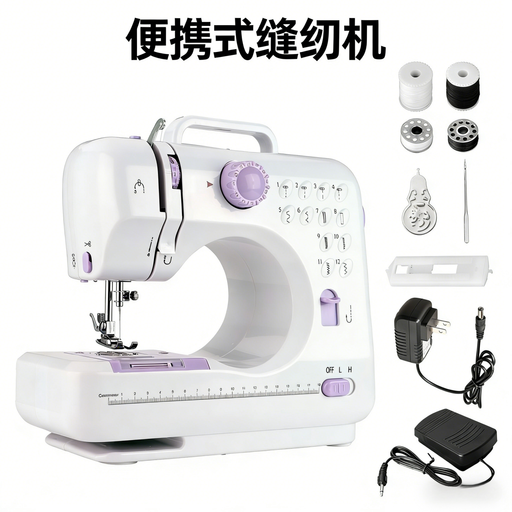
This compact machine is an option to assess for fabric-bookmark projects if its stitch types and fabric handling match the design you plan to make.
 No image available
For a planned bookmark design, check that this machine’s stitch types and fabric handling cover your seams and finishes.
The product name specifies 12 stitches, dual power and an LED light. Confirm the supplied adapter’s mains input and plug for UK use, as well as the included presser feet, before buying.
Yes, if its stitches and included feet cover the seams and finishes in your design. Singer UK lists basic and decorative stitch options for the Start 1306 and adjustable stitch length for the M2405; check the exact model rather than assuming either has every function you need.
It can save a separate trimming step when you repeatedly finish seams, but it is not required to sew a bookmark. The Brother Innov-Is A65 is an example described with automatic thread cutting; weigh that convenience against how often you would use it.
Check the mains input rating and the plug supplied with the exact machine or adapter. County Durham and Darlington Fire and Rescue Service advises online buyers to look for 230V, 50Hz compatibility and a three-pin UK plug or charger.
No blanket UKCA-only conclusion follows: GOV.UK guidance says Great Britain continues to recognise CE marking for certain goods alongside or instead of UKCA marking, subject to the applicable product rules. Check the documentation for the machine being supplied; Northern Ireland has different arrangements, and a mark alone does not answer questions about its plug or mains rating.
Read the terms for the exact model and seller, including who handles a fault and how to arrange a repair. Do not assume that an arrangement advertised for another machine or retailer applies to the one you buy.