Who is choosing the machine?

Shared-workshop pouch makers

People making zipped travel pouches on a machine used by several participants need controls and threading steps that can be explained consistently. If the equipment is provided for use at work, the Health and Safety Executive’s guidance on guarding, lighting and user training is also relevant.

Makers sewing layered pouch materials

People combining outer fabric, interfacing, lining or webbing need to assess the thickest joins in their own pattern. Presser-foot lift and pressure adjustment are useful features to check, but a model’s description alone cannot establish how it will sew every layer combination.

Mobile class and workshop users

People who carry a machine to sessions or put it away afterwards need to account for its weight, cover and storage space as well as its sewing controls. Janome UK & Ireland lists different weights and control arrangements across its workshop-relevant models, so these details are worth comparing model by model.

What matters when buying?

Simple mechanical machine

Choose when: The workshop mainly makes light-to-medium woven pouches and participants would benefit from physical stitch controls.

Trade-off: A simple model may have fewer threading or speed-control aids; confirm the zipper-foot arrangement for the exact package.

Computerised general-purpose machine

Choose when: Changing users would benefit from assisted threading and a controllable maximum speed, as offered on the Janome 230DC according to Janome UK & Ireland.

Trade-off: Every user still needs an introduction to its controls, and electronic assistance does not establish suitability for thick pouch layers.

Heavy-duty domestic machine

Choose when: Bulky seams or heavier materials occur repeatedly and the exact model offers relevant foot clearance or pressure adjustment.

Trade-off: Test the intended layer stack; a higher stated speed does not replace controllable sewing or the workshop’s safety arrangements.

Concern What to check Who this matters to
Layered seams Check presser-foot lift and pressure adjustment, then sew a sample of the thickest intended join. When thick interfacing and bulky seam intersections are routine, I need to know how the machine handles my actual layer stack; around 29% of consumers put layered-seam capability first.
Shared use Check threading instructions and controllable speed, alongside the workshop’s guarding, training and maintenance arrangements. If participants have different experience levels, I need a setup they can learn and use consistently; safe, repeatable shared use comes first for around 29% of consumers.
Zip and seam control Confirm an included or compatible zipper foot and adjustable stitch length for the exact model. For pouches with close stitching beside a zip, I care most about controlling that seam; around 24% of consumers prioritise zip and seam control.
Moving and storage Compare stated weight and cover provision, and plan space for the machine and its cable. When the machine must be carried or put away between sessions, I need to manage that routine comfortably; portability and storage lead the choice for around 18% of consumers.

Buying pitfalls

  • Choosing by maximum stitch speed alone

    Singer Sewing lists the Heavy Duty 4423 at 1,100 stitches per minute, but that figure does not show how easily a changing group of users can sew accurately near a zip. For equipment used at work, the Health and Safety Executive also emphasises adequate instruction and training.

    Check whether users can control slow, accurate stitching, and plan how each participant will learn the machine before treating speed as an advantage.

  • Assuming every machine handles the same layers

    Interfacing, lining, webbing and seam intersections can make one part of a pouch substantially bulkier than another. Stated foot lift, pressure adjustment or a heavy-duty label cannot establish performance on your particular fabric stack.

    Where possible, try a representative sample with the intended needle, thread and zip before choosing a machine for repeated layered work.

  • Overlooking how the shared machine will be managed

    A retail feature list does not settle who will instruct users, check the equipment or arrange maintenance. Where machines are provided for use at work, Health and Safety Executive guidance addresses equipment suitability, inspection, protective measures and training.

    Ask the workshop host who manages instructions, guards, cable positioning, checks and maintenance, taking account of how the venue operates.

  • Choosing straight-stitch-only equipment without a finishing plan

    Janome UK & Ireland describes the HD9 as a straight-stitch-only machine. That specialised arrangement can suit repeated straight seams, but it does not offer the broader stitch selection some pouch patterns call for.

    Check the stitches and feet required by your patterns and decide how any other construction or finishing steps would be handled before selecting this route.

Brands to consider for these machine types

Janome

Janome UK & Ireland lists models spanning simple mechanical controls, computerised speed control and specialist straight-stitch work.

  • The 2200XT has two main dials and a stated 6.0 kg weight; the 230DC adds features including a maximum-speed controller and assisted needle threading.
  • Janome describes the HD2200’s metal body as intended for schools and heavy users, with adjustable foot pressure among its stated features.
  • The HD9 is straight-stitch only and weighs 14 kg according to Janome. Check whether its specialised operation and storage needs suit the workshop rather than assuming a higher-speed model is the right starting point.

Singer

Singer Sewing’s Heavy Duty 4423 is a domestic mechanical model with features relevant to checking layered seams and zip insertion.

  • Singer lists an extra-high presser-foot lifter, adjustable presser-foot pressure, a metal interior frame and an included zipper foot for the 4423.
  • Its stated maximum speed is not evidence of easier control for beginners or proven performance with every pouch material. Assess the actual layers and the workshop’s user instruction separately.

Joybuy products for this topic

This compact machine is a product choice for basic pouch stitching where moving or storing the machine matters. Check zip-foot compatibility, layered-seam handling and shared-use arrangements before deciding whether it suits the workshop’s projects.
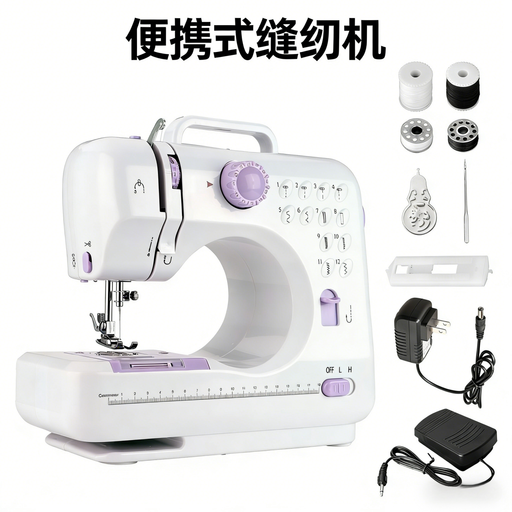
Purple IAGREEA Mini Portable Electric Sewing Machine

IAGREEA Mini Portable Electric Sewing Machine, 12 Stitches, Purple

Consider this compact machine if basic stitching and storage between sessions are priorities, provided it passes a trial with your pouch materials. Its product name specifies 12 stitches, dual power and an LED light.

Before choosing it for zipped or layered pouches, confirm zipper-foot compatibility and try the intended seams. Battery operation requires four AA batteries, which are not included; the workshop also needs suitable instruction and maintenance arrangements for shared use.

View on Joybuy

Frequently asked questions

Do I need a heavy-duty machine to sew travel pouches?

Not necessarily: a general-purpose machine can suit pouches made from light-to-medium fabrics, while repeated bulky joins make foot clearance and pressure adjustment more important to check. Try your planned layers on the exact machine where possible rather than relying on a heavy-duty label.

What should I check for sewing pouch zips?

Confirm that the exact machine package includes a zipper foot or accepts a compatible one, then check the stitch controls your pattern needs. Singer Sewing lists a zipper foot and adjustable stitch length for the Heavy Duty 4423, but accessory provision should be checked for any other model individually.

What should a shared workshop arrange before people use the machine?

Arrange clear user instruction and a safe setup, with responsibility for checks and maintenance established before sessions begin. Where equipment is provided for use at work, the Health and Safety Executive’s guidance on the Provision and Use of Work Equipment Regulations 1998 addresses suitability, safe condition, training and protective measures; its sewing-machine guidance also highlights needle guards and adequate lighting.

Does workplace equipment law apply to every hobby sewing group?

A hobby group should not assume that workplace equipment duties apply to it in the same way as an organisation providing machines for use at work. The Health and Safety Executive describes duties under the Provision and Use of Work Equipment Regulations 1998 in relation to work equipment; whether they apply to a particular workshop depends on how it operates. Ask the host about its arrangements and seek appropriate advice if the work-use status is unclear.

How should a machine shared between sessions be maintained?

Follow the manufacturer’s instructions and establish who is competent to carry out maintenance. For equipment used at work, the Health and Safety Executive says inspection needs and frequency should be determined through risk assessment, taking account of the equipment and how it is used.