Who is this for?

First-time craft-fair case maker

You plan to make a small run of simple padded cases and want clear controls and manageable threading. Hazel A Patterns describes a glasses-case construction using fusible fleece; check the other materials and closure in the pattern you choose.

Layered-material case maker

Your pattern includes several layers, a zip or bulky seam intersections. Michelle Patterns describes a case with six material layers on each side, making the thickness of your own seam stack an important buying check.

Repeat-batch maker

You expect to sew enough cases for a fair that threading, bobbin access and control on short seams matter throughout the batch. Check those features on the exact machine rather than choosing by its maximum stitch speed alone.

What matters when choosing?

Choose the case pattern and materials first, then check the machine against its thickest seam and the work involved in making a batch.

ConcernWhat to checkWho this matters to
Layered seams Check presser-foot clearance and whether pressure can be adjusted; test the thickest join in your pattern. If my case has a zip and padded seam crossings, I need to know the machine can sew the actual stack with control; roughly 42% of consumers put material handling first.
Batch workflow Check bobbin access, threading and whether the sewing speed remains manageable on short seams. When making a batch, I want to keep thread changes and short seams manageable. Around 33% of consumers prioritise a repeatable workflow.
Getting started Try the stitch selector and check for adjustable stitch length, reverse stitching and the feet your closure needs. If these are my first cases, I need controls I can learn before producing stock; simple setup comes first for roughly 25% of consumers.

Pitfalls to avoid

  • Choosing by maximum stitch speed

    Singer states a maximum of 1,100 stitches per minute for the Heavy Duty 4423, but that figure does not establish control on short case seams, curves or bulky crossings.

    Try the speed and stitch-length controls while sewing a sample of your actual case design.

  • Assuming all padded cases have similar seams

    Hazel A Patterns describes a case using fusible fleece, while Michelle Patterns specifies six material layers on each side of another design. The finished case’s small size does not tell you how thick its joins will be.

    List the fabrics, padding and closure in your chosen pattern, then test its thickest seam stack.

  • Treating a heavy-duty label as a sewing test

    Manufacturer-listed frames, motors and presser-foot features do not establish how a machine will handle every fabric and needle combination.

    Use the specifications to narrow your options, then make a sample or request a demonstration with comparable materials.

  • Leaving servicing and selling checks until later

    Janome UK & Ireland advises checking its official retailer route for aftersales care and warranty support. The UK Office for Product Safety and Standards also states that businesses making or selling consumer products are responsible for their safety.

    Confirm service arrangements before buying the machine, inspect cases before sale, and check the rules applicable to the fair’s location and organiser.

Brands to consider

Janome

Janome UK & Ireland lists domestic machines ranging from the mechanical 2200XT to the HD2200, giving makers different feature sets to check against their case pattern.

  • The 2200XT lists 22 stitches, variable stitch width and length, quick foot conversion and a free arm.
  • The HD2200 lists adjustable presser-foot pressure and a solid metal body, but those specifications do not establish performance on your particular layered seam.

Singer

Singer Sewing UK lists the Heavy Duty 4423 for makers considering features relevant to bulkier fabric work.

  • Singer lists an extra-high presser-foot lifter, adjustable presser-foot pressure and a top drop-in bobbin for the 4423.
  • Its stated maximum sewing speed is not a measure of how controllable the machine will feel on your short case seams.

BERNINA

The BERNINA 325 offers workspace and convenience features to consider if glasses cases are part of a wider range of sewing projects.

  • BERNINA lists a slide-on table, semi-automatic threader, LED light and adjustable presser-foot pressure.
  • Those features are not necessary conditions for sewing a basic glasses case; compare them with the work you actually plan to do.

Joybuy product choices

This mini sewing machine is an option to consider for straightforward fabric cases. Check its controls, included feet and ability to sew your pattern’s thickest seam before relying on it for a fair batch.
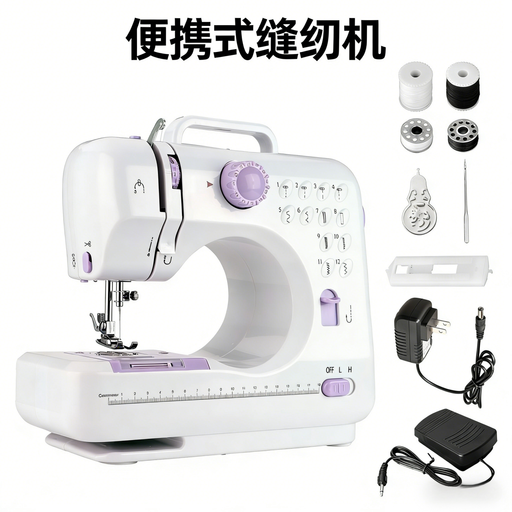
Purple IAGREEA mini portable dual-power sewing machine

IAGREEA Mini Portable Dual-Power Sewing Machine, 12 Stitches, Purple

Consider it for a straightforward fabric-case pattern, subject to a trial on your chosen materials. The product title specifies 12 stitches, dual power and an LED light. Before making a batch, confirm stitch-length adjustment, presser-foot clearance and whether the foot required for your closure is included.

View on Joybuy

Questions about making cases for a fair

Do fabric glasses cases need a heavy-duty sewing machine?

Not necessarily: a straightforward cotton-and-low-loft-fleece pattern may suit a basic domestic machine. If your design adds several padded layers, a zip or bulky intersections, check clearance and feeding controls and test the thickest seam before making stock.

Which features matter more than decorative stitches?

For craft-fair glasses cases, start with the stitch and foot requirements of your chosen pattern, including stitch-length control, reverse stitching and any zip foot needed. Check threading and bobbin access on the exact model if you will make a batch.

Should I check who provides warranty support?

Yes: confirm the warranty and service arrangements for the machine you intend to buy. Janome UK & Ireland advises purchasing through an official UK retailer for its aftersales care and warranty support; that is Janome’s guidance, not a general legal requirement for every brand.

What should I check before selling handmade cases at a craft fair?

Check the product-safety requirements applicable where the fair takes place, alongside any organiser requirements. The UK Office for Product Safety and Standards says businesses making or selling consumer products are responsible for their safety; inspect each case and avoid claims about protection that its construction has not demonstrated.

What if a customer reports a fault in a handmade case?

Take the report seriously and check the case against its description and the applicable consumer rights. Section 9 of the Consumer Rights Act 2015 requires goods to be of satisfactory quality; clear material descriptions and checks of seams and closures help you assess what has gone wrong.