First-time napkin makers
If you are learning to sew hems, look for stitch controls, threading and a bobbin arrangement you can manage without making setup the hardest part of the project.


For occasional napkin hems, start with a domestic sewing machine that offers a straight stitch and adjustable stitch length, then check whether its threading and storage routine suit your kitchen table. A dial-controlled machine keeps the controls direct; computerised features are worth considering if threading, speed control or regular projects beyond napkins matter to you.
If you are learning to sew hems, look for stitch controls, threading and a bobbin arrangement you can manage without making setup the hardest part of the project.
If the table is shared, check where the machine and fabric will fit during sewing and whether you can comfortably move and store the machine afterwards.
If napkins are the start of repeated projects, speed control and fabric-handling features may matter more to you than they would for a single set of hems.
Check the stitch and setup controls you need for napkin hems, then make sure the machine fits the table-to-storage routine. Consider extra features only if you expect to use them.
| Concern | What to check | Who this matters to |
|---|---|---|
| Simple setup and hemming | Confirm a suitable straight stitch, adjustable stitch length and a threading method you can use comfortably. | If I want to hem napkins without struggling to thread the needle or choose a stitch, straightforward setup comes first; around 40% of consumers would make this their primary concern. |
| Table space and storage | Compare the exact weight and dimensions with your table and storage space, leaving room to guide the fabric. | Clearing a shared table after sewing means I need a machine I can lift and put away; around 40% of consumers would put setup and storage first. |
| Future sewing projects | Consider speed control and fabric-feeding features if you expect regular use beyond napkins; check what comes with the exact model. | If napkins are only the start of regular projects, I want controls I will continue using; around 20% of consumers would prioritise room for more sewing. |
More stitch choices do not necessarily make a straight napkin hem or the initial setup easier. Janome UK & Ireland lists adjustable stitch controls on the dial-controlled J3-24, while its computerised models add other convenience features.
Decide whether threading, bobbin setup or speed control would change how you sew before choosing a machine for its extra stitch options.
A carrying description does not tell you whether a machine is manageable between your cupboard and kitchen table. Janome UK & Ireland lists the J3-24 at 6.0 kg; whether that is comfortable depends on your own storage arrangement.
Measure the table and storage spot, check the exact model’s weight and dimensions, and allow space to move the napkin fabric as you sew.
Janome UK & Ireland provides examples of both dial-controlled and computerised domestic machines.
Brother is another domestic-machine option when accessible model instructions matter to a new sewer.
Singer offers domestic models to compare, including those listed by UK retailer John Lewis & Partners.
These compact IAGREEA machines are choices to assess for occasional kitchen-table napkin sewing. Check their stitch controls and physical fit before deciding whether either meets your needs.
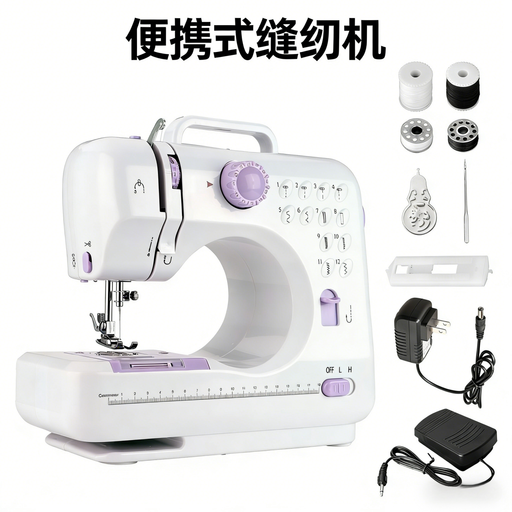 Image unavailable
If you want a mini machine for occasional napkin hems, check that its stitch controls suit your fabric and hem before choosing it.
The product name specifies 12 stitches, dual power and an LED light. Confirm whether stitch length is adjustable and what the power options require.
Check the applicable product documentation for your delivery location.
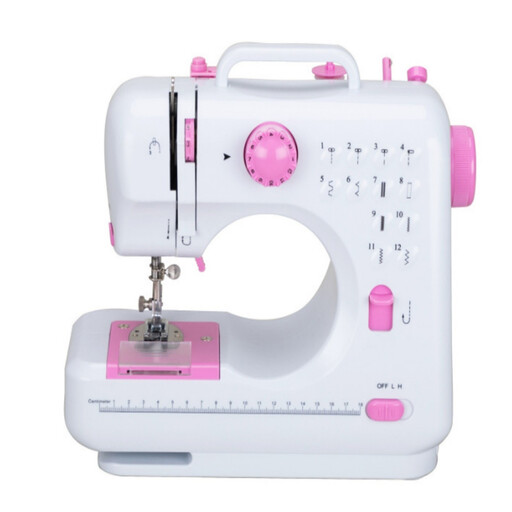 Image unavailable
If you plan to set up and clear away a mini machine between napkin projects, compare its size and weight with your table and storage space.
The product name specifies 12 stitches, dual power and an LED light. Confirm its stitch-length control, bobbin setup and power requirements for the way you intend to sew.
Check the applicable product documentation for your delivery location.
A standard sewing machine with a suitable adjustable stitch is a practical starting point for ordinary napkin hems; you do not need to choose a dedicated overlocker for that task. Consider an overlocker separately if you also want its edge-finishing functions.
Check the machine’s weight and dimensions against the table and its storage spot, leaving room to guide the fabric. Janome UK & Ireland lists its J3-24 at 6.0 kg, but you need to judge whether lifting and putting away that weight works for you.
It is worth considering if threading would regularly slow down your setup, but it is not a requirement for a napkin hem. Janome UK & Ireland lists a built-in needle threader on the J3-24 and an automatic needle threader with a top-loading bobbin on the 230DC.
Check that the seller and the exact electric sewing machine have documentation applicable to Great Britain; do not treat a marking alone as proof that the product meets every requirement. The Office for Product Safety & Standards’ guidance on the Electrical Equipment (Safety) Regulations 2016 concerns electrical equipment placed on the Great Britain market. Northern Ireland has separate arrangements.
Look for a manual for the exact model and a support route you can use, particularly if threading and bobbin setup are new to you. Brother provides UK manuals for the XN1700; check the equivalent information for whichever machine you are considering.