What matters when choosing?
Settle the hem method and fabric requirements first, then decide how much speed control and durability the shared workload calls for. Extra stitching features do not remove the need to check the exact foot and practise the intended hem.
| Concern |
What to check |
Who this matters to |
| Repeatable hems |
Test a straight hem on the intended fabric. For a rolled hem, confirm the foot fits the exact machine and suits the fabric. |
I want the edges of successive napkins to look consistent without struggling to feed the fabric into a narrow-hem foot; around 39% of consumers put repeatable hems first. |
| Mixed-skill use |
Try the bobbin and threading steps with a new user; check whether the model has a maximum-speed controller. |
When several people take turns, I need a setup I can teach and a manageable pace for beginners; around 38% of consumers prioritise shared-user controls. |
| Broader workload |
List the other planned fabrics and frequency of use, then check the model’s stated capabilities against the heaviest project. |
If the same machine must tackle projects beyond napkins, I need to assess that wider workload before choosing; roughly 23% of consumers make broader-duty suitability their primary concern. |
Joybuy products for basic napkin sewing
This compact machine is a choice to assess for basic seams and hems. For repeated napkin work in a shared workshop, check its stitch settings, compatible hemming feet and suitability for the intended workload.
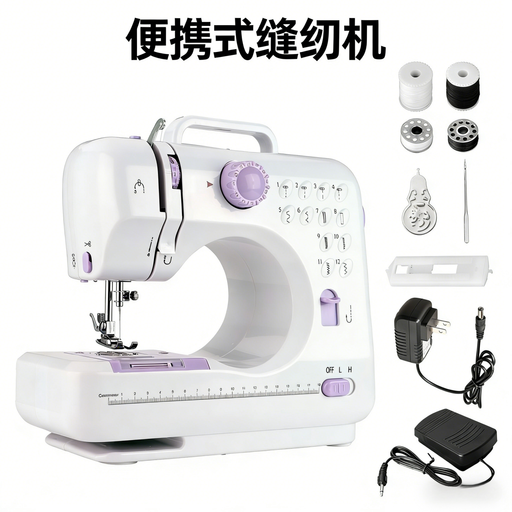 Image unavailable
IAGREEA Mini Portable Electric Sewing Machine, 12 Stitches, Dual Power, Purple
Consider this model for basic napkin seams and hems, subject to a trial on the workshop’s fabric. Its listed features include 12 stitches, dual power and an LED light. Before planning repeated narrow hems, confirm stitch-length adjustment, the available presser feet and the workload it can accommodate.
View on Joybuy
Frequently asked questions
Do I need a special machine to sew fabric napkins?
Usually not: a domestic machine that sews a straight stitch can handle a basic folded hem on suitable fabric. For narrow rolled edges, Janome demonstrates using a rolled-hem foot; check that the foot fits your exact machine and practise feeding the fabric slowly.
What should beginners use for hems in a shared class?
Start with a straight stitch and a folded hem, then introduce a rolled-hem foot when users can guide fabric evenly. A maximum-speed controller, such as the one Janome UK lists for the 230DC, can help an instructor moderate practice speed, but users still need instruction.
Do UK workplace equipment duties apply to a shared workshop?
They apply where the machine is work equipment used at work, rather than simply because several people share it. Under the UK Provision and Use of Work Equipment Regulations 1998, an employer must ensure work equipment is suitable for its intended purpose; the Health and Safety Executive also requires adequate training for people using equipment at work. Whether those duties apply to a particular workshop depends on how it operates.
What support should an organiser check before buying?
Confirm who handles warranty work and servicing for the exact model, and where users can obtain compatible bobbins, needles and presser feet. This matters especially when several people depend on one machine for scheduled sessions.


