First-time school-project sewists
Learning to thread the machine and sew basic seams is the immediate task. SINGER presents the Start 1306 as a beginner model with easy threading, preset stitch settings and six built-in stitches.


For a first school pencil case, choose a machine with the stitches the pattern requires, clear threading instructions and a safe, well-lit place to work. A portable starter model suits a machine that must travel to class; additional stitches and setup features are more relevant if decorative work or later projects are planned. Check the pattern’s zip and fabric layers against the exact machine before buying.
Learning to thread the machine and sew basic seams is the immediate task. SINGER presents the Start 1306 as a beginner model with easy threading, preset stitch settings and six built-in stitches.
Carrying and storing the machine may matter alongside its stitch controls. SINGER describes the M1605 as lightweight and portable for classes or smaller spaces.
Decorative details and future sewing make stitch choice more relevant. Janome offers a decorated pencil-case project and lists 25 stitches on its Sewist 725S.
Start with the school pattern: identify the seams, zip and fabric layers it calls for, then weigh ease of setup against carrying the machine and using it after the assignment. For consumers choosing a machine for this project, each concern below represents a different primary need.
| Concern | What to check | Who this matters to |
|---|---|---|
| Simple setup and seams | Check the required stitch types, threading instructions and stitch selector against the pattern. | If I am learning to sew my first case, I want to get through setup and make controlled seams before exploring extra functions. Around 38% of consumers put straightforward setup first. |
| Portability and workspace | Check the stated weight and dimensions, and plan a stable, well-lit work surface. | Taking a machine to class or putting it away after use makes carrying and storage my main concern. Roughly 25% of consumers prioritise portability. |
| Decorative and later projects | Compare the pattern’s stitch requirements with the available stitches; consider a needle threader or top-loading bobbin if useful beyond this project. | If this pencil case is the start of more craft projects, I care about the options I will use afterwards. About 12% of consumers place continued sewing first. |
| Safe mains use | Check the supplied plug and fuse, instructions, cord condition and appropriate needle protection before use. | When a learner will use a mains-powered machine, I want its electrical supply and working setup checked before anyone starts sewing. Around 25% of consumers make safe use their primary concern. |
More stitches do not, by themselves, simplify a first pencil case. Plain construction still depends on threading the machine and controlling the seams.
Check the pattern first; give decorative stitch options more weight only if the project or later sewing calls for them.
Stated machine weights differ: SINGER lists the M1605 at 4.4 kg, while Janome lists the Sewist 725S at 6.7 kg. The difference matters if the machine must be carried regularly.
Check the exact model’s weight and dimensions, then arrange a stable table and somewhere to store it safely.
A small pencil case still involves a moving needle and, on a mains-powered machine, an electrical supply. The Health and Safety Executive advises appropriate needle guarding; Electrical Safety First advises checking the UK plug and fuse.
Follow the manual, inspect the cord, keep loose hair and clothing clear, and switch the machine off before threading it or changing a needle. Arrange supervision appropriate to the learner.
SINGER lists beginner-oriented mechanical models including the Start 1306 and portable M1605.
Janome’s Sewist 725S is a mechanical option to consider when the pencil case may lead to further sewing.
These portable sewing machines are relevant to a school pencil-case project, but their stitch options and power arrangements differ. Check each one against the pattern and the learner’s setup before choosing.
 No image available
Consider this model if the learner wants stitch choices and a lit work area for the project.
The product title specifies 12 stitches, dual power and an LED light. Confirm that its stitches suit the pattern’s seams, zip and fabric layers, and check the supplied UK plug, fuse and needle protection before use.
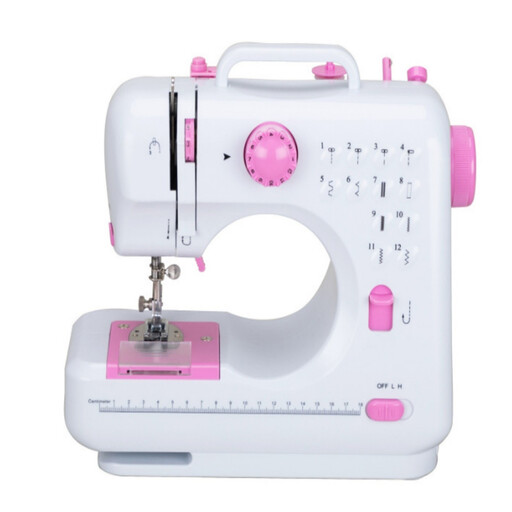 No image available
This variant is worth checking when a learner wants stitch choice and lighting for a pencil-case project.
Its product title specifies 12 stitches, dual power and an LED light. Check the threading instructions, pattern-specific zip and fabric-layer suitability, and the supplied UK plug, fuse and needle protection.
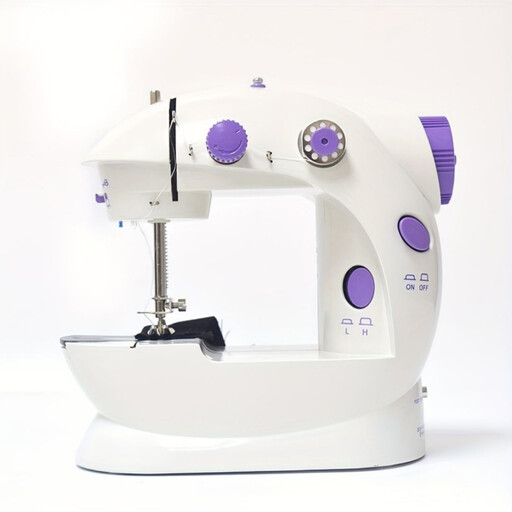 No image available
For a learner considering a pedal-operated machine, establish which stitch it makes before relying on it for the pencil-case seams.
The product title specifies a 6V 1A rating, a 4AA battery or plug-in power option, a spare needle and a threading device. The listing says it has no backstitch and is not for children under 8. Check how the pattern secures seams, whether the machine can handle its zip and fabric layers, and the supplied UK plug, fuse and needle protection.
No: a mechanical machine can make a straightforward pencil case if its stitches and controls meet the pattern’s requirements. Check the construction steps before paying for functions intended mainly for other projects.
Switch the machine off first. The Health and Safety Executive advises switching power off for adjustments and needle changes, while Electrical Safety First advises turning it off, preferably unplugging it, when threading the needle.
Check the supplied UK three-pin plug and fuse, read the instructions and inspect the cord before use. Electrical Safety First also advises buying from a reputable retailer; confirm that the machine’s needle protection and working setup are appropriate for the learner.
Check the seller and the machine’s safety information before deciding. Electrical Safety First recommends a reputable retailer, a UK plug and fuse, and registering the machine so the owner can be contacted about recalls or repairs.