First-time community sewing groups
Groups introducing participants to threading a machine and sewing a first lined pencil case with a zip. Clear controls and a manageable sewing pace matter when several people are learning together.


For a community group making lined pencil cases with zips, start with a domestic sewing machine that can use a compatible zipper foot and is straightforward for participants to thread and control. A basic mechanical model may suit a small group using woven fabrics; a computerised model with a maximum-speed controller may be more useful when participants have varied experience. Check the exact foot, power connection and shared-use arrangements before choosing either route.
Groups introducing participants to threading a machine and sewing a first lined pencil case with a zip. Clear controls and a manageable sewing pace matter when several people are learning together.
Organisers making batches of similar cases who need a repeatable way to sew zips and seams, plus a plan for checking and maintaining the machine between sessions.
Leaders supporting participants with different levels of confidence. Controls such as a maximum-speed setting or start/stop button, where fitted, may help them manage the pace of a session.
Check how the group will sew the zip before deciding how many machine controls it needs: a simpler mechanical route may be enough for a small workshop, while speed control offers another way to manage mixed-skill sessions.
Consider it when: A small group is making conventional lined cases from woven fabric and prefers straightforward dial controls.
Trade-off: Participants need a manageable way to control sewing pace; check the exact machine and its pedal before a group session.
Consider it when: Participants have varied experience or the group will run repeat sessions. Janome lists a maximum-speed controller and start/stop button on its 230DC.
Trade-off: Additional controls are not necessary to construct a simple case and do not replace supervision or safe threading practices.
| Concern | What to check | Who this matters to |
|---|---|---|
| Zip and basic seams | Check whether the exact model includes or accepts a compatible zipper foot, and how its straight stitch and seam-end stitching work. | If I am making lined cases with zips, I need to sew close to the zip teeth and secure the seams. Around 42% of consumers put this construction need first. |
| Learning and pace | Try the threading and bobbin-loading steps; check the available speed controls and obtain the manual. | When several beginners share a machine, I want them to follow the setup and sew at a manageable pace. Roughly 33% of consumers prioritise ease of learning and pace control. |
| Shared-use safety and upkeep | Confirm the UK 3-pin plug and fuse, inspect the cord, and plan storage and maintenance appropriate to the sessions. | As an organiser, I need to know who checks the machine and stops its use if a fault appears. About 25% of consumers place shared-use safety and upkeep first. |
A lined pencil case needs a zip fitted close to its teeth. The LoveCrafts pencil-case instructions call for a zipper foot; extra decorative stitches do not answer whether the chosen machine can use one.
Check the exact model’s compatible foot system and what comes in the package, rather than relying on a general listing image.
A separate compatible zipper foot may be needed if one is not supplied.
Simple controls do not remove needle-area or electrical hazards. Electrical Safety First advises checking for damage and stopping use if a machine sparks, smells unusual or makes unusual noises.
Agree who supervises participants, checks the cord and reports faults. Switch the machine off before threading it, and follow its manual.
The Health and Safety Executive says inspection and testing frequency depends on the equipment and its environment; it does not specify a universal annual testing interval.
Plan visual checks and maintenance around how and where the group uses the machine, with competent formal inspection or testing where appropriate.
A machine intended for group use needs a suitable power connection and identifiable manufacturer details. Electrical Safety First advises checking for a standard UK 3-pin plug and fuse.
Confirm the supplied plug, fuse, manual and manufacturer details. For use in Great Britain, check which conformity requirements apply to the actual machine rather than assuming a listing image establishes compliance.
Janome UK & Ireland presents the J3-18 as a starter-oriented mechanical machine and the 230DC as a computerised option. These named models illustrate two different control setups for a community workshop.
BERNINA presents the 325 as a compact machine with a slide-on table that extends its support surface. Its pencil-case project demonstrates zip insertion using Zipper Foot #4.
These portable sewing machines are choices to assess for straightforward pencil-case sewing. Before selecting either one for zipped cases or repeat group sessions, check zipper-foot compatibility, the supplied power connection and whether it suits the group’s materials and frequency of use.
 No image available
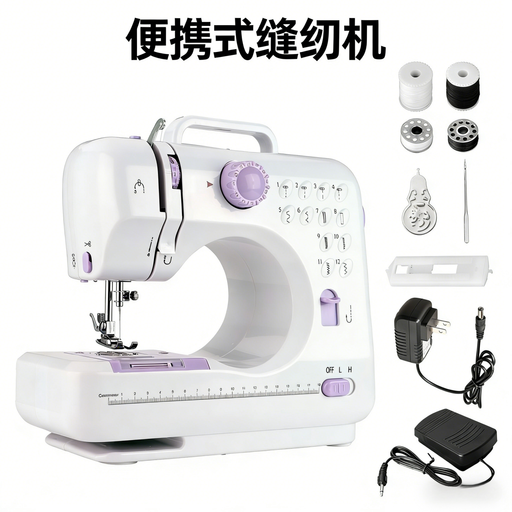
For a group considering a small machine with a choice of stitches for basic sewing. The product name specifies 12 stitches, dual power and an LED light.
For lined cases, confirm that this exact machine accepts a compatible zipper foot. Check the supplied adapter’s UK plug and fuse, and assess it against the planned fabrics and frequency of group use.
 No image available
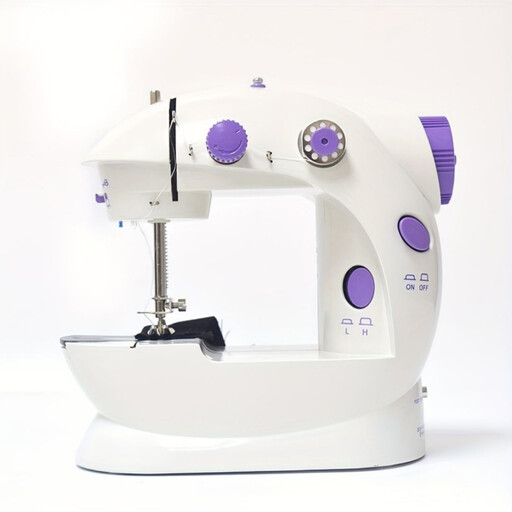
For a group considering simple controls for basic sewing. The product name specifies a pedal, battery or plug-in power, 4AA batteries, a spare needle and a threading device.
Its stated limitations include fixed stitch width and length and no backstitch function, so plan how participants will secure seam ends. Confirm zipper-foot compatibility and the supplied adapter’s UK plug and fuse before choosing it for lined cases.
No overlocker is required by the beginner lined pencil-case instructions from LoveCrafts. They use a sewing machine and zipper foot to construct the case and insert its zip, so check those requirements before considering a specialist machine solely for this project.
A compatible zipper foot helps position stitching close to the zip teeth. LoveCrafts calls for one in its pencil-case instructions, while BERNINA demonstrates its own Zipper Foot #4 for a pencil case; check the foot system and supplied accessories for the exact machine you choose.
A CE mark can be recognised for certain goods meeting EU requirements in Great Britain: GOV.UK’s March 2025 guidance says that recognition extends indefinitely beyond 2024. Check the requirements applicable to the particular electrical machine; this Great Britain guidance does not establish the position in Northern Ireland.
No universal annual portable appliance testing interval is specified by the Health and Safety Executive. Electrical equipment must be maintained in a safe condition, with inspection and testing appropriate to the equipment and its environment; visual checks remain part of that approach.
Check the machine and cord for damage, follow its manual and make sure participants know who will stop use if a fault appears. Electrical Safety First advises switching off before threading and stopping use if there is sparking, a burning smell, damage or unusual noise.