What matters when choosing?
Start with the seams and fabric you will sew, then decide how much setup help rotating users need and how regularly the machine will be used. A simple mechanical model can suit occasional cotton projects; electronic aids may help mixed-skill groups, while heavier-duty or high-speed models call for a clear workload and users who can control them safely.
| Concern |
What to check |
Who this matters to |
| Repeatable setup |
Check stitch selection, threading and bobbin steps, speed control and whether the manual can stay with the machine. |
If different people need to start sewing without a lengthy handover, I want controls they can learn and use consistently. Around 30% of consumers would put repeatable setup first. |
| Regular shared use |
Check intended use, stable placement, service arrangements and the workshop's cleaning and fault-reporting plan. |
When the machine will be used session after session, I need an ownership plan as well as a suitable machine. Regular shared use would be the primary concern for around 30% of consumers. |
| Fabric variation |
Check the manual's fabric and needle guidance, presser-foot clearance and pressure adjustment; try the thickest planned seam. |
If pillowcases may involve layered hems or heavier soft-furnishing fabric, I need to know how the machine handles the actual layers. Around 20% of consumers would prioritise fabric flexibility. |
| Occasional cotton projects |
Check for a straight stitch, adjustable stitch length, reverse and a usable seam guide. |
For occasional cotton pillowcases, I would rather keep the sewing process straightforward than choose a specialist production machine. That simple-project need would come first for around 20% of consumers. |
Brands and model lines to consider
These model lines illustrate different approaches to pillowcase sewing; choose according to the workshop's users, fabrics and frequency of use rather than the brand name alone.
Janome
Janome offers examples ranging from the two-dial 2200XT to the HD2200 for frequent use and the specialised HD9 straight-stitch machine.
- Janome describes variable stitch controls on the 2200XT and a solid metal body with adjustable foot pressure on the HD2200.
- The HD9 is a straight-stitch-only machine weighing 14 kg, according to Janome; that specialised format warrants consideration only if the workshop's workload calls for it.
Brother
Brother's Innov-is A16 illustrates an electronic-control option for workshops with beginners and returning users.
- Brother lists a one-step needle threader, quick-set bobbin, slide speed control and 16 preset stitches for the Innov-is A16.
- Setup aids do not replace instruction or a maintenance plan when several people share a machine.
SINGER
The Heavy Duty 4423 is a domestic-machine option to examine when regular sewing or varied fabric layers matter.
- SINGER lists a metal frame, adjustable presser-foot pressure and a sewing speed of up to 1,100 stitches per minute for the 4423.
- Its stated speed does not, by itself, make it the right choice for new users or establish suitability for every fabric stack.
bernette
The bernette 33 illustrates a mechanical option with front controls for straightforward seams.
- bernette lists 15 stitches, a needle threader, a two-step presser-foot lift and adjustable presser-foot pressure for the 33.
- Check that its controls and presser-foot arrangement suit the fabric layers and users in your workshop.
Joybuy sewing-machine options
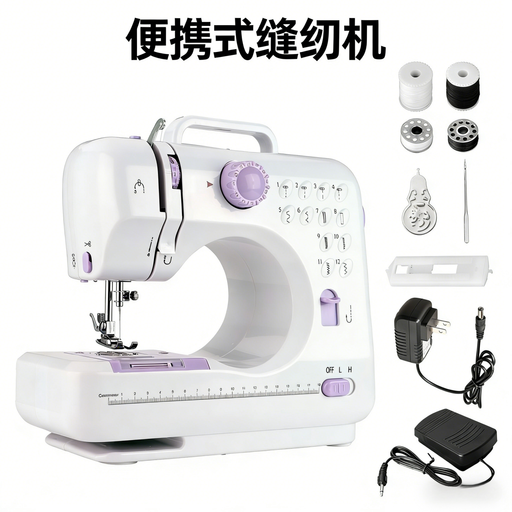
This compact machine is an option to examine for smaller pillowcase projects. Confirm its seam controls, power arrangement and suitability for the way your workshop will use it before choosing it.
 No image available
IAGREEA Mini Portable Electric Sewing Machine, 12 Stitches, Dual Power, Purple
For a small-scale pillowcase project, consider this compact model only if its stitch controls meet your seam and hem requirements.
Its product name specifies 12 stitches, dual power and an LED light. Check for the straight-stitch selection, stitch-length adjustment and reverse function you need, as well as the power options and UK electrical-supply compatibility.
Before assigning it to a shared workshop, check the included accessories and whether its intended use fits the expected frequency of sessions.
View on Joybuy
Frequently asked questions
Does a UK shared workshop have to follow PUWER for its sewing machines?
PUWER applies where a sewing machine is provided or used as work equipment. The UK Health and Safety Executive says such equipment must be suitable, maintained in a safe condition and inspected as necessary, with adequate information, instruction and training for users. An informal hobby group should assess its own operating arrangement rather than assume workplace duties either do or do not apply.
Do I need a high-speed machine to sew pillowcases?
No, not solely for occasional cotton pillowcases: start with a machine that provides the straight-stitch and seam controls the project requires. Consider a faster or more specialised machine if regular output or heavier fabrics justify it and users can operate it safely.
What should we check before using a machine in the workshop?
Check that the machine suits the task and electrical supply and that its plug, lead and casing are in good condition. For equipment used at work, the UK Health and Safety Executive also calls for suitable equipment and adequate user instruction; remove damaged equipment from use and arrange competent attention to faults.
How important is the repair route for a shared machine?
A clear repair route helps the workshop respond when a machine develops a fault. Check the applicable warranty terms and servicing arrangements for the model and seller; Janome directs customers seeking warranty work to official Janome UK retailers.
What should users do between sewing sessions?
Follow the model-specific manual for cleaning, keep its instructions accessible and record faults rather than continuing to use a damaged machine. The bernette 33 manual instructs users to unplug that model when it is unattended and before cleaning; workplace organisers should also maintain an appropriate inspection and maintenance process.


