Shared-workshop beginners
People who need to thread a machine, choose a stitch and resume work after someone else has changed the settings.


For occasional cotton placemats, start with a general-purpose machine that different users can set up and adjust consistently. If the group regularly sews bulky hems, binding or several layers, look for relevant feeding, foot-pressure and clearance features, then test the intended fabric stack. A straight-stitch-only machine makes sense for sustained straight-seam work only if the workshop does not need it to make utility stitches as well.
People who need to thread a machine, choose a stitch and resume work after someone else has changed the settings.
People sewing folded hems, batting, binding or heavier fabrics who need to assess how the intended layers pass under the foot and feed through the machine.
People making many placemats with predominantly straight seams, provided another machine is available if their work also calls for utility stitches.
Consider it: For occasional placemat sessions where straightforward controls make handovers easier.
Trade-off: Check the actual layered seam before relying on a simple model for bulky work.
Consider it: When bulky hems, binding or multiple layers are routine and users still need utility stitches.
Trade-off: A heavy-duty label does not establish stitch quality on the workshop’s particular fabric stack.
Consider it: For sustained production dominated by straight seams.
Trade-off: It cannot make zigzag or other utility stitches at that workstation.
When choosing one machine for shared placemat-making, decide whether consistent handover, handling thick edges or repeated straight-seam work is the primary need.
| Concern | What to check | Who this matters to |
|---|---|---|
| Repeatable setup | Try threading, loading the bobbin and restoring stitch and speed settings after another user has sewn. | When several people take turns, I want to start a seam without having to decipher the previous user’s settings. Around 40% of consumers put consistent setup first. |
| Layer handling | Test folded hems and the thickest seam intersection; check foot clearance and whether foot pressure can be adjusted. | If my placemats include batting or binding, I need the layers to pass through without disrupting the seam. For around 30% of consumers, handling those layers is the primary concern. |
| Batch workflow | Confirm the required stitch types, then consider speed control, work area and arrangements for maintaining the machine. | Making many largely straight-seamed placemats makes a repeatable workflow more important to me than a wide stitch selection. That is the leading need for around 30% of consumers. |
Foot clearance, pressure adjustment and frame construction are useful specifications to examine, but none establishes how a machine will sew every combination of placemat fabric, batting and binding.
Try a representative sample with folded hems and the thickest crossing seam. Look for feeding problems, skipped stitches or puckering, and check whether other users can repeat the result.
Janome specifies the HD9 as straight-stitch-only. Its published speed does not make it a substitute for a machine needed to sew zigzag or other utility stitches.
List the stitches used across the workshop’s placemats and related projects before deciding whether a straight-stitch-only workstation is practical.
Where equipment is provided for use at work, the Health and Safety Executive says it must be suitable, maintained and safe to use, with inspection as needed and adequate information, instruction and training for users.
Establish who manages user induction, fault reporting and maintenance if the shared workshop is a workplace.
Janome’s UK range provides examples of simple domestic, heavier-duty domestic and professional straight-stitch routes.
The electronic Innov-is A16 illustrates a route for groups interested in setup assistance and speed control.
The Heavy Duty 4423 illustrates a domestic route with utility stitches and features intended for varied fabric thicknesses.
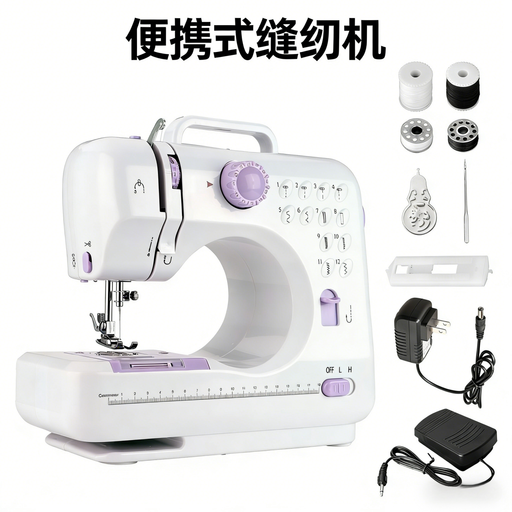
This mini machine is a choice to consider for basic placemat seams and hems where straightforward setup matters. Test the intended layers before choosing it for bulky edges or repeated workshop production.
 No image available
Consider it for basic placemat seams and hems when users need a simple way to take turns. Its description specifies 12 stitch patterns, a drop-in top bobbin, printed threading guides, adjustable speed and a choice of foot-pedal or push-button operation. Test a representative layered seam, and confirm foot clearance and maintenance arrangements before adopting it for sustained shared use.
No: a straightforward domestic machine can suit ordinary woven-cotton placemats when the group can set it up consistently. If projects regularly include bulky hems, binding or several layers, test the intended stack and consider models with relevant feeding, pressure-adjustment or clearance features.
Yes, when the required seams are straight stitches and repeated straight-seam work justifies that route. Janome specifies the HD9 as straight-stitch-only, so it cannot be the sole workstation if projects also require zigzag or other utility stitches.
The Provision and Use of Work Equipment Regulations 1998 apply where equipment is provided for use at work; sharing a machine does not by itself establish that the workshop is a workplace. For equipment used at work, the Health and Safety Executive identifies duties concerning suitability, safe condition, maintenance, inspection as needed, and adequate user information, instruction and training.
Keep the exact model’s manual accessible and agree how users restore settings, report faults and arrange cleaning and maintenance. If the machine is provided for use at work, the Health and Safety Executive also requires adequate information, instruction and training and equipment maintained in a safe condition.