First-time apron maker
You need a machine that is straightforward to set up and can make the straight, reinforced seams required for a cotton apron.


For an ordinary cotton apron, a straightforward domestic machine is usually enough if it can sew straight seams, reinforce them and adjust stitch length. Easier threading and speed control may help a new learner; consider a heavy-duty machine when the apron has substantially thicker layers or the machine will also be used for heavier projects.
You need a machine that is straightforward to set up and can make the straight, reinforced seams required for a cotton apron.
You are choosing for a learner and need controls they can use with instruction and appropriate supervision, including a safe routine for threading and needle changes.
You expect to use the machine after the apron project for repairs, clothing or crafts, so threading aids, bobbin setup and other utility functions may matter more to you.
Check the functions needed for cotton seams first. Then decide whether easier controls or capacity for thicker layers would serve a real need beyond the basic apron.
| Concern | What to check | Who this matters to |
|---|---|---|
| Simple setup and dependable seams | Check for straight stitch, reverse stitching, adjustable stitch length and a suitable general-purpose foot. | If I am learning on a cotton apron, I want uncomplicated controls and seams I can reinforce. Around 33% of consumers put simple setup and dependable seams first. |
| Controlled use by a learner | Look for clear controls and adequate lighting; decide whether a speed limiter would help alongside instruction and supervision. | When a learner uses the machine, I need a pace they can manage and a safe routine for adjustments. Supervised control comes first for around 27% of consumers. |
| Fit for a limited project | Confirm the core seam-making functions rather than choosing by the number of decorative stitches. | If this is a one-off apron project, I want functions I will actually use rather than extra controls to learn. Around 27% of consumers primarily want a machine matched to that limited task. |
| Thicker layers and later projects | Check the exact fabric and strap layers against the model’s needle, presser-foot and fabric guidance. | If my apron has bulky crossings or I plan to sew heavier fabrics later, I need to assess those layers before choosing. This wider-use need comes first for around 13% of consumers. |
Ordinary cotton seams do not, by themselves, establish a need for a machine intended for substantially thicker materials.
Check the strap material and the number of layers at each crossing. Consider heavier-duty capability if those layers or later projects call for it.
A speed slider or threading aid can make a task easier to manage, but neither replaces a safe working routine. The Health and Safety Executive advises switching power off for adjustments and needle changes.
Arrange instruction and appropriate supervision before the learner starts, and use any convenience controls as supporting features.
The seller, exact model and supplied product information matter when choosing an electrical sewing machine from a marketplace listing.
Check the seller’s identity, instructions and suitability for the market where the machine will be used before ordering.
Janome offers a mechanical starting point for the apron project as well as models with setup aids.
Brother’s Innov-is A16 illustrates the electronic route for a learner who would use more control over sewing pace.
Singer’s Heavy Duty 4423 is relevant when the planned sewing extends to substantially thicker layers or heavier fabrics.
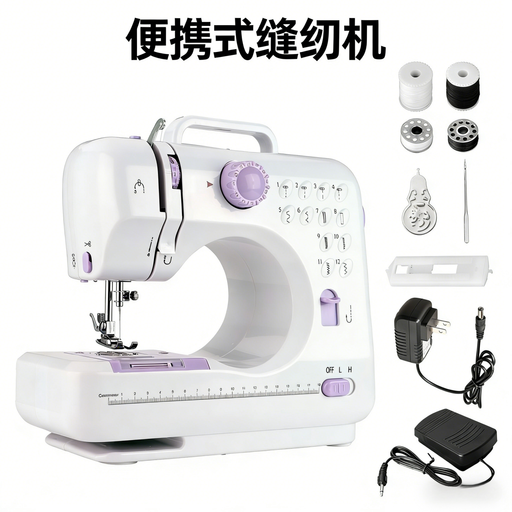
This compact sewing machine is a possibility for basic apron sewing if its controls and presser foot suit your cotton fabric and layered seams.
 No image available
For a cotton-apron project, check whether this mini machine suits your fabric and the layers where straps meet the apron.
The product name lists 12 stitches, dual power and an LED light. Confirm adjustable stitch length, a suitable presser foot and the exact listing’s UK-market information before choosing it.
Usually not for an ordinary cotton apron: start by checking that a domestic machine can make straight, reinforced seams with adjustable stitch length. Consider heavier-duty capability if your straps and seam crossings are substantially thicker, or you plan to sew heavier fabrics later.
Prioritise the functions needed for seams, then consider whether bobbin setup, threading aids, lighting or speed control would help the learner. Brother lists a speed slider and threading aid for the Innov-is A16, while Janome lists a needle threader, top-loading bobbin and LED light for the Sewist 725.
Arrange instruction, supervision and a safe setup suited to the learner and setting. The Health and Safety Executive advises adequate lighting and switching power off for adjustments and needle changes; the Design & Technology Association advises assessing appropriate group size and supervision locally.
Not necessarily: GOV.UK guidance says CE marking continues to be recognised alongside or instead of UKCA marking in Great Britain where the relevant product rules permit it. That guidance covers England, Scotland and Wales; check the applicable requirements separately for Northern Ireland.
Contact the retailer with your order record and details of the fault. GOV.UK states that consumer rights apply to goods bought remotely or in person; keep the model details and any evidence of the problem when seeking a remedy.