For ordinary double-sided fabric bunting, choose a machine that can sew a straight stitch at an adjustable stitch length; a basic mechanical model can be sufficient. A needle threader, simpler bobbin loading or a work light may be worth considering when several learners will share the machine or it will be used for later projects, but those features do not replace instruction and supervision at school.
Who is the machine for?
First-time bunting makers
If the immediate task is sewing fabric flags and attaching them to binding, start with the stitch the project calls for rather than a long list of decorative options. The Sewing Directory’s bunting instructions specify a straight stitch at length 2.5.
Adults supervising learners
Choose controls that the intended users can learn, then plan instruction, a clear work area and close supervision. The Design and Technology Association’s primary-school model risk assessment calls for close adult supervision when responsible Key Stage 2 pupils use sewing machines.
Families planning later sewing projects
If the machine will also be used for repairs or crafts, compare adjustable stitch settings and setup conveniences on the exact model. Janome and Singer list features such as needle threaders on some named beginner models, but those features should not be assumed across a whole range.
What matters when choosing?
Check that the machine can make the seams required by your chosen bunting instructions before weighing up conveniences for shared use or future projects. If pupils will operate it at school, the school’s supervision and safety arrangements are a separate part of the decision.
| Concern |
What to check |
Who this matters to |
| Straight seams |
Confirm straight stitch and adjustable stitch length. The Sewing Directory’s double-sided bunting method uses stitch length 2.5 and a 1 cm seam allowance. |
If I am making cotton flags for this project, I want to follow the seam instructions without relying on decorative stitches; around 50% of consumers would put straightforward straight-seam sewing first. |
| Supervised use |
Check whether learners can understand the controls and threading path, and arrange instruction, cable checks and close adult supervision where applicable. |
When pupils are new to machine sewing, I need a setup I can teach and supervise within the school’s procedures; manageable, supervised use would be the primary concern for around 30% of consumers. |
| Later projects |
Decide whether you need additional utility stitches or setup features after the bunting is finished, and check the exact model’s accessories. |
If I expect to use the machine again for repairs or crafts, I do not want to choose solely for one set of flags; roughly 20% of consumers would make future-project use their main priority. |
What should you avoid overlooking?
-
Choosing by decorative-stitch count
More stitch choices do not answer the immediate question of whether a machine can sew the straight seams in your bunting instructions.
Confirm the straight stitch, adjustable stitch length, standard presser foot and threading process first. Treat decorative stitches as relevant only if you have another use in mind.
-
Assuming a beginner label covers school safety
A machine described as suitable for beginners still has a needle, moving parts and an electrical cable. The Design and Technology Association’s model assessment calls for close supervision of responsible Key Stage 2 pupils using sewing machines.
Follow the school’s risk assessment and instruction procedures. Check the machine, plug and cable, keep the cable clear of walkways, and switch off before adjustments or needle changes, as advised by the Health and Safety Executive.
-
Assuming every version has the same conveniences
Needle threaders, bobbin arrangements and lighting differ between named models, even within beginner ranges.
Check the exact model and box contents if a particular feature matters for lesson setup or later use.
-
Planning for the machine but not the project materials
Having a machine ready will not help if the fabric flags cannot be cut, sewn and attached during the available project time.
Prepare the pattern, fabric, thread and binding or tape, and try a seam on scrap fabric before the session.
The project may also require suitable needles, pins, scissors and an unpicker, alongside time to cut the flags and prepare the binding.
Brands to consider
These brands have named domestic machines with features relevant to bunting. Compare individual models rather than treating a brand name as a guarantee of ease of use or school suitability.
Janome
Janome UK & Ireland lists the dial-controlled 2200XT and the Sewist 725 among its domestic sewing machines.
- The 2200XT uses two operating dials; the Sewist 725 lists a built-in needle threader, top-loading bobbin and LED light.
- Choose between those features using the exact model specification and supplied accessories; they do not establish how suitable a machine is for unsupervised pupil use.
Brother
Brother SewingCraft lists the LX17 as a lightweight mechanical sewing machine with 17 stitches.
- The LX17’s listed dial selection, drop-in bobbin and LED lighting are features to compare if setup and storage matter.
- Its beginner positioning does not replace the school’s instruction, supervision or risk assessment.
Singer
Singer Sewing UK lists mechanical Tradition models including the 2250NT and 2273.
- The named models list adjustable stitch settings and needle-threading conveniences that may be relevant to repeat use.
- Check the exact version’s features, included accessories and seller support rather than assuming all Tradition models share one configuration.
Joybuy product choices
These compact IAGREEA machines are choices for basic sewing and craft use. Before choosing either for bunting, check its stitch against the method you plan to follow; the models differ in their stated stitch settings.
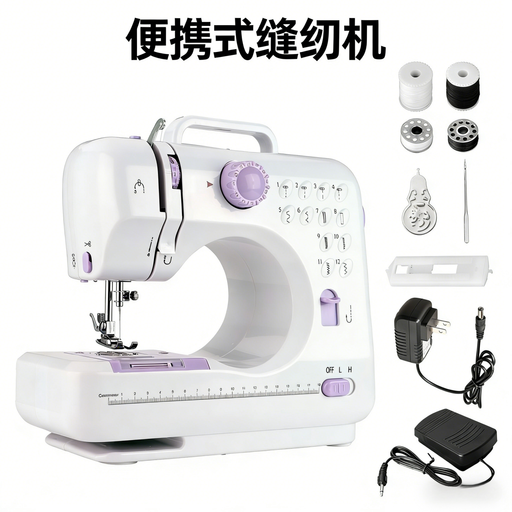 Image unavailable
IAGREEA Mini Portable Electric Sewing Machine, 12 Stitches, Purple
Consider this compact model if you want a machine for craft sewing and need to compare its stitch options with your bunting instructions.
The product name specifies 12 stitches, dual power and an LED light. Confirm that it makes the required straight stitch, whether stitch length can be set to suit your chosen method, and whether its DC adaptor has a suitable UK plug.
View on Joybuy
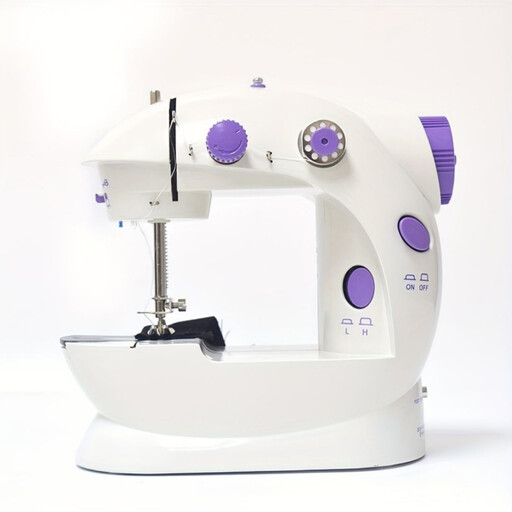 Image unavailable
IAGREEA Portable Mechanical Sewing Machine with Pedal, 6V 1A
This compact mechanical model is worth considering only if its available stitch suits the bunting method you intend to use.
The product name specifies pedal operation, battery or plug-in power using 4 AA batteries, and an included spare needle and threading device. Its stitch length and width are fixed and it has no backstitch function, so it cannot be adjusted to follow instructions requiring a particular stitch length. Confirm the stitch type and presser-foot suitability for your fabric before choosing it.
View on Joybuy
Frequently asked questions
Do I need a computerised sewing machine for fabric bunting?
No: a mechanical machine can make ordinary double-sided bunting if it provides the straight stitch and adjustable stitch length your instructions require. The Sewing Directory’s method specifies straight stitch length 2.5 and a 1 cm seam allowance; computerised controls are not a requirement of that method.
Does bunting require a zigzag stitch?
Not for double-sided flags sewn right sides together and then turned: The Sewing Directory’s method specifies a straight stitch for those seams. Zigzag may be relevant to a different, exposed-edge finish, so decide on the construction method before treating it as a required machine feature.
Can pupils use a sewing machine for a school project?
Pupil use needs to follow the school’s risk assessment, instruction and supervision arrangements, not a machine’s beginner label. The Design and Technology Association’s primary-school model assessment says responsible Key Stage 2 pupils should use sewing machines only under close adult supervision.
Does a school sewing machine need a PAT test every year?
An annual portable appliance test is not automatically a legal requirement. The Health and Safety Executive says inspection and testing arrangements should reflect the equipment and its environment; the school should maintain the machine safely and apply its own checking procedures.


