What should you check before buying?
Identify the cover fabric and closure first, then decide whether this is a one-off project or the start of more sewing.
| Concern |
What to check |
Who this matters to |
| First seams and speed |
Check the required straight and edge-finishing stitches, threading instructions and foot-pedal control on the exact model. |
If this is my first cover, I want to concentrate on guiding the fabric rather than learning numerous controls. Around 50% of consumers put easy first seams and speed control first. |
| Use after the project |
Look for adjustable stitch settings and the functions needed for planned closures or later projects. |
I would rather choose around the crafts I expect to make next than around this cover alone; roughly 25% of consumers prioritise future-project flexibility. |
| Thicker layers and shared use |
Check suitability for the actual fabric and layers, plus the machine’s handling features and whether its weight is practical to move. |
When the cover has bulky seams or the machine will be shared repeatedly, I need to assess fabric handling and robustness first. About 25% of consumers make that their primary concern. |
Joybuy products for a compact setup
These compact IAGREEA machines are options to examine when a portable setup matters. Before choosing either for a cushion cover, confirm its exact stitch functions and suitability for your fabric and layers.
 No image available
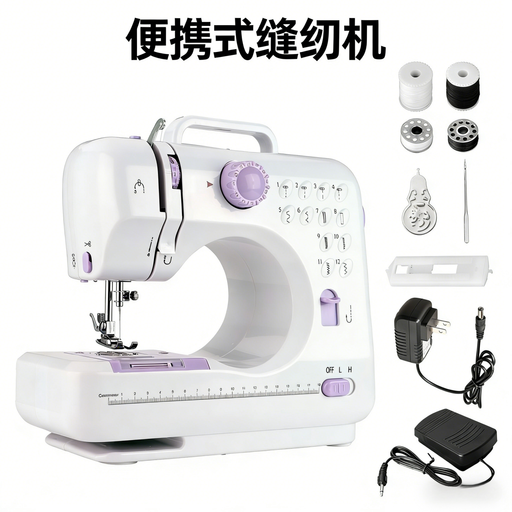
IAGREEA Mini Portable Electric Sewing Machine, 12 Stitches, Purple
For a learner considering a compact machine, check that its stitches cover the planned seams and edge finish. The named Purple variant specifies 12 stitches, dual power and an LED light; confirm fabric and layer suitability before buying.
View on Joybuy
 No image available
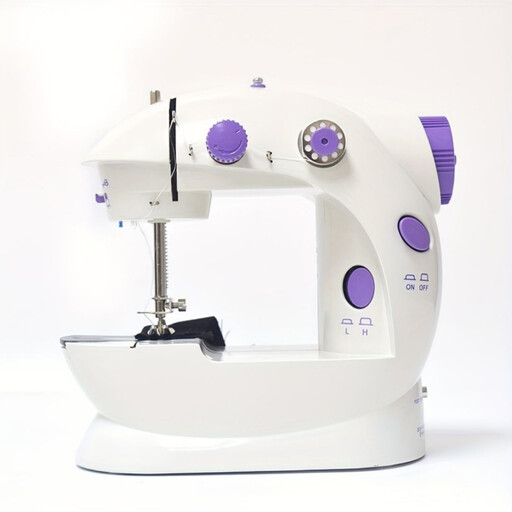
IAGREEA Portable Mechanical Sewing Machine with Pedal, 6V 1A
If a pedal and portable setup are priorities, confirm that this machine makes the stitches your chosen cover needs. Its named configuration specifies 4AA battery or plug-in power, thread shuttle cores, a spare needle and a threading device; check fabric and layer suitability before buying.
View on Joybuy
Common questions
Do I need a computerised machine for a school cushion cover?
No, not for a straightforward cover in light- to medium-weight fabric: an entry-level mechanical machine is a sensible starting point, as John Lewis & Partners advises for newcomers. Match its stitches and controls to the closure and fabric before considering extra functions for later projects.
Which stitches does a basic cushion cover need?
Straight stitch makes the construction seams; zigzag can help finish an edge if the fabric frays. A buttonhole matters only if the chosen closure uses buttons, so check the design before treating it as a requirement.
Can a primary-school pupil use a sewing machine?
The Design and Technology Association’s primary model risk assessment restricts machine use to responsible Key Stage 2 pupils under close adult supervision. Prior training, checks for damage to the machine, cable and plug, and control of hair, loose clothing and jewellery are also specified; follow the school’s own procedures.
Should I choose a sturdier machine for a cushion cover?
Choose a sturdier route when the actual fabric, bulky layers or repeated shared use warrant it, not simply because the project is a cushion cover. Janome positions the HD2200’s solid metal body for schools and heavy users, but the machine’s weight and suitability for the exact fabric still matter.


