For a basic woven-fabric glasses case, choose a straightforward beginner machine that can sew a straight seam, secure its ends and handle the intended fabric layers. Extra clearance matters if the case has bulky padding; speed control and a wider stitch range are more relevant if the learner will keep sewing after this project. School use must also fit the school’s supervision and risk-assessment arrangements.
Who is this for?
First-time school-project maker
You need to learn how to thread the machine and sew tidy seams, not work through a large stitch library. A pattern using woven fabric, lining and interfacing makes clear instructions and manageable controls particularly useful.
Maker using padded layers
You plan to add fleece or other padding to a lined case. Check whether the complete fabric stack fits beneath the presser foot and sews as intended, rather than relying on a general claim about thick fabrics.
Learner continuing beyond one project
You expect to use the machine again after the glasses case. Needle-threading assistance, speed control or additional stitch settings may then be worth considering alongside the functions this assignment actually needs.
What matters when choosing?
Start with the pattern’s seams, then consider the thickness of its layers and whether the machine will be used after the assignment.
| Concern |
What to check |
Who this matters to |
| Simple setup and seams |
Check for a straight stitch, a suitable way to secure seam ends and threading instructions the learner can follow. |
If this is my first small sewing project, I want to get the machine ready and practise neat seams without navigating unnecessary settings. Around 45% of consumers put simple setup and basic seam control first. |
| Fabric layers |
Check presser-foot clearance with the intended outer fabric, lining and interfacing or padding; try a sample seam if possible. |
A padded case means I need the assembled layers to fit and feed through the machine, not merely to fit beneath a raised foot. Handling the fabric stack comes first for around 33% of consumers. |
| Use after the project |
Consider whether speed control, stitch adjustments and setup aids will be useful for the sewing planned next. |
If I expect to keep sewing, I want controls I can grow into without choosing extra functions solely for this case. Longer-term use is the primary concern for around 22% of consumers. |
Mistakes to avoid
-
Choosing by stitch count alone
A basic glasses case does not inherently need dozens of decorative stitches. A larger stitch selection is little help if threading is difficult or the machine cannot manage the planned seams and layers.
Read the pattern before comparing machines. Prioritise its seam requirements, a way to secure the stitching, usable clearance and the accessories needed for the chosen materials.
-
Assuming extra clearance guarantees thick-fabric sewing
A higher presser-foot lift can make it easier to position bulky layers, but does not establish how every fabric combination will feed or stitch. Very heavy outer fabric can also make a small case awkward to turn.
Try the complete fabric stack on scraps where possible, and choose materials that suit the case pattern rather than relying on a broad thick-fabric description.
-
Treating a home purchase as school-use permission
A machine’s suitability for a project does not replace supervision and safe-use arrangements for pupils. The Health and Safety Executive advises switching power off for adjustments and needle changes.
Follow the teacher’s machine-specific instructions and the school’s risk assessment. In England, Department for Education guidance places responsibility for managing pupil health and safety with the school employer or proprietor.
Brands to consider
These model examples help distinguish useful controls for this project; a brand name alone does not establish that a particular machine will handle your fabric stack.
Janome
Janome UK & Ireland lists both a mechanical starter model and a computerised model with additional controls.
- The J3-18 has 18 stitch choices, variable stitch length and a built-in needle threader; Janome positions it for starters and occasional sewing.
- The 230DC adds features including speed control and foot-pressure adjustment, but those additions are not necessary for every basic glasses-case pattern.
Singer
Singer UK presents the Start 1306 as a simple mechanical machine for beginners.
- Singer specifies six built-in stitches and an extra-high presser-foot lifter intended to give bulky layers more clearance.
- Its preset stitch width and length offer less adjustment than variable stitch controls; clearance alone does not establish how the finished case layers will sew.
Brother
Brother has entry-level domestic models to consider alongside the specific Janome and Singer examples.
- John Lewis & Partners has listed Brother models including the LK14S, JK2500NT and HF37.
- Check stitch controls, included feet, fabric guidance and guarantee terms for the exact Brother model under consideration.
Joybuy machines for this project
These compact IAGREEA machines are options to assess for basic case-making. Before choosing one, check the pattern’s required stitch and seam finish against the exact model, then consider the full thickness of the planned materials. Their compact format should not be assumed to provide the same fabric handling as a full-size machine.
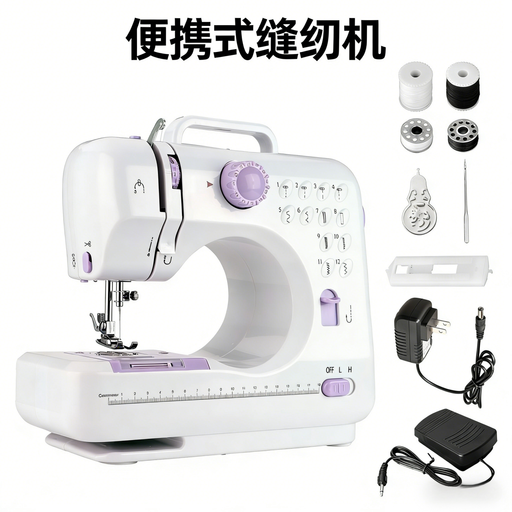 Image unavailable
IAGREEA Mini Portable Electric Sewing Machine, 12 stitches, dual power, purple
For a learner who wants help getting started, the description lists printed threading guides and an instructional video.
The listing describes reverse stitching, high and low speed settings, an LED light and a thread cutter. Check how the intended outer fabric, lining and interfacing sew together before relying on its claims about thicker materials.
View on Joybuy
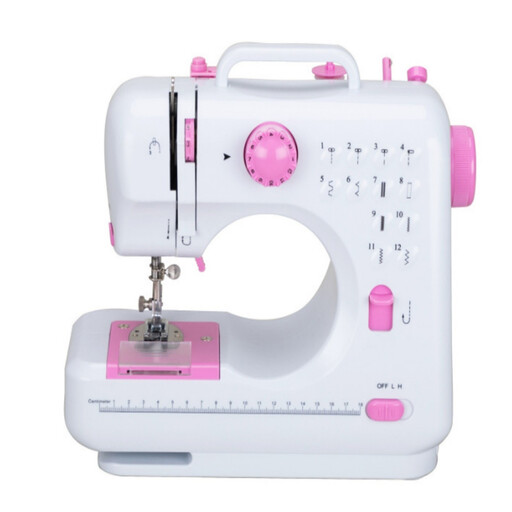 Image unavailable
IAGREEA Mini Portable Electric Sewing Machine, 12 stitches, dual power, pink
For a learner seeking simple controls, the description lists one-button operation and high and low speed settings.
The title specifies 12 stitches, while the description also lists an LED light and a thread cutter. Confirm which stitch the case pattern needs, how its seam ends will be secured and whether the complete fabric stack can be sewn. Check the model’s age guidance and school-use instructions with the supervising teacher.
View on Joybuy
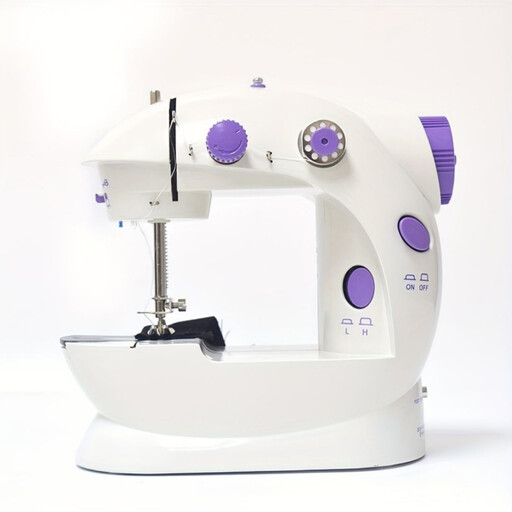 Image unavailable
IAGREEA Portable Mechanical Electric Sewing Machine with pedal, 6V 1A
For someone considering a machine with few controls, the description lists one stitch type, marked threading directions and high and slow speed settings. Its title specifies plug-in or 4 AA battery power.
The description specifies fixed stitch width and length and no backstitch function. Confirm the stitch type and a seam-finishing method suitable for the pattern, and try the planned layers if possible. Its stated safety warning excludes children under 8; school use also needs the school’s supervision and risk-management arrangements.
View on Joybuy
Common questions
Do I need an overlocker to make a fabric glasses case?
No. A basic fabric glasses case can be made with a standard sewing machine: the Hello Sewing pattern uses woven fabric and fusible interfacing with a sewing machine. Check the seams and finishing steps in the particular pattern you choose.
Can a beginner machine sew a lined glasses case?
Yes, provided it can make the pattern’s seams and sew the exact combination of outer fabric, lining and interfacing. Try the layers on scraps first, especially if adding padding; a fabric stack that fits under the raised foot may still be difficult to feed or turn neatly.
What safety arrangements matter for a school sewing project?
Use the machine under the school’s instructions, supervision and risk assessment. The Health and Safety Executive advises switching power off for adjustments and needle changes. For schools in England, Department for Education guidance places responsibility for managing pupil health and safety with the school employer or proprietor.


