First-time school-project sewer
If this is your first pocket project, understandable controls and a manageable setup matter more than decorative functions. John Lewis & Partners recommends starting with a simple entry-level mechanical machine.


For straightforward storage pockets in light-to-medium-weight fabric, start with a simple mechanical sewing machine whose controls the learner can use confidently. If the design includes thick fabric or bulky seam crossings, check the exact model against those materials rather than choosing by stitch count. For use at school, supervision and the school's equipment procedures matter as much as the machine's features.
If this is your first pocket project, understandable controls and a manageable setup matter more than decorative functions. John Lewis & Partners recommends starting with a simple entry-level mechanical machine.
Lining, interfacing or several layers at a seam crossing make the planned materials an important part of the choice. Compare the exact machine's fabric guidance and presser-foot clearance before committing to a design.
When a learner will use a shared machine, decide who will supervise, where it will be set up and how needle changes will be handled. The Health and Safety Executive advises switching off power during adjustments and needle changes.
Choose around the pocket fabric and intended user before comparing extra stitches. A compact machine may be convenient to put away, but portability does not establish how it will handle a bulky seam.
Choose it when: The project uses light-to-medium-weight fabric and ordinary pocket seams.
Check the limit: Confirm suitability before sewing padding, heavy fabric or bulky seam crossings.
Choose it when: The learner would benefit from features such as a needle threader or drop-in bobbin, or the design needs more presser-foot clearance.
Check the limit: An extra-high presser-foot lift, listed for the Janome Sewist 725S, does not by itself establish suitability for every fabric stack.
Choose it when: The project or later sewing plans call for functions beyond basic pocket seams.
Check the limit: Extra stitch choices need a purpose; they do not replace checking the fabric and learning the controls.
| Concern | Buying check | Who this matters to |
|---|---|---|
| Beginner operation | Check the threading instructions, bobbin setup and whether the learner can control the machine at a comfortable pace. | If I am learning to sew pocket seams, I want to get started without navigating functions I will not use. Around 33% of consumers put straightforward beginner operation first. |
| Supervised use | Agree who will supervise and confirm the school's equipment procedures; plan a well-lit work area and power-off needle changes. | When a learner will use the machine at school, I need to know how it can be set up and operated safely. Supervised use is the primary concern for around 27% of consumers. |
| Layered fabric | Count the planned layers and seam crossings, then compare the model's fabric guidance and presser-foot clearance. | If my pockets include lining or thick seam intersections, I need a machine suited to that construction. Around 20% of consumers make fabric handling their first priority. |
| Storage and moving | Compare the machine's published weight, cover provision and accessory storage with where it will be kept. | For an occasional project, I may need to clear the desk and put the machine away after each session. Storage and portability come first for around 20% of consumers. |
A longer stitch list does not make ordinary storage-pocket seams easier to sew. John Lewis & Partners points newcomers towards simple entry-level mechanical machines.
List the seams required by the project, then consider additional functions only if another planned use calls for them.
A pocket seam can become bulky where fabric, lining and folded edges meet. A model's general beginner positioning does not settle its suitability for that particular stack.
Count the layers at the thickest crossing and check the exact model's fabric guidance. If possible, try the planned layers on scraps with an appropriate needle and thread.
Even a small project requires a safe place to work and a procedure for adjustments. The Health and Safety Executive advises switching off power for needle changes and adjustments.
Confirm the school's supervision and equipment rules, then plan lighting, cable placement and how the machine will be switched off before adjustments.
A machine used only occasionally still needs a practical place for both the machine and its accessories between sessions.
Compare its published weight and cover provision with the space available at home or school before choosing a portable model.
Brother has entry-level domestic machines to compare for a first pocket project; John Lewis & Partners lists the LK14S as one example.
Janome UK & Ireland lists standard mechanical machines alongside other machine categories, allowing a comparison between basic controls and additional setup features.
Singer is worth comparing across basic, Heavy Duty and computerised model lines when deciding which functions the pocket project actually requires.
These compact IAGREEA machines are options to compare for basic pocket seams and occasional use. Check the planned fabric layers and the school's use requirements before choosing one.
 No image available
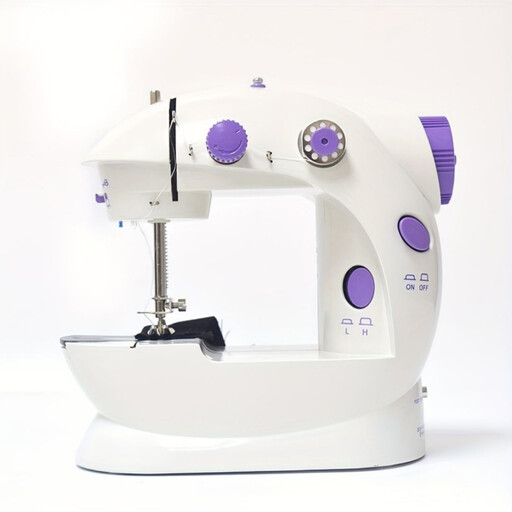
Consider this compact model for basic pocket seams when it also needs to be put away between sessions.
The listed variant has 12 stitches, dual power and an LED light. Check its controls and the suitability of the planned fabric layers before buying.
 No image available
Compare this portable mechanical model for a straightforward project where pedal operation is wanted.
Its listed configuration specifies 6V 1A, plug-in or 4AA-battery power, and a spare needle and threading device. Check whether its stitch and seam-finishing options meet the pocket design's needs.
 No image available
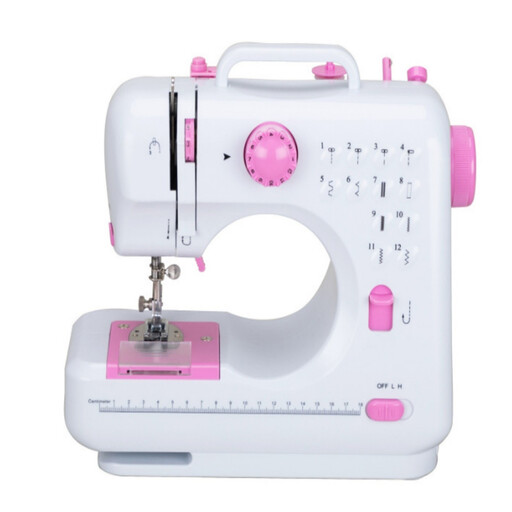
Consider this compact variant for basic pocket seams if the machine will be moved or stored between sessions.
Its name specifies 12 stitches, dual power and an LED light. Confirm the operating controls and suitability for the project's fabric layers before choosing it.
Usually not for straightforward pockets in light-to-medium-weight fabric: a simple mechanical machine with the required utility stitches is a sensible starting point. Consider additional controls or stitches if the project or a specific later use calls for them, rather than assuming they will improve basic seams.
Choose only after checking the thickest planned seam against the exact machine's fabric guidance. Janome UK & Ireland lists an extra-high presser-foot lift and foot-pressure adjustment for the Sewist 725S, but neither feature alone establishes that a particular machine can sew every layered design. Try the planned materials on scraps where possible.
Confirm the school's supervision and equipment procedures before bringing in or using a machine. The Health and Safety Executive advises a safe system of work that includes switching off power for adjustments and needle changes; the school's own arrangements should govern the classroom setup.