First-time tool-roll maker
If you are learning to sew straight seams, hems and pockets, manageable speed and a threading process you can follow may matter more than decorative stitches.


For a first tool roll, choose a machine with controllable speed and straightforward threading, bobbin loading and straight stitching before prioritising a long stitch list. If the design includes repeated bulky seams in canvas or denim, test the thickest planned fabric stack; for a machine shared at school, safe operating procedures and maintainable equipment also matter.
If you are learning to sew straight seams, hems and pockets, manageable speed and a threading process you can follow may matter more than decorative stitches.
If pocket edges or ties create thick intersections, make a sample with the intended materials and check how the machine feeds it before sewing the finished roll.
A machine used by several learners needs clear instructions, maintenance arrangements and supervised operating procedures. The Health and Safety Executive advises switching off power before needle changes or adjustments in its sewing-machine guidance for textile workplaces.
Consider it when: You want to limit sewing speed and make setup easier for one or a few tool rolls.
Bear in mind: Convenient controls do not establish how well a machine will handle your thickest seam. Brother describes the Innov-is A16 as suitable for multiple layers, but test your intended stack.
Consider it when: A school, club or household expects several learners to use the machine for this and later projects.
Bear in mind: Janome positions the HD2200 for schools and heavier use, but that is its own product positioning; check whether the machine is practical to store, move and maintain.
Consider it when: Your design repeatedly brings together canvas, denim or bulky folded seams, and you expect to sew similar projects later.
Bear in mind: SINGER markets the Heavy Duty 4423 for denim and canvas, but its label is not a tested layer limit for your project. Control and sample sewing still matter.
| Concern | What to check | Who this matters to |
|---|---|---|
| Simple setup and controlled seams | Check the speed controls, straight and reverse stitching, bobbin setup and instructions for the exact model. | If I am learning to sew pocket divisions, I want to slow down at corners without struggling to set up the machine; roughly 33% of consumers would put simple setup and control first. |
| Layered fabric | Test an offcut matching the thickest planned seam, including its folds and binding; check the manual for suitable needles and thread. | Folded canvas or denim at a pocket edge makes me concerned about whether the fabric will feed cleanly; around 33% of consumers would prioritise handling layered material. |
| Safe shared use | Confirm usable instructions and a plan for supervision, maintenance and switching off power before needle changes. | When several learners share a machine, I need operating rules that each person can follow; roughly 17% of consumers would make safe shared use their primary concern. |
| Features for a limited project | Check that the machine covers the planned seams and any edge finishing, rather than choosing by stitch count alone. | If this may be my only sewing project, I want the functions the tool roll actually requires; around 17% of consumers would put avoiding unnecessary features first. |
More decorative stitches do not tell you whether a machine will feed a folded pocket edge or tie attachment cleanly.
Make an offcut with the same fabric, binding and thread, then sew its thickest intersection slowly before cutting the final pieces.
Basic seam functions alone do not establish how a compact machine will handle a bulky tool-roll seam.
Check the exact model against your planned material stack rather than treating stitch options as a fabric-capacity rating.
Bulky intersections and tight corners still call for control, especially while learning. SINGER markets the Heavy Duty 4423 for heavier fabrics, but that does not determine the right speed for each seam.
Practise on samples at a controlled pace and follow the machine’s instructions when stopping or pivoting.
Several learners using one machine need consistent instructions and a plan for its condition and upkeep, not just suitable stitches.
Arrange supervision and maintenance, and switch off power before needle changes or adjustments, as advised in the Health and Safety Executive’s sewing-machine guidance for textile workplaces.
The Innov-is A16 represents an electronic route for makers who value controlled speed and straightforward setup.
The mechanical HD2200 is a shared-use option that Janome positions for schools and heavier users.
The M3505 offers a conventional sewing-machine route, while the Heavy Duty 4423 is marketed for projects involving fabrics such as denim and canvas.
These portable IAGREEA machines are choices to assess for basic tool-roll sewing. Check the exact seam stack before relying on a mini machine for bulky canvas or denim, and consider whether its controls suit the learner.
 No image available
A portable option to assess for basic seams and hems on a first tool roll.
The listed variant has 12 stitches, dual power and an LED light. Check its performance on the thickest planned seam, along with the instructions and conformity information relevant to where it will be used.
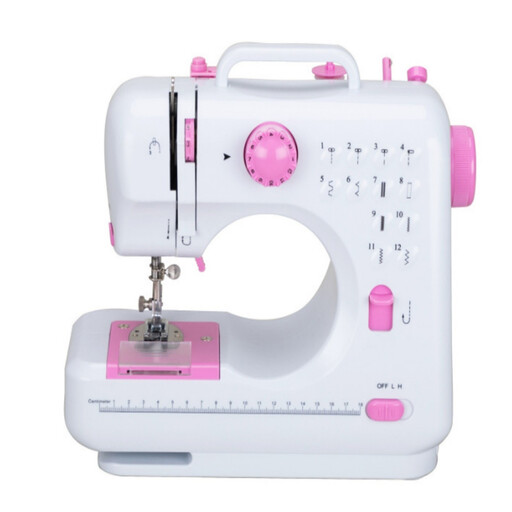 No image available
A portable option to consider if the planned tool roll uses basic stitching rather than relying on demonstrated thick-fabric capacity.
The listed variant has 12 stitches, dual power and an LED light. If reinforced seams matter, check its reverse-stitch controls; also test the intended fabric stack and confirm the instructions and applicable conformity information.
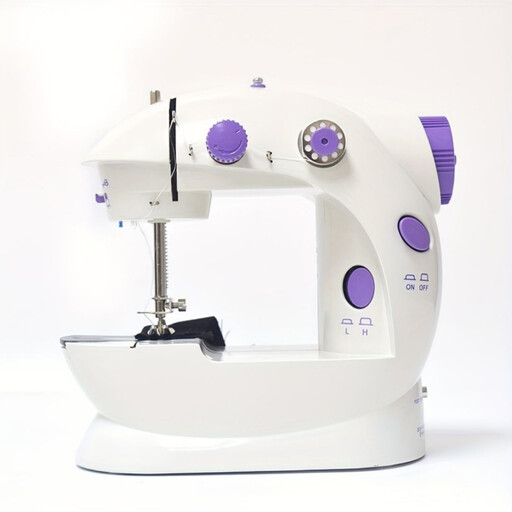 No image available
This compact machine is an option to assess for simple stitching, but plan how you will secure tool-roll seams: its description states that it has no backstitch function.
The listed bundle includes thread shuttle cores, a spare needle and a threading device; the title specifies battery or plug-in power using 4AA batteries. Test the planned fabric stack and confirm the instructions and applicable conformity information before choosing it for school use.
Not necessarily: a standard beginner machine can be suitable if it handles the planned seams and gives you enough control. For repeated canvas, denim or bulky intersections, test the thickest sample rather than assuming a heavy-duty label guarantees a particular layer capacity.
Only if the exact machine handles your planned fabric stack satisfactorily. Basic stitches or speed settings do not, by themselves, establish how it will sew folded canvas and pocket intersections.
Switch off the machine’s power before a needle change or adjustment and follow its instructions. The Health and Safety Executive gives this advice for textile-workplace sewing machines; a school should set its own supervision and safe-use arrangements.
For a machine supplied for use in Great Britain, check the applicable conformity marking and instructions for that product. GOV.UK guidance dated 21 August 2026 says CE marking continues to be recognised alongside UKCA in England, Scotland and Wales; Northern Ireland follows different processes, so check the rules applicable there separately.
Confirm the exact machine variant, warranty terms and available service arrangements before purchasing. Janome advises using its official UK retailers for after-sales care and warranty on its machines; check the arrangements that apply to whichever model you choose.