Volunteer-led costume teams
Groups making batches of coordinated scrunchies need a straightforward way to set up the machine and repeat short seams without frequent interruptions.


For ordinary fabric scrunchies, choose a machine that can sew the fabric seam and make a small zig-zag stitch for joining the elastic; extra decorative stitches are not the deciding factor. A straightforward mechanical machine suits occasional work with a confident operator, while speed control and easier setup matter more when several beginners share it. Consider a heavy-duty model if the group will also sew thicker, layered costume items.
Groups making batches of coordinated scrunchies need a straightforward way to set up the machine and repeat short seams without frequent interruptions.
When several volunteers take turns, clear stitch selection, manageable sewing speed and an easy threading routine become more important.
A group that also sews layered or heavier costume fabrics needs to assess those projects separately rather than choosing solely for lightweight scrunchies.
Start with the seams the scrunchies require, then decide whether shared use or wider costume work changes the type of machine you need.
Choose when: One confident operator will make scrunchies intermittently.
Trade-off: Foot-pedal control may suit the operator, but this route does not offer an electronic speed slider.
Choose when: Several newer users will share the machine and want to limit its sewing pace.
Trade-off: Electronic controls add functions that an ordinary scrunchie seam does not require.
Choose when: Scrunchies are part of a wider workload involving layered or heavier costume fabrics.
Trade-off: Its additional capacity should be assessed against those other projects, not assumed necessary for lightweight scrunchies.
| Concern | What to check | Who this matters to |
|---|---|---|
| Repeatable batch sewing | Check the basic stitches and how readily users can thread the needle and load the bobbin. | I need to make many matching accessories without stopping repeatedly to set up the next short seam; around 37% of consumers put an uninterrupted batch workflow first. |
| Shared use by beginners | Look for understandable stitch selection and a way to control sewing pace. | When volunteers take turns, I want each person to start at a manageable speed; for around 36% of consumers, ease of shared use is the primary concern. |
| Fabric and elastic joins | Confirm a zig-zag stitch for the elastic join and test the intended fabric, thread and elastic together. | I will use more than one fabric and need the elastic join to work with the chosen construction method; around 18% of consumers prioritise that combination. |
| Transport and storage | Check the machine’s weight, carrying arrangement and space for its accessories. | If the machine moves between sewing sessions, I need to carry and store it safely; portability comes first for around 9% of consumers. |
Crafter’s Companion’s scrunchie instructions use a small zig-zag stitch to join the elastic. A long list of decorative stitches does not establish that the machine has the stitches needed for this method.
Check straight and zig-zag stitching, stitch-length adjustment and the threading and bobbin routine on the exact model.
Features intended for a broader costume workload do not, by themselves, improve a lightweight fabric-and-elastic project.
Consider a heavy-duty machine for regular work with other costume materials; otherwise, focus on the required stitches and controllable operation.
Several users may encounter different setup and electrical-safety issues. The Health and Safety Executive advises checking that electrical equipment suits both its task and its electrical supply.
Keep the manual available, show users the setup procedure, inspect the plug and cable, and unplug the machine before inspection or maintenance.
The J3-18 illustrates a mechanical option; the 230DC illustrates an electronic option for a group considering more controls.
The Innov-is A16 is relevant to groups assessing electronic controls for shared use.
The Heavy Duty 4423 is worth considering if the group’s sewing extends beyond scrunchies.
These portable IAGREEA machines are options to examine for basic scrunchie sewing. Before choosing one for a batch, confirm that its exact stitch selection can make the elastic join required by your method.
 No image available
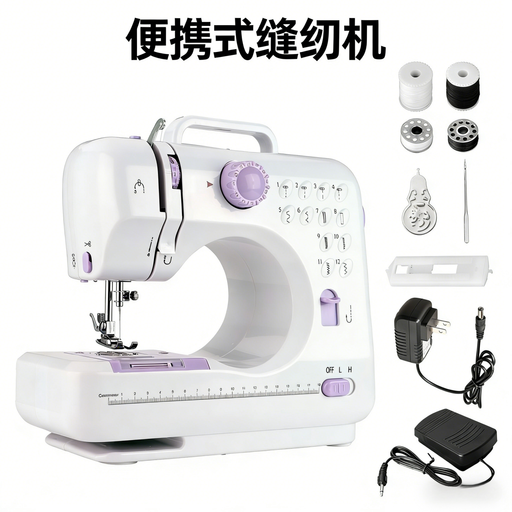
Consider this portable model if the group wants a machine for short sewing projects. Its title lists 12 stitches, dual power and an LED light; confirm which stitches are included and whether stitch length can be adjusted before relying on it for the elastic join.
 No image available
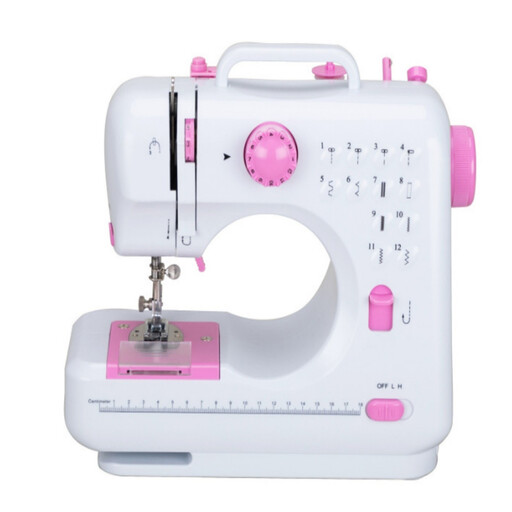
This pink variant is another portable option for the group’s sewing sessions. Its title lists 12 stitches, dual power and an LED light; check the actual stitch selection, stitch-length adjustment and threading arrangement for this variant.
 No image available
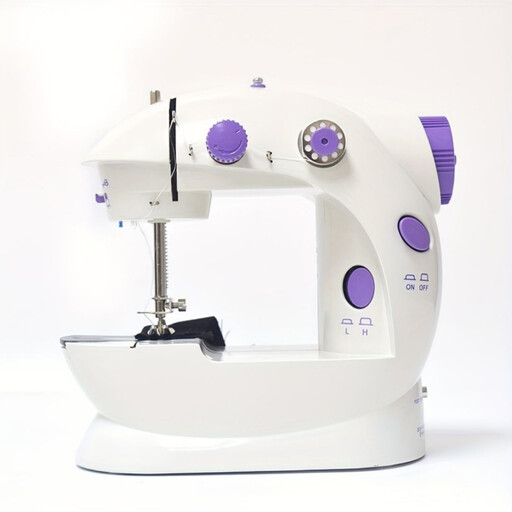
Consider this model for occasional simple sewing only after checking that its stitch can make the seams your scrunchie method requires. Its title lists a pedal, plug-in or 4AA-battery power, thread shuttle cores, a spare needle and a threading device. The stated limitation is a single stitch type with fixed width and length; confirm its identity before planning to stitch the elastic join.
No overlocker is needed for the Crafter’s Companion method: it uses an ordinary sewing machine and a small zig-zag stitch to join the elastic. Check that the machine you choose can make that join.
An electronic model with speed control is worth considering when several less-experienced people will take turns; a simple mechanical model can suit occasional work with a confident operator. Compare the exact models’ pace controls, threading and bobbin setup.
Test the chosen fabric, thread and elastic on offcuts before starting the batch. Check the fabric seam, stitch length and elastic join; Crafter’s Companion’s method uses a small zig-zag stitch to join the elastic.
Use equipment suited to the task and electrical supply, as advised by the Health and Safety Executive. Check the plug and cable before use, keep the operating instructions accessible and unplug the machine before inspection or maintenance.