Volunteer groups learning together
Where beginners and occasional users share a machine, straightforward threading, visible bobbin loading and manageable controls can make it easier to return to a familiar setup between sessions.


For straightforward shoe bags, start with a domestic sewing machine that volunteers can set up easily, then test it on a sample of the finished bag seam. If the design includes canvas, webbing or several bulky layers, consider a sturdier model with relevant feeding or presser-foot adjustments—but test the actual construction before buying for the whole project. Shared use also calls for operator instruction and an electrical-maintenance routine suited to the venue.
Where beginners and occasional users share a machine, straightforward threading, visible bobbin loading and manageable controls can make it easier to return to a familiar setup between sessions.
Projects using lining, canvas-like fabric, webbing or bulky seam allowances need to judge the machine against the thickest completed section, not a single layer of cloth.
Organisers need to consider storage, instruction, maintenance and access to servicing alongside the machine itself. The Health and Safety Executive advises switching power off for adjustments and needle changes; Janome advises checking its authorised retailer route for after-sales care.
Settle the bag fabric and construction before choosing a machine. Then assess how volunteers will learn to use it, how often it will run and what the shared venue needs.
| Concern | What to check | Who this matters to |
|---|---|---|
| Finished seam bulk | Test straight and reverse stitching at the thickest seam intersection. If the design is bulky, consider presser-foot clearance, adjustable foot pressure and the machine’s stated feeding capability. | If our bags have lining or webbing, I need the machine to sew the completed seam, not just the outer cloth. Around 31% of consumers put handling the finished material stack first. |
| Shared setup | Look at threading, bobbin loading and stitch selection; check whether speed can be limited while volunteers learn. | When different volunteers take turns, I need a setup they can learn and repeat without losing time at every session. For around 31% of consumers, ease of training is the primary concern. |
| Repeat use and support | Check construction and carrying weight alongside warranty terms, servicing arrangements and access to compatible consumables. | If we sew regularly, I need a machine the group can store, maintain and get help with when necessary. Keeping repeat sessions running comes first for around 23% of consumers. |
| Venue readiness | Plan instruction, lighting, cable placement and pre-use checks; set inspection arrangements according to the equipment and setting. | Before volunteers begin, I need a work area and equipment routine suited to a shared session. Around 15% of consumers make safe shared use their leading concern. |
Decorative stitches do not show whether a machine will feed the bag’s thickest seam, particularly where lining, binding or webbing meets an allowance.
Make a sample with the intended materials and test straight stitches, reverse stitches, corners and the bulkiest intersection before committing to machines for the project.
A sturdier machine may be less convenient to move or store, while a basic one still needs testing if the bag design turns out to be bulky. A heavy-duty label does not settle either question.
Decide on fabric, lining, closures and expected frequency of use, then choose the machine route that handles a completed sample.
The Health and Safety Executive says portable-appliance inspection and testing arrangements depend on the equipment and its environment; its guidance does not prescribe an annual PAT test for every appliance.
Use visual checks and a venue-appropriate maintenance routine. Keep cables out of walkways, instruct operators and switch the machine off for needle changes or adjustments, as the Health and Safety Executive advises.
A group using one machine across repeated sessions needs a workable route for servicing and compatible accessories. Janome says purchasing through an official UK retailer matters for its after-sales care and warranty.
Check the exact model’s warranty terms, seller and service contact, and the availability of suitable needles, bobbins and feet before ordering.
Janome offers domestic-machine routes ranging from the beginner-oriented Sewist 725S to the HD2200, which Janome positions for schools and heavy users.
Brother’s Innov-is A16 is an electronically controlled domestic option for groups that want manageable speed and a repeatable setup for different volunteers.
SINGER positions its Heavy Duty domestic range for thicker fabrics and long seams, a route to examine if the finished shoe-bag design calls for heavier work.
These compact IAGREEA machines are options to examine for straightforward shoe-bag seams and simple controls. Test either one on the finished bag materials before relying on it for a group project, especially if the design includes bulky intersections.
 No image available
Consider this compact machine for straightforward bag-seam samples; check the completed material stack before using it for project production.
The product title specifies 12 stitches, dual power and an LED light. Confirm the intended power arrangement, warranty and servicing with the seller.
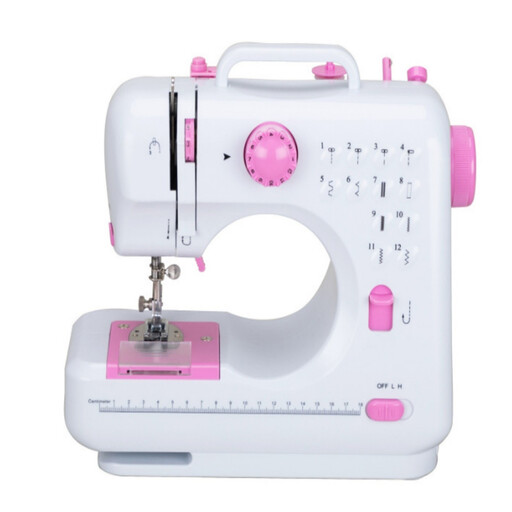 No image available
This compact option is relevant to simple stitching tasks, provided it passes a test on the group’s complete bag seam.
The product title specifies 12 stitches, dual power and an LED light. Check the operating controls, power arrangement, warranty and servicing with the seller.
Not automatically: start by testing a domestic sewing machine on the completed seam of an ordinary woven shoe bag. If the design has repeated thick intersections, webbing or heavier cloth, examine a sturdier route. Janome positions the HD2200 for schools and heavy users, while SINGER describes its Heavy Duty range for thicker fabrics; neither statement guarantees a match for your construction.
Easy threading, straightforward bobbin loading and controllable speed can make a shared setup easier to teach. Brother lists those features on the Innov-is A16, while Janome lists a built-in threader and top-loading bobbin on the Sewist 725S. Let volunteers practise with the thread and fabric the project will use.
No fixed annual interval applies to every portable appliance. The Health and Safety Executive says inspection and testing arrangements should reflect the equipment and environment; visual checks remain important. Agree a suitable maintenance routine with the person responsible for equipment at the venue.
Plan instruction, suitable lighting, clear walkways and checks of the machine and work area before use. The Health and Safety Executive’s sewing-machine guidance advises switching power off for adjustments and needle changes. Apply its machinery-safety principles to the domestic equipment and participants at your venue.
Confirm the exact model’s warranty terms, seller, service contact and access to compatible accessories. For Janome machines, Janome says an official UK retailer is important for after-sales care and warranty; check the relevant arrangements for whichever machine the group selects.