What matters when choosing?
Match the machine to your thickest planned bag seam before comparing convenience features. For a kitchen table that must be cleared after sewing, the space and effort involved in setup are part of that decision.
Basic domestic machine
Consider it when: You make occasional bags from manageable woven fabrics and need to put the machine away after each session.
Trade-off: Confirm suitability for your thickest handle join rather than assuming that a machine suited to flat seams will manage every layered section.
Heavier-duty domestic machine
Consider it when: Canvas bags and reinforced handles are regular projects, but you still need a home-table setup.
Trade-off: Model-specific material and seam limits still matter; a higher advertised sewing speed is not a thickness rating.
Industrial walking-foot setup
Consider it when: Heavyweight materials are routine and you can give the equipment a dedicated workspace.
Trade-off: The stand-and-table arrangement described by UK specialist retailer Direct Sewing Machines does not suit a kitchen table you need to clear after use.
| Concern |
What to check |
Who this matters to |
| Reinforced seams |
Check the intended fabric and layer count against model-specific guidance; ask about presser-foot lift and feeding at handle joins. |
If my bag body sews easily but its layered handle join does not, I need to judge the machine by that join. Around 36% of consumers put reinforced-seam capability first. |
| Easy setup |
Look at the threading steps, stitch controls and whether the machine offers reverse stitching for securing seam ends. |
For occasional sessions, I want to start a bag without spending much of the time working out the controls; easy setup comes first for around 29% of consumers. |
| Table use and storage |
Compare weight and footprint with your available surface and storage space; allow room to support the bag panels. |
When the kitchen table has other uses, I need a machine I can set up and move away comfortably. Around 21% of consumers prioritise temporary-table use and storage. |
| Seam control |
Check stitch-length control and reverse stitching; confirm the fit of any foot you want for layered topstitching. |
If neat topstitching is my main aim, I want control over straight seams rather than extra decorative stitches; around 14% of consumers put construction and finish first. |
Joybuy products for table-top sewing
These portable IAGREEA machines are choices to examine for occasional table-top sewing, not substitutes for a confirmed heavyweight-bag setup. Compare their seam-control functions and check your planned handle layers before choosing either one.
 No image available
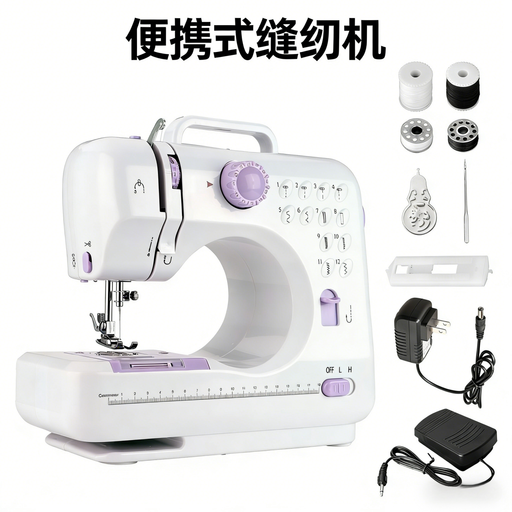
IAGREEA Mini Portable Electric Sewing Machine, 12 stitches, purple
Consider this model for occasional basic bag seams and hems where putting the machine away after use matters.
The product information lists 12 stitch patterns and forward and reverse stitching, with an approximate weight of 2.0 kg and dimensions of 28 × 12 × 24 cm.
For reinforced handles or shifting layers, confirm the intended seam thickness, presser-foot controls and compatibility with any walking foot before buying.
View on Joybuy
 No image available
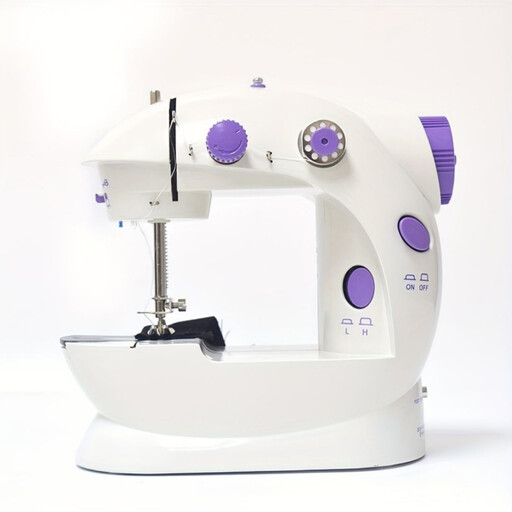
IAGREEA Portable Mechanical Household Sewing Machine, 6V 1A
This portable model is a choice for basic occasional sewing if its fixed stitch meets your bag-making needs.
The product information lists low and high speed settings, a pedal, 6V 1A power and a battery option using 4 AA batteries. It specifies one stitch type with fixed width and length, and no backstitch function.
Plan how you will secure seam ends without backstitching, and confirm suitability for your intended handle and corner layers before buying.
View on Joybuy
Frequently asked questions
Do I need a walking foot to sew shopping bags?
Not necessarily: a standard presser foot may be sufficient for an ordinary woven tote. If bag layers slip out of alignment, a compatible walking or even-feed foot is worth considering. The Sewing Directory describes a walking foot as useful for bag making, but you still need to confirm that the accessory fits your exact machine.
Can a domestic heavy-duty machine replace an industrial walking-foot machine?
Not automatically. A heavier-duty domestic machine may suit reinforced bags made at home, but its capabilities must be checked against the intended material and seam stack. UK specialist retailer Direct Sewing Machines describes industrial walking-foot equipment for repeated layers of thick material; that route also requires room for its setup.
What should I check before using a sewing machine on a kitchen table?
Check that the table can support the machine securely and that you have room for the bag panels, foot controller and cable without pulling the work sideways. Compare the machine’s weight and footprint with the space where you will store it; Janome UK & Ireland, for example, lists the 2200XT at 6.0 kg and the HD2200 at 8.0 kg.
How can I check a machine for safety alerts before buying?
Identify the exact model and check the UK product-safety alerts, reports and recalls service published by the Office for Product Safety & Standards. Keep the machine’s model and serial details, especially when purchasing second-hand, so you can identify alerts that apply to it.


