For an occasional table runner with straightforward seams and hems, start by looking for a domestic machine with a dependable straight stitch and adjustable stitch length. If you plan to piece patchwork or quilt several layers, give more weight to a compatible walking or even-feed foot and enough support for the fabric; check whether those accessories come with the exact model.
Who is sewing the runners?
First-time table-runner makers
If your plans centre on simple seams and hems, focus on stitch controls you can use comfortably. A straightforward domestic machine may suit occasional projects; consider quilting accessories if you later start sewing several layers regularly.
Patchwork and quilted-runner makers
Piecing and quilting put more emphasis on keeping layers aligned and supporting the fabric. The Sewing Directory describes a walking foot as helpful for preventing layers from slipping; check the foot's compatibility with the machine you choose.
Home-decor sewists using denser fabrics
If runners are part of wider home-decor sewing, compare the exact machine's stated fabric uses and presser-foot-pressure controls. Claims about sewing thicker fabric do not, by themselves, establish how the machine will handle quilted layers.
What matters when choosing?
Decide whether you mainly need simple construction, control over quilted layers, room for bulkier work or flexibility across fabrics. A machine chosen for one of those jobs may still need a separate accessory for another.
| Concern | What to check | Who this matters to |
|---|
| Layered feeding |
Check for an included or model-compatible walking or even-feed foot, or an integrated dual-feed system. |
If I quilt a pieced runner, I want its layers to stay aligned as I stitch; around 33% of consumers put layered-feed control first. |
| Simple setup |
Check the straight-stitch controls, adjustable stitch length and threading arrangement. |
When I am learning to make basic seams and hems, I want controls I can manage without quilting features I will not use; roughly 27% of consumers prioritise an easy start. |
| Workspace |
Compare the stated sewing space and whether an extension table is included or available. |
For longer runners or repeated quilting, I want room to support the fabric instead of managing it all beside the needle; about 20% of consumers put workspace first. |
| Fabric versatility |
Check stated fabric uses, presser-foot-pressure adjustment and suitable accessories for the exact model. |
If I switch between lighter cloth and denser home-decor fabric, I need to assess how each will feed; around 20% of consumers make fabric versatility their primary concern. |
Buying pitfalls
-
Assuming any walking foot will fit
An attachment needs to suit the machine's fitting and the stitches you intend to use.
Check the exact model against the manufacturer's compatibility information before choosing a foot.
A compatible foot may need to be bought separately.
-
Choosing by stitch count alone
For pieced or quilted runners, fabric support, seam-making accessories and layer feeding may matter more to the construction process than additional decorative stitches.
Decide whether you will quilt layers before comparing stitch lists; then check the included feet and work surface.
-
Treating “heavy-duty” as a quilting feature
A machine described for thicker fabric does not necessarily include a way to control how quilt layers feed together.
Check fabric suitability and layered-feed accessories separately for the exact model and bundle.
-
Overlooking the seller and delivery market
Janome says buying through an official UK retailer matters for its after-sales care and warranty. A mains-powered machine also needs to be suitable for its delivery market.
For a Janome machine, check the retailer through Janome's UK network. For any mains-powered model, confirm the plug, voltage and product documentation with the seller.
Relevant brands to consider
Janome
Janome's 5060QDC is a model to examine if you expect to piece and quilt runners and want accessories supplied with the machine.
- Janome lists an extension table, a 1/4-inch seam foot and an even-feed foot with guide for the 5060QDC.
- Check the current 5060QDC bundle: those accessories should not be assumed to come with other Janome models.
PFAFF
The PFAFF ambition 610 is relevant if you want integrated top-and-bottom feeding and more stated sewing space for regular quilting.
- PFAFF lists its IDT integrated dual-feed system and 200 mm sewing space for the ambition 610.
- IDT and the stated workspace are model-specific; check the specifications of any other PFAFF machine separately.
SINGER
The M2605 offers basic stitch controls, while the Heavy Duty 4432 is a separate model to assess for denser home-decor fabrics.
- SINGER lists 21 stitches and adjustable stitch length for the M2605, and adjustable presser-foot pressure for the 4432.
- Before choosing either model for quilted runners, confirm its exact walking-foot compatibility and accessory bundle.
Joybuy options for basic sewing
These portable IAGREEA machines are options to assess for occasional, straightforward seams. If your runners will be quilted or bulky, check the exact model's layered-feed accessories and usable sewing area before choosing either one.
 No image available
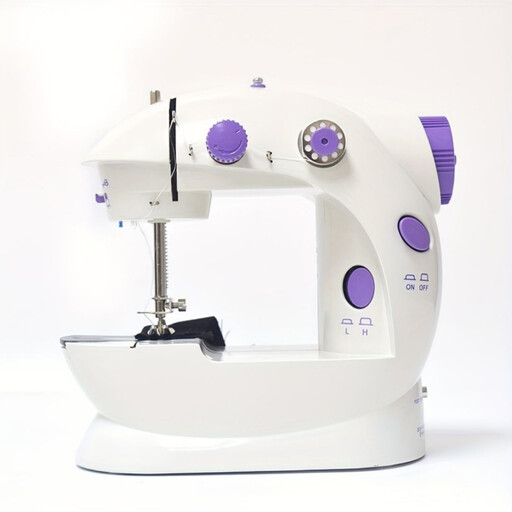
IAGREEA Mini Portable Electric Sewing Machine, 12 Stitches, Purple
Consider this for occasional basic seams and hems rather than assuming it will handle layered quilting.
The product name lists 12 stitches, dual power and an LED light. Before making a quilted or long runner, check compatible feed accessories and the usable sewing area. Confirm the plug, voltage and documentation for your delivery location.
Joybuy
 No image available
IAGREEA Portable Electric Sewing Machine with Pedal, 6V 1A
Consider this for simple, occasional seams only if its stitching limits suit how you plan to finish the runner.
The product name lists pedal operation, 6V 1A power and battery or plug-in use with 4AA batteries. Its stated limitations are one stitch type, fixed stitch width and length, and no backstitch. Check the usable sewing area, compatible feed accessories and delivery-market details before buying.
Joybuy
Questions about table-runner sewing
Do I need a walking foot to sew a table runner?
Not for every simple runner. A walking or even-feed foot becomes more relevant when quilting several layers or trying to keep them from shifting; The Sewing Directory describes its use for this purpose. Check compatibility with the exact machine before buying an attachment.
Does a table runner require a large sewing area?
A small, lightly layered runner does not necessarily require one, but extra support can be useful as the fabric becomes longer or bulkier. Compare the stated space and included table for the exact model: Janome lists an extension table with the 5060QDC, while PFAFF lists 200 mm sewing space for the ambition 610.
Can a heavy-duty machine replace a walking foot?
A heavy-duty designation does not establish that a machine will keep quilt layers aligned. Assess its stated suitability for your fabric separately from whether it includes, or accepts, a layered-feed accessory.
Where should I buy a Janome machine if after-sales support matters?
Janome says purchasing through an official UK retailer is important for its after-sales care and warranty. Check the retailer through Janome's UK network, then confirm the terms for the exact machine.


