What matters when choosing?
Decide how demanding the group’s fabric and workload will be, then consider how confidently different volunteers can set up and control the machine.
Robust mechanical machine
Consider it when: Regular shared use makes a solidly built, dial-operated machine appealing; Janome positions the HD2200’s metal body for schools and heavy users.
Trade-off: The HD2200’s stated 8.0 kg weight deserves attention if volunteers carry it between venues.
Computerised machine with setup aids
Consider it when: Volunteers value controlled speed and help with threading and corner turns; Brother lists these controls for the Innov-is A16.
Trade-off: Check the actual bunting layers before relying on Brother’s stated ability to feed heavier or layered fabrics.
Speed-oriented mechanical machine
Consider it when: Repeated production and thicker sections make presser-foot clearance and fabric control priorities; SINGER lists both on the Heavy Duty 4423.
Trade-off: Its stated maximum of 1,100 stitches per minute does not mean inexperienced users will finish accurate seams faster.
| Concern |
What to check |
Who this matters to |
| Repeated seams and layers |
Check fabric feeding, presser-foot adjustment and clearance using the group’s intended fabric and thread. |
If we are making bunting repeatedly or joining several layers, I need the machine to handle those seams consistently. Around 42% of consumers put this fabric-handling need first. |
| Handover between volunteers |
Check threading and bobbin access, stitch selection and whether users can control the sewing pace. |
When volunteers have different levels of experience, I want each person to be able to take over without a difficult setup. For around 33% of consumers, ease of shared use comes first. |
| Moving and finishing work |
Compare stated weight and storage arrangements; check stitch-width and decorative options if visible finishes matter. |
If we carry the machine between venues or make decorative edges, I need its transport and stitch options to suit that work. This is the leading concern for around 25% of consumers. |
Joybuy product choices
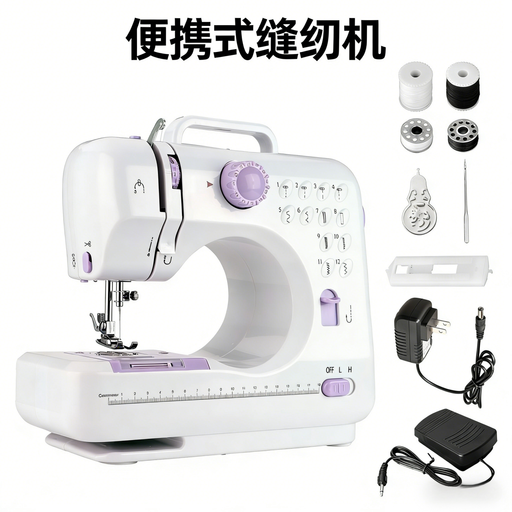
This mini machine is a choice to consider for basic bunting seams where portability matters. For repeated group production or layered fabric, assess it against the actual workload before choosing it.
 No image available
IAGREEA Mini Portable Electric Sewing Machine, 12 stitches, purple
Consider its mini format for basic bunting work that requires a machine to be moved between locations; check how it handles the intended layers before relying on it for repeated group sewing.
The product name specifies 12 stitches, dual power and an LED light. Confirm the power arrangement and electrical suitability for the venue before use.
Joybuy
Common questions
Do we need a heavy-duty machine for ordinary cotton bunting?
Not necessarily: for ordinary cotton bunting, start with a domestic machine whose straight stitch, fabric feed and stitch settings suit the intended seams. Consider sturdier construction and greater presser-foot clearance if the group sews frequently or uses several layers, and try the actual fabric stack before purchase.
What makes a machine easier for several volunteers to share?
Straightforward threading, an accessible bobbin, clear stitch selection and controllable speed can make handovers easier. Brother lists all four types of feature for the Innov-is A16; check the controls on any model the group considers and make sure volunteers can use them confidently.
Does a theatre group have to PAT-test its sewing machine every year?
For Great Britain, the Health and Safety Executive says annual portable-appliance testing is not itself a legal requirement. Electrical equipment must be maintained safely, with visual checks and an inspection or testing approach appropriate to the equipment and its environment; groups operating in Northern Ireland should confirm the provisions that apply there.
What should we check before using a newly delivered machine at a venue?
Visually check the machine, lead, plug, foot control and casing for damage, then follow its manual for setup and operation. The Health and Safety Executive recommends a simple visual check of new electrical equipment to make sure it has not been damaged.


