Volunteer-led lining teams
When beginners and occasional sewers take turns making lining seams, straightforward controls and manageable threading and bobbin steps help each person get started.


For a project mainly sewing straight seams in tote-bag linings, start with a domestic machine that volunteers can learn to operate and test it on the actual fabric. If bulky joins are routine, consider a model intended for multiple layers; computerised speed controls may help a mixed-experience team, but add controls everyone will need to learn.
When beginners and occasional sewers take turns making lining seams, straightforward controls and manageable threading and bobbin steps help each person get started.
If the project sometimes joins lining to outer fabric or includes interfacing and bulky seam allowances, test the planned layers rather than choosing solely for lightweight lining panels.
A machine shared across sessions needs a workable storage and transport plan, alongside checks that keep the equipment in suitable condition for use.
Begin with the lining seams the group will sew most often, then test the thickest planned join. Consider how easily volunteers can use and look after the machine between sessions.
| Concern | What to check | Who this matters to |
|---|---|---|
| Straight seams and feeding | Check stitch-length adjustment and sew a sample on the actual lining, including a seam intersection. | If my main job is sewing lining panels, I want the fabric to feed steadily without having to redo long seams. Around 37% of consumers would put seam consistency first. |
| Volunteer-friendly controls | Try the threading path, bobbin loading and stitch controls; consider whether a speed controller would help the team. | When volunteers have different levels of experience, I need them to get started without relearning a complicated setup each time. For around 27% of consumers, ease of operation would be the main concern. |
| Layered joins | Test the thickest planned fabric stack with the intended needle and thread; check any model-specific claims about multiple layers. | If our bag corners bring several layers together, I need to know the machine can sew that particular join before we make a batch. Around 18% of consumers would prioritise layered-seam tolerance. |
| Shared use and upkeep | Check weight, storage arrangements, warranty route and the condition of the plug, cable and foot controller. | When I organise repeat sessions, I need a machine we can store, move and check safely between uses. Shared-project practicality would come first for around 18% of consumers. |
Most lining seams call for a suitable straight stitch and predictable fabric feeding; a larger decorative-stitch selection does not show how a machine will handle your fabric.
Sew trial seams on the lining and at the thickest planned corner, then compare the controls volunteers will actually use.
A claim about canvas or multiple layers cannot establish how a machine will sew your particular combination of fabric, interfacing and seam allowances.
Test that combination with a suitable needle and thread, and reduce seam bulk where the pattern permits.
A machine that suits the sewing task may still be awkward if volunteers must carry it to a venue or put it away after every meeting.
Decide where it will live, who will move it and whether its weight and cover suit that arrangement.
The Health and Safety Executive says visual examination is essential and that inspection and testing frequency depends on the equipment and its environment; it does not prescribe a universal annual portable-appliance-testing interval.
Arrange routine visual checks and competent inspection or testing where the venue and equipment risks call for it.
These ranges illustrate different approaches to lining work; compare the exact model and its controls rather than treating a brand name as a guarantee of suitability.
Janome UK & Ireland lists the two-dial 2200XT, the metal-bodied HD2200 and the computerised 230DC as distinct domestic options.
The mechanically controlled HF37 is an option to examine when lining work may also include canvas or several fabric layers.
JUKI UK presents the computerised HZL-G220 as a route for groups interested in feed controls and more space around larger work.
BERNINA's 3 Series provides another domestic-machine range to compare when workspace and controls are important.
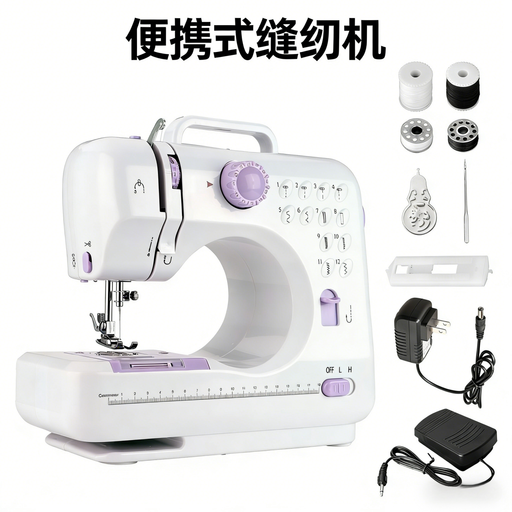
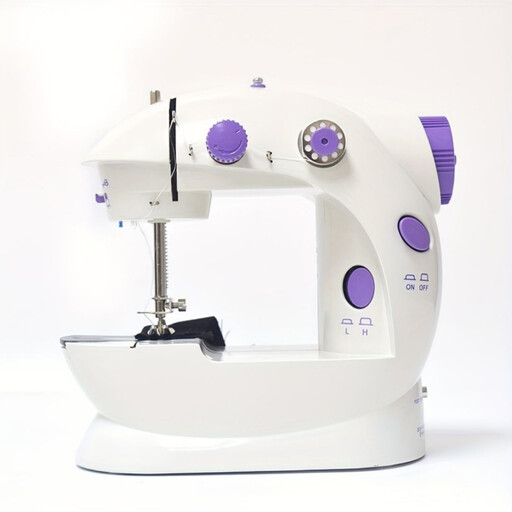
These portable IAGREEA machines relate to basic lining seams and straightforward controls. Check each machine's stitch settings and trial your project fabric before deciding whether it suits repeated group use.
 No image available
A portable option to consider for basic lining seams and hems when the group wants a compact machine.
The product name lists 12 stitches, dual power and an LED light. Check its stitch-length settings, plug compatibility and warranty arrangements, and trial the lining and thickest seam before batch sewing.
 No image available
This simpler portable option may suit a group concentrating on basic straight sewing, provided its stitch settings meet the project's needs.
The product name lists a pedal, battery or plug-in power, thread shuttle cores, a spare needle and a threading device. Its described fixed stitch settings and lack of backstitch make it important to plan how seam ends will be secured; also check plug compatibility and trial the thickest planned join.
Usually not when the project is limited to lightweight-to-medium lining fabric and ordinary seams. If it regularly includes thicker outer fabric or bulky corners, consider a machine intended for layered work and test the thickest planned join with the intended needle and thread.
A simple mechanical machine suits straightforward seams when volunteers need controls they can learn quickly. Consider a computerised model if the team will make use of features such as a maximum-speed controller or managed feeding, allowing time to teach those controls.
The Health and Safety Executive does not prescribe a universal annual portable-appliance-testing interval. Visual examination is essential, and the appropriate inspection and testing frequency depends on the equipment and its environment; agree a routine suitable for the project venue.
Visually check the machine, plug, cable and foot controller for damage, and stop using damaged equipment. The Health and Safety Executive notes that visual checks can reveal many defects, but they do not replace competent further inspection or testing where it is needed.
Confirm the exact seller's warranty and repair route, along with access to compatible needles, bobbins and presser feet. Support terms can vary by seller and model; for machines it supplies, JUKI UK states a two-year back-to-base manufacturer guarantee.