For occasional tote-lining seams in a small craft room, start by considering a mechanical machine with adjustable stitch length and enough space to support the fabric while you sew. A computerised model with speed control and needle-up/down operation is worth considering if corners are your main difficulty; frequent thick seam crossings call for closer checks of feeding, presser-foot clearance and pressure adjustment. A machine’s small size alone does not establish how it will handle your materials.
Who needs which features?
Occasional sewists with limited storage
If you put your machine away after short lining projects, consider its weight and the space needed to support a tote panel while sewing. Janome UK & Ireland describes the J3-18 as suitable for occasional sewing and states a weight of 6.0 kg.
Learners working on corners and topstitching
If slowing down and pivoting neatly matter more to you than a large stitch selection, look at speed and needle-position controls. Brother identifies the Innov-is A16 needle-up/down button as useful for pivoting corners.
Frequent makers of layered bags
If linings regularly meet interfacing, outer fabric or webbing, assess the thickest seam crossing you plan to sew. Janome UK & Ireland lists adjustable foot pressure for the 423S; Brother says the Innov-is A16 feed system can tackle multiple layers, a claim to check against your own materials.
What matters when choosing?
For tote linings in a small craft room, decide how the machine will be stored, how much control you want at corners and whether thicker material crossings are a regular part of the project.
| Concern |
What to check |
Who this matters to |
| Storage and workspace |
Check the machine’s dimensions and weight, then allow clear tabletop space to support the tote pieces. |
If I need to lift the machine into storage after each short session, its size and weight may decide what I can comfortably use. Around 39% of consumers would put storage and liftability first. |
| Seam and corner control |
Look for adjustable stitch length; check speed control and needle-up/down operation if you want help pacing or pivoting. |
When I am learning to turn lining corners or topstitch slowly, control matters more to me than extra decorative stitches. Around 38% of consumers would make seam control their primary concern. |
| Layered seam crossings |
Check the exact model’s fabric guidance and presser-foot clearance; try your intended fabric stack where possible. |
If interfacing, outer fabric or webbing regularly meets at a seam, I need to judge the machine against that crossing, not the lining alone. For around 23% of consumers, handling layers would come first. |
Mistakes to avoid
-
Choosing by machine footprint alone
A small machine still needs room around the needle for the tote panel. SINGER Europe states 148 mm of needle-to-tower space for the Simple 3223G; that measurement does not describe your available tabletop support.
Measure both the storage spot and the working surface, then compare the dimensions and table arrangement of the exact machine.
-
Assuming every machine will sew the thickest crossing
Features and material-handling claims apply to specific models. Brother’s multiple-layer claim for the Innov-is A16, Janome’s adjustable foot pressure on the 423S and SINGER Europe’s extra-high presser-foot lifter on the Simple 3223G do not establish suitability for every fabric stack.
Identify your thickest planned crossing and check the model manual, needle guidance and clearance. Test the intended materials if possible.
-
Treating a warranty as the only option when something is faulty
GOV.UK explains that the Consumer Rights Act 2015 addresses faulty goods, including repair or replacement. A manufacturer warranty and a retailer’s returns process are separate from statutory protections.
Keep your proof of purchase and model details, and check the seller’s contact and returns information before ordering.
Brands to consider for these needs
Janome
Janome UK & Ireland lists different features for two relevant domestic models: the J3-18 for occasional sewing and the 423S for buyers considering adjustable foot pressure.
- The J3-18 has variable stitch length and a free arm, with a stated weight of 6.0 kg.
- The 423S has a stated weight of 7.4 kg, which is worth considering if you must lift it into storage after every session.
Brother
The Innov-is A16 is a model to consider when controlled speed and corner pivoting are priorities.
- Brother lists a slide speed control, quick-set bobbin and needle-up/down operation for the A16.
- Brother’s statement that its feed system can tackle multiple layers applies to the A16; check it against the materials you intend to sew rather than extending it to other models.
SINGER
SINGER Europe lists the Simple 3223G as a mechanical option with a free arm and an extra-high presser-foot lifter.
- The Simple 3223G listing specifies 23 stitches and 148 mm of needle-to-tower sewing space.
- Check the exact UK-stock variant’s accessories, electrical configuration, warranty and support before relying on the European model details.
Joybuy machines for simple sewing
These mini IAGREEA machines are choices to assess for simple sewing when storage space is limited. Compare their stitch controls and check your intended lining and seam crossings before deciding whether either suits your tote projects.
 No image available
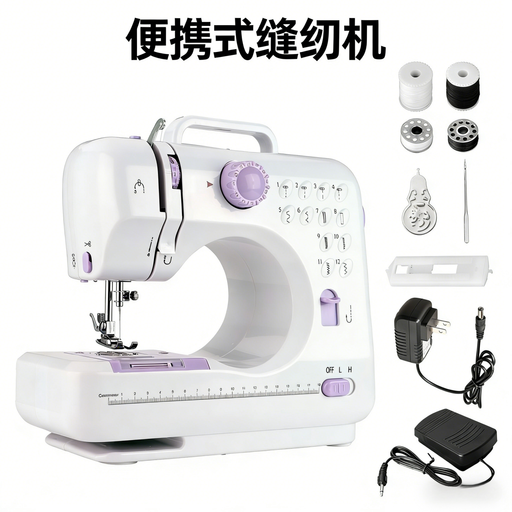
IAGREEA Mini 12-Stitch Dual-Power Sewing Machine, Purple
Consider this mini machine for simple seams if its format fits your storage space and its controls suit your work. The product name specifies 12 stitches, dual power and an LED light. Check stitch-length adjustment and how the machine handles your intended lining and thicker seam crossings before buying.
View on Joybuy
 No image available
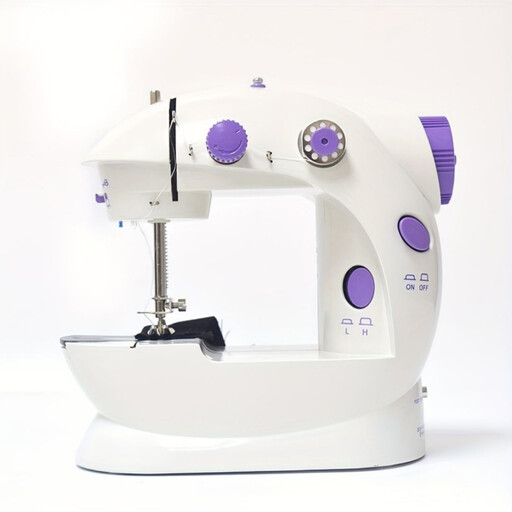
IAGREEA Portable Mechanical Sewing Machine with Pedal, 6V 1A
Consider this mini machine for basic seams only if its limited stitch controls fit your plans. Its listed configuration has pedal operation and battery or plug-in power using 4AA batteries or 6V 1A power. The product description specifies one stitch type, fixed stitch width and length, and no backstitch function; check its full dimensions and clearance if storage or thicker crossings matter.
View on Joybuy
Frequently asked questions
Is a mechanical machine enough for tote bag linings?
A mechanical machine is a sensible option for occasional lining seams if its straight-stitch controls and adjustable stitch length meet your needs. Janome UK & Ireland lists variable stitch length on the J3-18 and describes it as suitable for occasional sewing. If your bags regularly include thick intersections, assess the exact machine against those materials too.
What helps when sewing lining corners?
A controllable sewing speed and the ability to stop with the needle down can make pivoting easier. Brother identifies the Innov-is A16 needle-up/down button as useful for corners, but that particular control is not essential to every suitable machine.
How should I clean the machine?
Follow the instructions for your exact model and unplug it before cleaning. Brother advises that dust in the bobbin case can affect sewing performance and that the machine should be unplugged before cleaning; undertake other servicing only as permitted by your model’s manual.
Does a manufacturer warranty replace my rights if the machine is faulty?
No. A manufacturer warranty is separate from statutory consumer protections. GOV.UK explains that the Consumer Rights Act 2015 addresses faulty goods, including repair or replacement; keep your proof of purchase and check the seller’s process for reporting a fault.


