For straightforward woven pillowcases, start with a domestic sewing machine that can make the hems and straight seams you need; French seams can enclose raw edges without an overlocker. A basic mechanical machine can suit small batches, while speed control may help with repeated work and a heavy-duty domestic model is worth considering if bulkier layers are a priority. Check the exact machine's seam controls before buying, and prepare fibre-content labels for pillowcases you intend to sell.
Who is this for?
First-time craft-fair pillowcase makers
If you are learning to make consistent hems and enclosed seams, straightforward setup matters more than a long stitch list. We're In Stitches describes a basic pillowcase as a project with two hems and two seams; its French-seam approach offers an enclosed finish without an overlocker.
Small-batch makers focused on throughput
If you expect to repeat the same seams across a larger batch or sew occasional bulkier hems, look closely at fabric-handling controls as well as stated sewing speed. Singer describes adjustable presser-foot pressure and an extra-high presser-foot lift on its Heavy Duty 4423; those features should not be assumed across its range.
Makers planning other sewing projects
If pillowcases are your starting point, speed control and easier threading may also be useful for later projects. Janome lists these features for the 230DC, while Brother lists speed control and a one-action needle threader for the Innov-is A16.
What matters when choosing?
Decide how many pillowcases you expect to make and whether your fabric creates bulky hems; then compare the controls on the exact models you are considering.
Basic mechanical machine
Consider it when: You are making a modest batch of straightforward woven pillowcases and prefer physical controls. Janome describes its 224A as an entry-level mechanical model.
Trade-off: Check the exact model's controls and included feet rather than assuming it has the convenience features of the computerised models discussed here.
Computerised machine
Consider it when: You want to limit sewing speed or value threading assistance across repeated sessions. Janome lists a maximum-speed controller for the 230DC, and Brother lists slide speed control for the Innov-is A16.
Trade-off: Extra stitch choices do not change the basic hems and seams needed for a conventional pillowcase.
Heavy-duty domestic machine
Consider it when: Repeated production or occasional thicker layers are your main concern. Singer specifies pressure adjustment and an extra-high presser-foot lift for its Heavy Duty 4423.
Trade-off: Singer's stated speed of 1,100 stitches per minute for that model does not replace accurate seam control or testing on your intended fabric.
| Concern |
What to check |
Who this matters to |
| Simple, repeatable seams |
Check straight-stitch and stitch-length controls, seam reinforcement and the included general-purpose foot on the exact machine. |
For a first batch, I want to set up the machine and make consistent hems without managing controls I will not use; roughly 33% of consumers would put straightforward construction first. |
| Batch work and fabric bulk |
Compare stated sewing speed, presser-foot pressure adjustment and clearance where your fabric or layered hems call for them. |
When I am making many pillowcases or handling thicker hems, keeping the fabric under control matters throughout the run; around 42% of consumers would prioritise batch work and fabric handling. |
| Controls for other projects |
Look for speed control and threading assistance you expect to use; assess additional stitches against your planned projects. |
I want a manageable pace now and controls I can use for other sewing later; approximately 25% of consumers would make flexibility their primary concern. |
Buying pitfalls
-
Assuming pillowcases require an overlocker
A standard sewing machine can make a basic pillowcase. The French-seam method described by We're In Stitches encloses raw edges without a separate overlocker.
Test a French seam on your intended woven fabric, including the finished seam allowance and any bulky areas, before making sale stock.
-
Choosing by decorative-stitch count
Conventional pillowcase construction centres on hems and seams, so more stitch options alone do not establish a smoother production workflow.
Work out your batch size and fabric thickness, then compare the exact machine's seam controls, speed control and included feet.
-
Assuming an overseas variant has the supply details you need
A visually similar machine may come with different supplied equipment or support arrangements. GOV.UK's electrical-equipment guidance addresses products placed on the Great Britain market; it should not be treated as a statement of the rules for Northern Ireland.
Confirm the exact model, supplied plug and instructions, seller identity and warranty provider before ordering.
-
Leaving fibre labelling until the fair
The fibre information on finished pillowcases is a separate consideration from choosing the machine. GOV.UK says textile labels in Great Britain must show fibre content; Northern Ireland guidance from nibusinessinfo.co.uk specifies further presentation requirements for consumer textile labels.
Keep a record of your fabric composition and check the labelling requirements applicable to your finished pillowcases before preparing stock for sale.
Brands to consider for these machine types
Janome
Janome describes the 224A as an entry-level mechanical model and the 230DC as a computerised domestic machine.
- Janome lists 30 built-in stitches, a maximum-speed controller and a top-loading bobbin for the 230DC.
- Those 230DC features do not describe the 224A or every Janome machine; compare the exact model and its included accessories.
Singer
Singer's Heavy Duty 4423 is a domestic model to examine when repeated seams or occasional bulkier layers shape the choice.
- Singer specifies adjustable presser-foot pressure, an extra-high presser-foot lift and a stated speed of 1,100 stitches per minute for the 4423.
- That stated speed does not establish how quickly you will finish accurate pillowcases, and the model-specific features should not be attributed to other Singer machines.
Brother
Brother's Innov-is A16 is a computerised option for makers interested in controlled operation and setup features.
- Brother lists slide speed control, a one-action needle threader, a quick-set bobbin and needle-up/down control for the Innov-is A16.
- Those controls may be useful for other projects, but they are not required to sew conventional pillowcase seams.
Joybuy product choices
These compact IAGREEA machines are options to assess for straightforward pillowcase hems and seams. Before planning a repeated production run, check the seam controls and included equipment on the exact colour variant you choose.
 No image available
IAGREEA Mini Portable Electric Sewing Machine, 12 stitches, purple
For a first pillowcase batch, consider this compact machine if its seam controls suit your fabric and intended finish.
The product title specifies 12 stitches, dual power and an LED light. Check stitch-length adjustment, the included presser feet, supplied UK plug and warranty arrangements before relying on it for repeated seams.
View on Joybuy
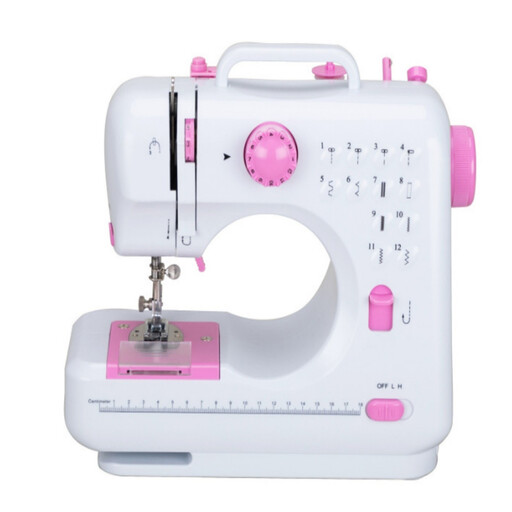 No image available
IAGREEA Mini Portable Electric Sewing Machine, 12 stitches, pink
For straightforward hems and seams, assess this portable option against the fabric and batch size you have in mind.
The product title specifies 12 stitches, dual power and an LED light. Check reverse or lock stitching, stitch-length adjustment, bobbin setup, supplied UK plug and warranty arrangements before making repeated sale stock.
View on Joybuy
Questions about making and selling pillowcases
Do I need an overlocker to make craft-fair pillowcases?
No: a standard sewing machine can make a basic pillowcase, and a French seam can enclose raw edges without an overlocker. Test the seam allowance and finished bulk on your intended woven fabric before making a batch.
What fibre information should I put on pillowcases sold at a UK craft fair?
Finished pillowcases sold to consumers need applicable fibre-content labelling, not a label describing the sewing machine. GOV.UK says textile labels in Great Britain must show fibre content, including the content of each component where applicable; Northern Ireland guidance from nibusinessinfo.co.uk also addresses the language, durability, legibility and accessibility of consumer labels. Check the rules for your product and sales location before printing labels.
What should I check on a mains-powered machine for UK use?
Confirm that the exact machine is intended for your market and check its supplied plug, instructions and warranty route before purchase. GOV.UK's electrical-equipment guidance concerns placing products on the Great Britain market; do not assume it gives the same requirements for Northern Ireland or that a similar-looking overseas variant has identical supplied equipment.


