What matters when choosing?
Decide what the thickest seam will contain, then consider how many volunteers will set up the machine and whether the bags will be made regularly or only occasionally.
| Concern |
What to check |
Who this matters to |
| Bulky seam handling |
Sew a sample of the thickest planned intersection; check how it feeds and whether the presser foot clears it. |
If the bag combines heavy fabric, lining or webbing, I need the machine to cross those joins repeatedly without relying on a claim about single fabric layers. Around 42% of consumers put thick-seam handling first. |
| Shared setup |
Try threading and bobbin insertion, and check whether volunteers can identify the controls they will use. |
When different volunteers share the machine, I want each person to get started confidently without a lengthy reset. Around 33% of consumers make straightforward shared setup their primary concern. |
| Simple occasional use |
Check the stitch adjustments needed for the pattern and whether the machine is practical to move and store. |
For occasional runs of uncomplicated woven bags, I would rather use the stitches I need than manage features the group will rarely touch. About 25% of consumers prioritise a simple setup for occasional use. |
Relevant brands to consider
These examples illustrate different machine features for the peg-bag task; the observations apply to the named models, not every machine from each brand.
Brother
The HF37 Strong & Tough is a mechanical option to examine when the group expects thicker seam intersections and wants threading and bobbin aids.
- Brother lists 37 stitches, a needle threader, a quick-set bobbin and a levelling button on its J foot. Brother also claims the HF37 can sew through up to ten layers of canvas; test the planned bag materials rather than treating that claim as a pattern-specific guarantee.
- Brother lists a shorter warranty for commercial use than for other use. Confirm how the group's intended work is classified.
Singer
The Heavy Duty 4423 is a mechanical option to examine when repeated sewing, presser-foot clearance and adjustable pressure are priorities.
- Singer lists an extra-high presser-foot lift, adjustable presser-foot pressure and a top drop-in bobbin. Its stated maximum speed is 1,100 stitches per minute.
- A stated speed or heavy-fabric description does not show how accurately the group can sew its actual layered seams. Test the fabric stack and check the seller's warranty and support terms.
Janome
The 219S is a simpler mechanical example for straightforward woven bags when stitch adjustment and portability matter more than specialised thick-material features.
- Hampshire Sewing Machines lists 14 stitches, adjustable stitch length and width, a four-step buttonhole and an approximate weight of 5.4 kg.
- The same retailer listing says the 219S has no drop-feed facility. Test bulky intersections if the peg-bag design calls for them.
Joybuy products for simpler peg-bag projects
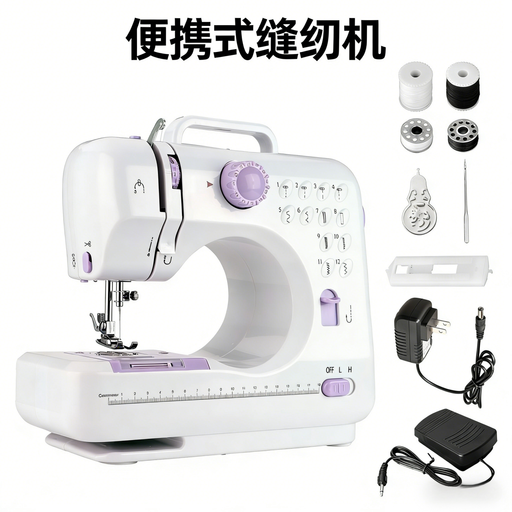
This compact sewing machine is a choice to examine for straightforward woven peg bags and shared basic use. If the group plans bulky intersections or repeated work in heavier fabric, judge it against a sample of the finished seam before deciding.
 No image available
IAGREEA Mini Portable Electric Sewing Machine, 12 Stitches, Dual Power, Purple
For straightforward woven peg bags, consider this compact option if it passes a test with the group's planned seams.
The product name specifies 12 stitches, dual power and an LED light.
Before relying on it for thicker joins, check presser-foot clearance and stitch adjustment against the pattern. Check the product documentation and applicable electrical marking before ordering.
Joybuy
Frequently asked questions
Do peg bags require a heavy-duty sewing machine?
No, not if the planned bags use straightforward woven fabric and the chosen machine handles the finished seams. A heavier-duty model is worth considering for repeated bulky joins, canvas-like fabric or webbing. Sew a sample of the thickest intersection with the intended materials before committing to a machine.
How should we choose between the Brother HF37 and Singer 4423?
Choose by the features your pattern and volunteers will use, then test the actual seam on the machine. Brother lists a levelling aid for thicker fabric and claims the HF37 can sew up to ten canvas layers; Singer lists an extra-high presser-foot lift and adjustable pressure for the 4423. Neither manufacturer statement establishes performance with your exact fabric and construction.
Will a theatre group get the same HF37 warranty as a home user?
Not necessarily. Brother lists a three-year HF37 warranty but specifies one year for commercial use. Ask Brother or the seller to confirm in writing which warranty term applies to the group's intended use.
What should volunteers do before sharing a new machine?
Use the exact model's manual to agree on threading, bobbin insertion and the controls needed for the bag pattern. Demonstrate the setup to each user and keep a sample of the planned fabric and seam construction for practice; follow that machine's manual for its maintenance instructions.
Which electrical marking should we check for a UK purchase?
Check the marking and documentation applicable to the machine and its destination. GOV.UK guidance says Great Britain recognises CE marking alongside UKCA marking under applicable product regulations, while Northern Ireland follows different processes. Use the destination-specific guidance rather than assuming one marking rule covers every part of the UK.


