For an initial run of zippered pencil cases, prioritise slow, controlled sewing, a zipper foot and dependable feeding through your intended fabric layers rather than a large stitch library. If you regularly sew bulky woven seams, test a mechanical or heavy-duty model with your complete material stack instead of relying on its label. Larger workspaces and faster workflow controls become more relevant when you make frequent batches or other sewn goods, but zip ends and thick crossings still call for a slower pace.
Who is this for?
First-time craft-fair pencil-case makers
If you are learning to install zips and turn neat corners, look for manageable setup and speed control. Brother lists a speed-control slider, quick-set bobbin, needle up/down control and zipper foot for the Innov-is A16.
Makers using layered fabrics
If your cases combine heavier woven fabric, lining and interfacing, test how a machine feeds your thickest seam crossing. Sewing Direct lists a metal interior frame and stainless-steel bedplate for the Singer Heavy Duty 4411; those features alone do not establish how it will handle your particular stack.
Makers producing frequent batches
If you repeatedly prepare stock for fairs, speed control and workspace may matter alongside careful sewing at zips. Janome lists a 255 mm workspace and a stated maximum of 1,200 stitches per minute for the Memory Craft 6700P; its maximum speed is not a target for precise corners.
What matters when choosing?
For craft-fair pencil cases, start with the thickest seam and the zip installation you intend to sew, then consider which controls would make your planned batches easier to manage.
| Concern | What to check | Who this matters to |
|---|
| Layered seams |
Test your outer fabric, lining, interfacing and zip tape together at the thickest crossing. Check which needles the machine calls for. |
When my case has several layers, I need the thickest crossing to feed evenly without disrupting the seam; around 36% of consumers put layered-fabric reliability first. |
| Batch workflow |
Try the speed control and bobbin system; assess workspace and thread-handling controls against your planned run. |
For a run of cases before a fair, I want repeated stops and thread changes to stay manageable; roughly 29% of consumers prioritise batch workflow. |
| Zip control |
Confirm whether a zipper foot is included and try sewing slowly and pivoting at corners. |
If I am learning to insert zips, I want time to guide the fabric around corners without rushing; around 21% of consumers place learning and control first. |
| Design flexibility |
Identify stitches you would use for your cases or other projects; check adjustable stitch settings and included feet. |
When I plan decorative finishes or other sewn goods, I want functions I will actually use; roughly 14% of consumers put design flexibility first. |
Mistakes to avoid
-
Choosing maximum speed over control
Fast straight stitching does not remove the need to slow down at zip ends, corners and uneven seam crossings.
Try a complete zippered case at a controlled pace before planning a larger batch; consider whether speed control and needle up/down operation help you pivot.
-
Assuming a heavy-duty label covers every fabric stack
Machine features and stated fabric capabilities do not establish how your combination of outer fabric, lining, interfacing and zip tape will feed.
Where possible, test the thickest crossing of your actual pattern with a suitable needle before committing materials to a batch.
An unsuccessful test can also use up fabric, zips and sewing time.
-
Overlooking the finished case when planning the range
The machine choice does not settle the requirements that may apply to a finished product. The Office for Product Safety and Standards describes the General Product Safety Regulations 2005 as aimed at ensuring that only safe products are supplied in Great Britain; textile-labelling requirements depend on the product.
Assess your finished cases and their components, and check whether the Department for Business and Trade’s textile-labelling guidance applies to their construction.
Allow time for test cases, material records and any applicable labelling work.
-
Treating craft-fair sales as automatically outside tax rules
HM Revenue & Customs says making things to sell for profit can be trading, and its £1,000 threshold concerns income from side activities before expenses.
Keep a record of receipts from all side activities and check HM Revenue & Customs guidance if their combined income exceeds that threshold in a tax year.
Relevant sewing-machine brands
Brother
The Innov-is A16 is relevant if you want controls for learning zip installation and cornering.
- Brother lists a speed-control slider, needle up/down button, quick-set bobbin, included zipper foot and 16 stitches for the A16.
- Brother’s stated multiple-layer capability is model-specific; test your intended pencil-case stack rather than assuming every crossing will sew alike.
Janome
The named Janome models offer different controls and workspace for general sewing and more frequent batches.
- Janome lists adjustable foot pressure on the HD2200, needle up/down and thread cutting on the DKS100, and a 255 mm workspace on the Memory Craft 6700P.
- These are specifications of different models, not a combined feature set available on every Janome machine.
Singer
The Heavy Duty 4411 is a mechanical-style option to examine if repeated woven-fabric seams are a priority.
- Sewing Direct lists a metal interior frame, stainless-steel bedplate and top drop-in bobbin for the 4411.
- Those retailer-listed features do not establish performance on every layered seam; confirm the supplied feet and test your materials.
Joybuy product choices for starting small
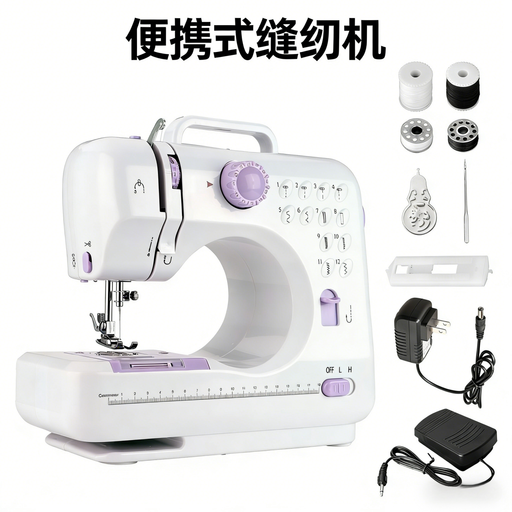
This compact machine is a choice to examine for basic pencil-case sewing and learning at a manageable pace. Check its zip-sewing accessories and performance with your intended layers before planning a craft-fair batch.
 No image available
IAGREEA Mini Portable Electric Sewing Machine, 12 Stitches, Purple
This compact machine is worth considering for learning basic pencil-case seams. Its listed variant has 12 stitches, dual power and an LED light. Confirm whether a zipper foot is included and test your thickest fabric-and-zip crossing before using it for a batch.
Joybuy
Common questions
Do I need an overlocker to make zippered pencil cases?
A standard sewing machine can construct a zippered woven pencil case; an overlocker is an additional option for seam finishing, not a substitute for sewing in the zip. Sewing Direct describes overlockers as useful for clean edges and stretch fabrics.
Which controls help when I am learning to sew in zips?
A zipper foot, manageable speed and needle up/down control help you sew close to the zip and pivot at corners. Brother lists those controls and an included zipper foot for the Innov-is A16; check the accessories and controls on the exact model you are considering.
What product-safety responsibilities should I consider when selling cases in Great Britain?
Assess the safety of the finished pencil case and its components for normal or reasonably foreseeable use. The Office for Product Safety and Standards describes the General Product Safety Regulations 2005 as applying to products supplied in Great Britain; check whether any more specific requirements apply to your finished design.
Does a handmade textile pencil case need a fibre-content label?
Check whether the textile-labelling rules apply to your particular pencil case rather than assuming that handmade goods are exempt. The Department for Business and Trade’s guidance says labels covered by the rules must show fibre content, with additional information about fur or other animal parts where relevant.
When should I tell HMRC about craft-fair sales?
HM Revenue & Customs says that if you make things to sell for profit and earn more than £1,000 from all side activities combined in a tax year, you need to tell HMRC. That threshold is measured before expenses, so keep track of your receipts as well as your sewing costs.


