What matters when choosing?
Decide whether everyday setup, layer alignment or thick-material sewing will determine your choice, then check the controls you will use at placemat corners.
| Concern |
What to check |
Who this matters to |
| Storage and setup |
Check stored dimensions and weight; look for threading and bobbin arrangements you find manageable. |
I need to clear my work surface after sewing, so a machine I can store and set up without difficulty comes first. Around 31% of consumers put storage and setup first. |
| Keeping layers aligned |
Check the exact machine fitting for a walking or even-feed foot, and whether the foot is supplied. |
When I sew padded or quilted placemats, I want the top and backing to stay aligned. Roughly 31% of consumers prioritise control of shifting layers. |
| Thick materials and seams |
Compare each model’s stated material capability and presser-foot arrangement with your usual fabric stacks. |
Canvas, denim or bulky seam crossings are regular parts of my projects, so I need a machine assessed for those demands. Around 23% of consumers make thick-material suitability their main concern. |
| Learning precise control |
Look for controllable slow sewing and consider how you will stop and turn at corners. |
I am still learning to guide seams accurately and would rather slow down than rely on a high maximum speed. About 15% of consumers put learning and corner control first. |
Brands to consider
These examples illustrate different machine features and material claims; compare the specific model and its accessories rather than treating a brand as a single type of machine.
Brother
The Innov-is A16 offers an easy-start computerised route, while the HF37 is positioned by Brother for heavier sewing.
- Brother lists a one-step needle threader, quick-set bobbin, speed control and needle up/down control for the Innov-is A16.
- Brother’s claim that the HF37 can handle up to ten layers of canvas is specific to that model; it does not establish the A16’s capacity or suitability for every fabric stack.
Janome
The 230DC is a computerised example with controls relevant to a shared or compact sewing space.
- Janome lists a maximum speed controller, foot-pressure adjustment, metal internal frame and metal needle plate for the 230DC.
- Walking-foot fit depends on the machine and accessory category; check the exact pairing before buying a foot for layered placemats.
Singer
The Heavy Duty 4423 is a mechanical option to examine if thicker home-sewing projects are routine.
- UK specialist retailer Singer Sewing Machines lists an alloy internal body, metal bed plate and 23 stitch functions for the 4423.
- The same retailer states a maximum of 1,100 stitches per minute; check slow-speed control and the exact current product and warranty details rather than choosing on maximum speed alone.
Joybuy product choices
These compact IAGREEA machines are choices to examine for basic placemat seams in a limited workspace. If padded layers or thick fabrics are central to your projects, check each model’s stated material range and accessory fit before treating it as suitable.
 No image available
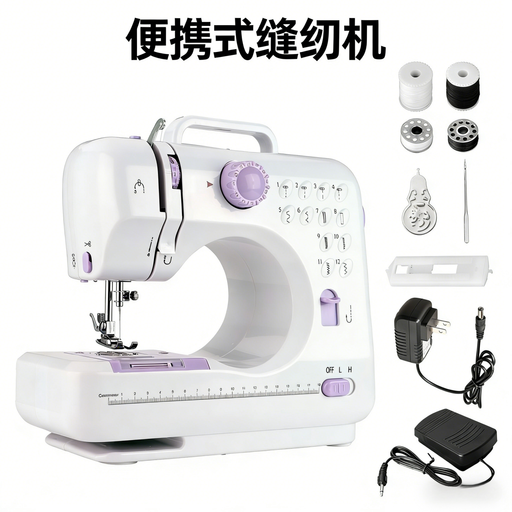
IAGREEA Mini Portable Electric Sewing Machine, 12 stitches, purple
For basic placemat seams in a small workspace, consider whether you can control this machine comfortably at corners. Its product name specifies 12 stitches, dual power and an LED light.
If you plan padded placemats, check its intended fabric range, presser-foot clearance and walking-foot compatibility. Confirm the supplied power connection before mains use.
View on Joybuy
 No image available
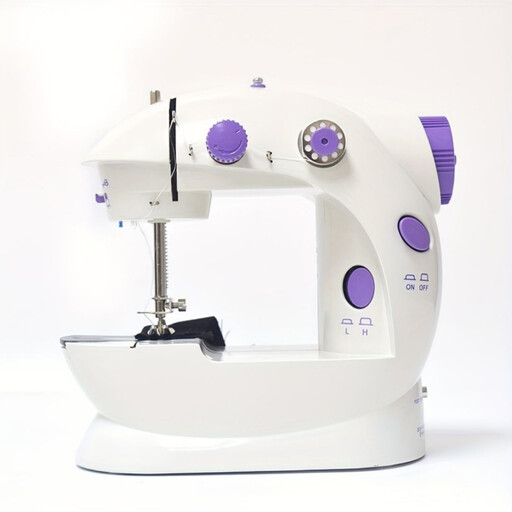
IAGREEA Portable Mechanical Sewing Machine with pedal, 6V 1A
For simple placemat seams where space is limited, check whether its sewing controls suit the corners and seam finishes you plan. The product name specifies a pedal, a threading device and battery or plug-in power using four AA batteries.
If your construction needs backstitching, varied stitches or bulky layers, check this model’s controls and intended fabric range carefully. Confirm accessory compatibility and the supplied plug or adapter before ordering.
View on Joybuy
Questions about placemat sewing
Do placemats require a heavy-duty sewing machine?
No: simple cotton placemats can make controlled sewing and easy setup more important than heavy-material capability. If canvas, denim or bulky layered seams are routine, compare machines against those materials; Brother’s claim for up to ten canvas layers applies to the HF37 specifically.
When is a walking foot useful for placemats?
Consider a walking or even-feed foot when padded or quilted layers shift as you sew, or when pattern alignment matters. Jaycotts describes its Janome even-feed foot as reducing layer slipping, but you must match the foot’s fitting category and part number to your machine.
What should I check before using a mains-powered sewing machine in the UK?
Check the supplied plug and fuse, read the machine’s instructions and choose a seller you can contact about faults. Electrical Safety First advises a standard UK three-pin plug and fuse; if delivery is to Northern Ireland, confirm the conformity information applicable there rather than relying solely on guidance written for Great Britain.
How should I look after the machine between projects?
Follow the instructions for your exact model and inspect its cord before use. Electrical Safety First advises switching off, preferably unplugging, before threading; stop using a machine that is damaged, sparks, smells of burning or makes an unusual noise, and contact the retailer or manufacturer about the fault.


