First-time laundry-bag maker
You need straightforward controls and help with setup while learning to sew basic seams and hems. Janome’s starter-machine information and Good Housekeeping UK’s testing both make ease of use relevant to this choice.


For a first laundry-bag project, choose a machine whose basic stitch controls, bobbin loading and instructions the learner can use confidently; a long decorative-stitch list is less important. Consider a full-size mechanical machine for repeated or shared use, subject to checking the planned fabric and seam layers. A computerised machine makes more sense if its guided controls will also be useful for later projects.
You need straightforward controls and help with setup while learning to sew basic seams and hems. Janome’s starter-machine information and Good Housekeeping UK’s testing both make ease of use relevant to this choice.
If several pupils will use the machine, consider repeated-use suitability alongside clear controls and supervised setup. Janome describes its 423S as a model used in schools; the Design and Technology Association’s primary-school guidance addresses supervision.
A compact machine may be easier to put away after the project. Check the planned fabric and layered seams before choosing one: SINGER recommends a full-size machine rather than its compact M1005 for thicker fabrics and more applications.
Decide how often the machine will be used, then check its controls and the fabric layers at the bag’s seams and hems. If a pupil will use it at school, the school’s supervision and safety arrangements matter too.
Consider it when: The project is occasional, storage matters and the planned fabric is suitable for the particular machine.
Trade-off: SINGER recommends a full-size machine instead of its compact M1005 for thicker fabrics and more applications.
Consider it when: You expect repeated projects or shared use and prefer direct controls. Janome positions its 423S for school use.
Trade-off: Check storage and who will move the machine; Janome lists the 423S at 7.4 kg.
Consider it when: You plan to keep sewing after this project and value guided stitch selection.
Trade-off: Good Housekeeping UK found the Brother Innov-is A65 easy to get started with, but said there was more to learn than on a mechanical machine.
| Concern | What to check | Who this matters to |
|---|---|---|
| Simple setup and seams | Check straight-stitch selection, reverse stitching, bobbin loading and the setup instructions. | If I am making my first bag, I want to set up the machine and secure basic seams without learning numerous stitch settings. Around 44% of consumers put simple setup and stitch control first. |
| Repeated or shared use | Check the maker’s intended use and whether the planned seam and hem layers suit the machine. | When several people will use the machine, I need one suited to repeated projects rather than choosing on stitch count alone. For around 33% of consumers, repeated-use suitability is the primary concern. |
| Storage and carrying | Check machine weight, storage space and the planned fabric layers before choosing a compact model. | If I need to carry the machine or put it away after one project, its size matters, provided it suits the fabric. Portability is the main priority for around 23% of consumers. |
Extra stitch patterns do not establish whether a machine can handle the planned bag fabric or layered hems. Basic seam control and manageable setup are more relevant to a first project.
Check the fabric and seam layers, then look at stitch selection, reverse stitching and bobbin loading.
A beginner label does not remove risks from the needle, moving parts, cable or plug. The Design and Technology Association’s primary-school model risk assessment calls for close adult supervision when responsible Key Stage 2 pupils use sewing machines.
Follow the school’s risk assessment, arrange appropriate training and supervision, and check the machine, cable and plug before use. The Health and Safety Executive advises switching off power for adjustments and needle changes.
A machine chosen for repeated use still needs a suitable place to be stored and a plan for moving it.
Measure the available space and decide who will carry the machine before choosing a model.
Janome’s UK range includes mechanical models positioned for occasional sewing, beginners and school use; those descriptions apply to particular models, not every Janome machine.
The computerised Innov-is A65 is relevant if the machine will be used beyond a simple laundry-bag project.
SINGER positions its compact M1005 for basic sewing and mending where storage space matters.
These compact IAGREEA machines relate to occasional basic sewing. Before choosing one for a school laundry bag, check the planned fabric and seam layers; the models differ in their stated controls and stitch options.
 No image available
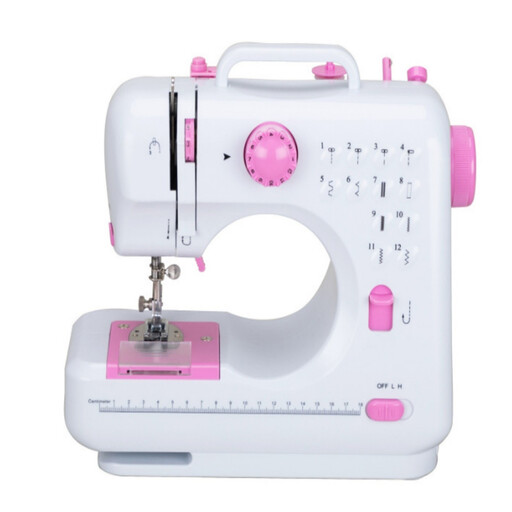
Consider this compact model for occasional bag-making if it suits the planned fabric and seam layers.
The product name specifies 12 stitches, dual power and an LED light.
Check the fabric and layered-seam suitability before buying.
 No image available
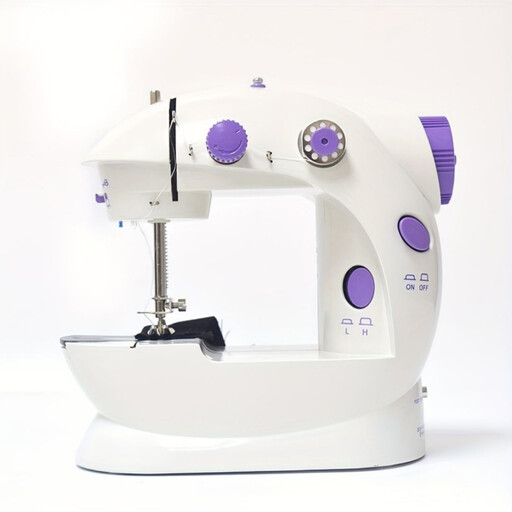
Consider this compact model for an occasional project if its controls and fabric suitability meet your needs.
The product name specifies 12 stitches, dual power and an LED light.
If securing seam ends with reverse stitching or easy bobbin loading matters to you, check those functions before buying. Check the planned fabric layers as well.
 No image available
Consider this portable machine only if its limited stitch control fits the planned bag seams and the learner meets its age restriction.
The product name specifies battery or plug-in power, four AA batteries for battery operation, and included thread shuttle cores, a spare needle and a threading device.
It has one stitch type with fixed width and length and no backstitch function. The supplied safety information says it is not for children under 8. Check the planned fabric layers before buying.
A compact machine may suit a simple bag if the particular model can handle its fabric and layered hems. SINGER recommends a full-size machine rather than its compact M1005 for thicker fabrics and more applications, so check the intended use before deciding.
The school should apply its risk assessment and arrange appropriate training and supervision. The Design and Technology Association’s primary-school model risk assessment says responsible Key Stage 2 pupils should use sewing machines only under close adult supervision; it also addresses equipment checks and keeping hair, loose clothing and jewellery clear of moving parts.
Yes. The Health and Safety Executive advises switching off power for adjustments and needle changes, and removing feet from the treadle when threading or changing needles. Follow the instructions for the particular machine too.
Check which feet, bobbins, needles, cover and instructions come with the exact machine. Bobbin and accessory compatibility is model-specific, so do not assume supplies from another machine will fit.