Shared-workshop beginners
When several members will set up and use one machine, manageable speed, accessible bobbin loading and a way to pivot at zip ends deserve attention. Brother lists these kinds of controls for its Innov-is A16.


For a theatre group making ordinary fabric pencil cases, start with a domestic sewing machine that can sew controlled straight seams and fit a zipper foot. Speed control and straightforward setup matter more when several beginners will share it; consider a heavier-duty machine only if dense fabrics or thick seam stacks are regular work, and check what stitch variety you would give up.
When several members will set up and use one machine, manageable speed, accessible bobbin loading and a way to pivot at zip ends deserve attention. Brother lists these kinds of controls for its Innov-is A16.
Groups making repeated woven-fabric cases need consistent seams and a way to sew in zips, but may not need extensive automated controls. Janome UK & Ireland positions its mechanical 224A for essential sewing tasks and features a pencil-case project made with a sewing machine.
If the same machine will also handle canvas, denim or thick costume-work seams, assess it against those planned layers. Brother and SINGER describe models for heavier fabrics, while Janome UK & Ireland identifies its HD9 as straight-stitch only—a limitation for groups needing other stitches.
Begin with the case pattern, zip and fabric layers, then consider how different members will set up the machine and where the group will store it.
| Concern | What to check | Who this matters to |
|---|---|---|
| Shared operation | Look for controllable speed and a bobbin and threading method that members can learn to reset. | If several newcomers share the machine, I want each person to start slowly and manage corners without relying on one experienced operator. Around 33% of consumers put shared-use control first. |
| Repeat-batch workflow | Check how readily users can secure seams, change bobbins and prepare for the next case. | When making a run of similar cases, I need a routine that stays manageable as work passes between members. For around 27% of consumers, repeat-batch workflow is the primary concern. |
| Zips and fabric layers | Confirm a suitable zipper foot and try the intended fabric stack, particularly at corners and seam intersections. | If my pattern brings a zip, lining and thicker fabric together, I need to know the machine can handle that combination before cutting a whole batch. Zip and layer capability comes first for around 27% of consumers. |
| Transport and electrical care | Check carrying arrangements and how the venue manages cable checks, faults and maintenance. | Moving a shared machine between storage and the work area makes handling and safe-use arrangements my main concern. Around 13% of consumers prioritise those arrangements. |
Janome UK & Ireland describes the HD9 as straight-stitch only. Its heavy-duty purpose does not provide zig-zag or decorative stitches for other theatre projects.
List the projects the machine will serve beyond pencil cases before choosing a specialist straight-stitch model.
A mechanical machine may cover essential sewing tasks, but shared beginners may place more value on speed control and simple setup. Brother lists those controls for the electronic Innov-is A16.
Where possible, let prospective users try the controls and sew a sample using the planned case materials.
For electrical equipment used in a workplace or venue, the Health and Safety Executive says maintenance must prevent danger. The checks, inspections and testing needed depend on the equipment, environment and previous results—not a universal annual interval.
Agree who will report faults, check visible cable and plug condition, arrange maintenance and follow the venue’s risk-based process.
SINGER’s detailed Heavy Duty 4423 information is published for another market, while its UK site directs shoppers towards stores. Accessories and purchase arrangements should be checked for the actual UK offering.
Confirm the exact model, plug, included zipper foot and warranty arrangements with the intended retailer.
Relevant when several users need approachable controls on a domestic machine.
Offers distinct mechanical, electronic and specialist straight-stitch models relevant to different group tasks.
Relevant to groups considering a domestic machine for occasional heavier fabric projects alongside pencil cases.
These compact IAGREEA machines are options to examine for straightforward sewing in a shared group. Before choosing either for zipped pencil cases, confirm zipper-foot compatibility, how seams are secured and electrical suitability for the venue.
 No image available
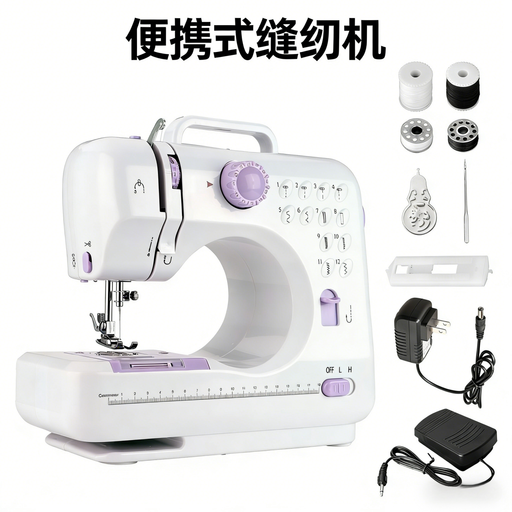
For a group considering a compact machine for fabric seams, try the intended case layers and confirm that a suitable zipper foot can be used.
This purple variant is described with 12 stitches, dual power and an LED light.
Check the supplied plug or adapter before use at the venue.
 No image available
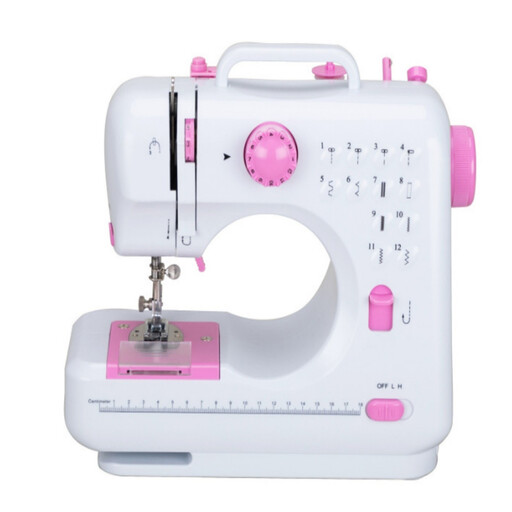
For straightforward sewing in a shared workspace, test the intended fabric and zip before planning a batch.
This pink variant is described with 12 stitches, dual power and an LED light.
Confirm zipper-foot compatibility, how to secure seams and the supplied plug or adapter before venue use.
Not necessarily: for ordinary woven-fabric cases, start by choosing a sewing machine that can make controlled straight seams and accommodate a zipper foot. Consider an overlocker separately if the chosen pattern or fabric finish calls for overlocked edges.
Controllable speed, straightforward bobbin loading and needle threading can make shared setup easier; needle up/down helps when pivoting at corners. Brother lists these features for the Innov-is A16, but check the controls on the exact machine the group is considering.
Consider one if the planned work regularly includes dense fabric or demanding multi-layer seams, rather than for an ordinary fabric case alone. Janome UK & Ireland describes its heavy-duty HD9 as straight-stitch only, so check whether the group also needs other stitches for costume work.
Do not assume a fixed annual interval applies. For workplace or venue use, the Health and Safety Executive says electrical equipment must be maintained to prevent danger, with the type and frequency of checks, inspections and testing determined by the equipment, environment and previous results. Follow the venue’s risk-based arrangements.