Who is this for?

First-time zip-pouch makers

If you are making a lined pencil case with a zip, you need to check how the machine will stitch close to the zip teeth and secure seam ends. LoveCrafts includes zip insertion and a lining in its beginner pencil-case project; John Lewis & Partners suggests simple entry-level machines for sewing newcomers.

Kitchen-table craft sewists

If the table is only a temporary sewing space, consider how you will set up, power and put away the machine. Electrical Safety First advises keeping kitchen electrical equipment clear of water and using extension equipment within its rating.

Thicker-fabric pouch makers

If you plan to use denim or canvas repeatedly, pay particular attention to the layered seams and zip ends you intend to sew. Singer positions its Heavy Duty range for thicker fabrics, but that range claim does not establish what any one machine will manage with your finished fabric stack.

What matters when choosing?

Basic mechanical machine

Consider it: For a first zippered pencil case made mainly from lighter fabrics, when straightforward operation matters more than extra programmes.

Bear in mind: Check the exact model carefully if dense layers or bulky seams will become a regular part of your sewing.

Heavier-duty mechanical machine

Consider it: When denim, canvas or bulky seam intersections will be a recurring part of your pencil-case projects.

Bear in mind: A range positioned for thicker fabrics is not a guarantee for every layered seam, and this route need not be your starting point for occasional lightweight cases.

Feature-led machine

Consider it: If you expect to take up more sewing projects and value controls such as adjustable speed or a programmable needle position.

Bear in mind: Convenience controls do not replace the basic requirements for inserting a zip, and they are not necessary for a straightforward pencil case.

Concern What to check Who this matters to
Zip insertion Check for an included or compatible zipper foot, plus reverse stitching or another way to secure seam ends. If I am learning to fit a zip, I want to stitch close to its teeth without losing control near the zip pull; around 33% of consumers put zip handling first.
Setup and storage Check the exact machine's weight and where its accessories can be kept between sessions. I need to clear the kitchen table after sewing, so a manageable setup is my main concern. Around 25% of consumers prioritise easy setup and storage.
Thicker layers Choose your intended outer fabric, then check the exact model's guidance for it and plan to test a matching layered seam. When I regularly make cases from denim or canvas, the bulky intersections matter most; roughly 25% of consumers make thicker-layer handling their priority.
Kitchen power Plan a dry position away from the sink and check the condition and rating of any extension equipment. My temporary sewing spot needs a lead that stays clear of water and walkways. For around 17% of consumers, the power setup is the primary concern.

What should you avoid?

  • Choosing a mini machine by stitch count alone

    Twelve stitch patterns do not establish that a machine can take the zipper foot needed for the lined zip-pencil-case method shown by LoveCrafts.

    Check zipper-foot inclusion or exact-model compatibility, how the machine secures seam ends, and its power requirements before ordering.

    A compatible foot may need to be obtained separately if one is not included.

  • Setting up beside the sink

    A temporary table position can put the machine or its lead near water, hot surfaces or a busy walkway. Electrical Safety First advises that kitchen sockets and switches should, where possible, be at least 30 cm horizontally from the sink.

    Choose a dry, stable position, route the lead clear of walkways and unplug the machine before packing it away.

  • Overloading an extension lead

    Electrical Safety First warns that overloaded extension equipment can overheat; a cable reel left wound can also overheat.

    If an extension device is necessary, stay within its marked rating, avoid daisy-chaining and fully unwind a cable reel before use.

  • Overlooking accessories and after-sales support

    A foot or bobbin must fit the exact machine. For Janome machines, Janome UK & Ireland says buying through an official UK retailer matters for after-sales care and warranty.

    Confirm the model number, compatible accessories, seller and applicable warranty arrangements before ordering.

Brands to consider

Brother

Brother is one brand to examine if you want a straightforward domestic machine: John Lewis & Partners lists the XN1700 among its sewing machines.

  • John Lewis & Partners lists a three-year guarantee with its Brother XN1700.
  • For that exact model, check the included feet, stitch functions, weight and plug details against your intended setup.

Janome

Janome is relevant if you want to compare simpler machines with models that offer more setup and stitching controls.

  • Janome UK & Ireland lists controls such as speed adjustment and programmable needle position on its DKS30, illustrating what a feature-led model can offer.
  • Those features do not establish what is included with another Janome model. Janome also advises buying through an official UK retailer for after-sales care and warranty.

Singer

Singer's Heavy Duty range is worth examining if thicker outer fabrics will be a regular part of your pencil cases.

  • Singer positions the range for thicker fabrics and long seams.
  • That is Singer's range-level claim, not a guarantee for every fabric stack or a reason to choose a heavier-duty machine for occasional lightweight cases.

Joybuy products for compact craft setups

This compact sewing machine may appeal if you need to put a craft setup away after using the kitchen table. Before choosing it for a zippered pencil case, confirm the exact model's zipper-foot compatibility and suitability for your power setup.
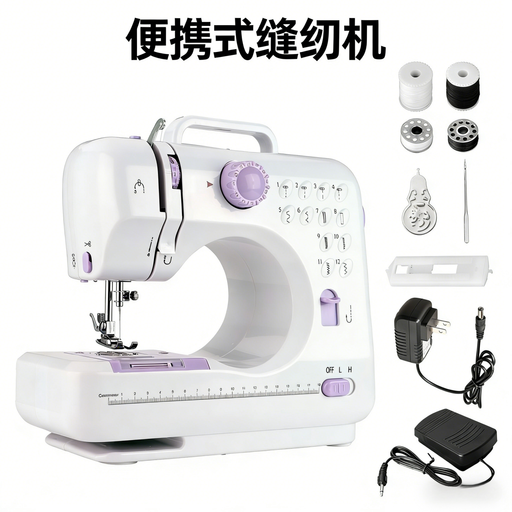
Purple IAGREEA Mini Portable Dual Power Sewing Machine

IAGREEA Mini Portable Dual Power Sewing Machine, 12 Stitches, Purple

Consider this portable model for a temporary craft setup if its size and power arrangements suit your table.

The product name specifies 12 stitches, dual power and an LED light. Check whether a compatible zipper foot is available for this exact model, and confirm its UK plug and mains suitability before use.

Joybuy

Frequently asked questions

Do I need a zipper foot for a pencil case?

For the lined, zippered method described by LoveCrafts, yes: the project uses a zipper foot to stitch close to the zip teeth. Check whether the foot comes with your chosen machine or whether the exact model accepts a compatible one.

Is a basic mechanical machine enough for a beginner?

A basic mechanical machine can suit a first pencil case made from lighter fabrics, provided it can handle the required zip and seam-end stitching. John Lewis & Partners suggests entry-level mechanical machines for newcomers; if you will regularly sew dense, layered fabrics, assess those materials against the exact model instead.

How can I set up safely on a kitchen table?

Place the sewing machine on a dry, stable surface, keep its lead clear of water and walkways, and unplug it before putting it away. Electrical Safety First advises that kitchen sockets and switches should, where possible, be at least 30 cm horizontally from the sink.

Can I use an extension lead for a temporary setup?

You can use an extension device that is in good condition and kept within its marked rating. Electrical Safety First advises against overloading or daisy-chaining extension equipment and says a cable reel should be fully unwound before use.

What should I check about accessories and support?

Check which zipper feet, bobbins and needles fit the exact model, along with the seller's applicable warranty and support arrangements. For Janome specifically, Janome UK & Ireland says an official UK retailer is important for after-sales care and warranty.