For straightforward table-runner hems and piecing, start with a domestic sewing machine you can set up and put away comfortably, then check that its controls suit the seams you plan to sew. For long or layered runners, fabric support becomes a separate decision: a removable extension table can help while sewing, but it must fit both the exact machine and your available table space. If you regularly use thicker fabrics, assess material handling as well; a heavy-duty label alone does not provide more tabletop support.
Who this setup suits
The right setup depends on whether storage, support for a long runner or handling thicker fabric is your main difficulty.
Occasional makers using a shared table
If you sew hems and simple pieced runners at a desk or dining table, a machine that is practical to set up and store may matter more than an extensive stitch selection. Brother and Janome list threading and fabric-control features on specific domestic models; check the dimensions and weight of any model you intend to move regularly.
Makers of layered or quilted runners
When a runner has a top, wadding and backing, support beside the needle can help keep its length on the work surface. SINGER, Janome and BERNINA describe extension or slide-on tables, but compatibility and the space required differ by machine and accessory.
Sewists using heavier décor fabrics
If your runners use canvas, denim or other substantial fabrics, consider the planned fabric stack and the machine’s feeding controls. SINGER lists adjustable presser-foot pressure on its Heavy Duty 4432; that feature does not remove the need to support a long runner on a narrow table.
What to check before buying
Decide whether your priority is putting the machine away, supporting a layered project or sewing thicker material. Then check the machine and any accessory in the space where you will actually use them.
| Concern |
What to check |
Who this matters to |
| Storage and setup |
Check the machine’s dimensions and weight, then look for threading and speed controls that suit short sewing sessions. |
I use a shared table and want to put the machine away after sewing a few seams or hems; around 40% of consumers would put practical storage and setup first. |
| Support for layered runners |
Measure the table with an extension surface fitted, and confirm whether that surface is included or compatible with the exact model. |
A quilted runner can pull away from the needle as I work, so I need temporary support without a permanent sewing table; roughly 30% of consumers would prioritise that support. |
| Thicker-fabric handling |
Check the maker’s fabric and needle guidance for your planned layers, including any presser-foot pressure adjustment. |
My runners use substantial décor fabric, and I need to judge how the machine handles that stack before focusing on extra stitches; about 30% of consumers would make material handling their primary concern. |
Buying pitfalls
-
Expecting a heavy-duty label to solve fabric drag
A machine intended for thicker fabric does not, by itself, keep a long runner supported on a narrow table.
Check the thickest fabric stack you plan to sew, then separately decide whether the project needs a removable extension table or another level support surface.
-
Buying an extension table by appearance
Extension tables vary by machine and model group. A table that looks suitable may not attach to your chosen machine.
Match the full machine model to the manufacturer’s compatibility information or a retailer’s listing before ordering.
-
Choosing mainly by decorative-stitch count
More stitch patterns do not address limited desk space or the handling of a long runner.
Start with the seams and finishing you intend to sew, then check setup, speed control, fabric feeding and project support. Check for drop feed if you plan free-motion quilting.
Relevant brands to consider
These examples show features and accessories worth checking on particular models, not features shared by every machine from a brand.
Brother
Brother positions the Innov-is A16 for beginner and intermediate sewing, making it a reference point for a machine used for straightforward runner projects.
- Brother lists a one-step needle threader, quick-set bobbin, speed control, needle up/down, 16 stitches and drop feed for the Innov-is A16.
- Check the Innov-is A16’s exact footprint and whether a compatible wider table is available if you plan layered runners.
Janome
Janome offers examples to compare if you are deciding between mechanical controls and a computerised machine with a wider temporary work surface.
- Janome lists drop feed and foot-pressure adjustment for the Sewist 725, and an extra-wide table for the 230DC and 360DC.
- The extra-wide table is a model-specific feature; confirm the included accessories and fitted dimensions for the machine you choose.
SINGER
SINGER’s Heavy Duty 4432 is a model to examine when thicker home-décor fabrics are the principal concern.
- SINGER lists adjustable presser-foot pressure for the Heavy Duty 4432 and offers model-specific extension tables.
- Confirm extension-table compatibility separately: a machine selected for thicker fabric still needs sufficient support for a long runner.
BERNINA
BERNINA describes slide-on tables for buyers considering a removable surface around the needle.
- BERNINA says its slide-on tables increase the sewing surface for larger projects.
- Check compatibility, included accessories and the desk space needed with the table attached to the exact model.
Joybuy choices for basic sewing
These portable IAGREEA machines are choices to consider for occasional basic table-runner sewing in a space that must also serve other purposes. If you plan layered or quilted runners, check the sewing area and extension-table options for the exact machine before deciding.
 No image available
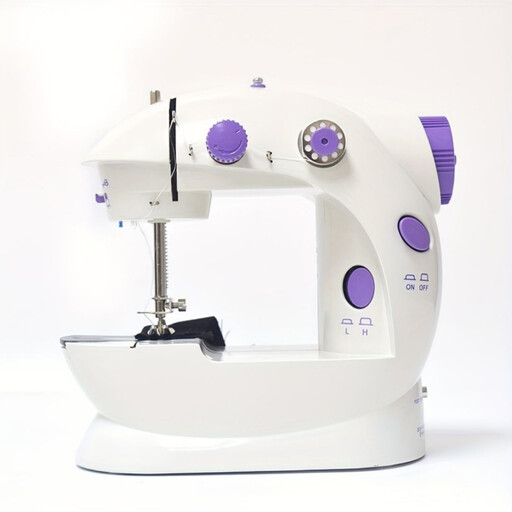
IAGREEA Mini Portable Electric Sewing Machine, 12 Stitches, Dual Power, Purple
Consider this portable machine for occasional runner seams and hems when you need to clear the table afterwards.
The product title lists 12 stitches, dual power and an LED light. If you intend to quilt layered runners, confirm the sewing-bed dimensions, drop-feed capability and whether an extension table fits this model.
View on Joybuy
 No image available
IAGREEA Portable Mechanical Electric Sewing Machine with Pedal, 6V 1A
Consider this model for occasional basic sewing where the machine needs to be put away between sessions; check that its seam and finishing options suit your runner.
The product title specifies pedal operation, battery or plug-in power using 4AA batteries, and a spare needle and threading device. Confirm its full footprint and weight, sewing-bed dimensions, backstitch capability and extension-table compatibility if those affect your project.
View on Joybuy
Common questions
Do I need a large quilting machine to sew table runners?
Not necessarily: a domestic machine can suit straightforward hems and piecing. If you make long or layered runners, assess how the fabric will be supported near the needle before choosing a larger machine or a compatible removable extension table.
What should I measure before buying a machine for a small table?
Measure the clear width and depth of the work surface, the storage space and the area needed with any extension table attached. Leave room for the runner to move beside and behind the needle, and use dimensions for the exact machine and accessory rather than judging from photographs.
Will any sewing-machine extension table fit my machine?
No; check compatibility against the full machine model. SINGER describes model-specific extension tables, while accessory listings for Janome machines identify particular compatible models.
Is drop feed necessary for every table runner?
No. Drop feed matters if you plan free-motion quilting, but it is not a requirement for ordinary straight seams, hems or piecing. Choose it as a priority only if that quilting method is part of your plans.


