Who is the machine for?

Volunteer teams sewing many panels

When several people share the work, straightforward setup and controllable seams matter more than a large selection of decorative stitches. Check how easily each volunteer can set up the machine and keep long seams feeding evenly.

Beginner-led groups with limited storage

A compact machine can suit basic seams and hems when it must be moved to a shared venue and put away between sessions. Check its controls against the actual curtain fabric before choosing on size alone.

Groups using sheer or shifting fabric

Fabric that moves or puckers calls for closer attention to threading, tension, stitch length and feeding. Brother USA Support identifies these settings, needle and thread choice, and the presser foot as possible causes of feeding problems.

What matters when choosing?

For a shared lightweight-curtain project, assess the intended fabric first, then decide how much setup simplicity and portability the group needs.

Concern What to check Who this matters to
Fabric control Check adjustable stitch length and thread tension; for shifting fabric, consider presser-foot pressure or even feeding. Test an offcut with the intended thread. When sheer panels pucker or move during long seams, I need room to adjust how they stitch and feed. Around 42% of consumers put fabric control first.
Simple setup Look for clear stitch selection and threading guidance, plus adequate light at the work area. If volunteers have different levels of sewing experience, I want them to set up for a basic seam without a lengthy handover. Ease of use comes first for around 33% of consumers.
Shared-space use Check the machine’s weight, storage space and suitability for the venue’s power arrangements; plan safe cable routing. Where the group borrows a room, I need to carry the machine, store it and set it up safely each time. For around 25% of consumers, that practical fit is the primary concern.

What should you avoid?

  • Assuming a portable machine has every fabric-control setting

    Singer Sewing lists adjustable tension but preset stitch length and width for the 4.4 kg M1605. A low carrying weight does not tell you whether a machine offers the adjustments your curtain fabric needs.

    If the fabric is sheer or has puckered during a trial seam, check stitch-length adjustment and consider presser-foot pressure or even feeding before deciding.

  • Choosing by stitch count instead of the intended seam

    Brother USA Support lists stitch length, tension, needle condition, fabric and thread combination, and presser-foot choice among possible causes of bunching or poor feeding. Decorative-stitch quantity does not resolve those setup questions.

    Where possible, test an offcut with the planned thread and lining, then consult the machine instructions if the fabric does not feed cleanly.

  • Leaving transport until after the purchase

    Singer Sewing lists the M1605 at 4.4 kg, while Janome UK & Ireland lists the 423S at 7.4 kg. Their different weights matter when volunteers must move and store a shared machine.

    Check the storage space and agree who will carry the machine between sessions.

  • Treating an electrical test as the whole safety plan

    For shared sewing work, the Health and Safety Executive advises adequate lighting, safe cable routing and switching off before needle changes or adjustments. It also says electrical-equipment checks should reflect the equipment and its environment.

    Follow the venue’s safety arrangements, check for visible damage before use and keep cables out of walking areas.

Brands and models to consider

Singer

Singer Sewing describes models spanning compact basic sewing and more feature-led curtain work.

  • The M1605 has adjustable tension; Singer Sewing also describes the 1408 as suitable for soft-furnishing projects.
  • Singer Sewing lists integrated even feeding and speed control for the C240 Featherweight, including a speed setting for larger projects such as curtains.
  • The M1605 has preset stitch length and width. Check each named model’s controls rather than assuming features apply across the brand.

Janome

Janome UK & Ireland lists mechanical models with adjustments relevant to groups using different fabrics.

  • The 423S lists variable stitch width and length and adjustable foot pressure; the Sewist 725 also lists foot-pressure adjustment.
  • Janome UK & Ireland lists the 423S at 7.4 kg and the Sewist 725 at 6.7 kg, so consider who will move the machine.

BERNINA

The BERNINA 325 is a feature-led option for buyers considering fabric support and adjustable presser-foot pressure.

  • BERNINA describes an included slide-on table that enlarges the support surface around the needle.
  • BERNINA’s example of more efficient feeding with adjusted foot pressure concerns faux suede; test the intended curtain fabric rather than assuming the same result.

Joybuy products for basic sewing

This compact machine is a choice to consider for straightforward seams and hems where portability matters. Check its controls and power compatibility against the group’s fabric and venue before choosing it for curtain work.
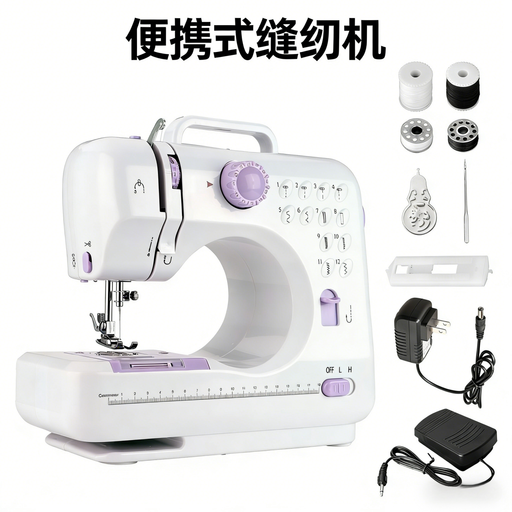
Purple IAGREEA Mini Portable Dual-Power Sewing Machine

IAGREEA Mini Portable Dual-Power Sewing Machine, 12 Stitches, Purple

Consider this portable machine for a beginner-led group making straightforward seams and hems. Its title specifies 12 stitches and an LED light; before sewing curtain panels, check stitch-length and tension controls, test the intended fabric on an offcut and confirm that its power arrangement suits the venue.

View on Joybuy

Frequently asked questions

Do lightweight curtains need a heavy-duty sewing machine?

Not necessarily: for lightweight panels, concentrate first on a clean test seam and suitable control of stitch length, tension and feeding. If the project includes thick hems, blackout lining or several bulky layers, assess that actual fabric stack before choosing a machine.

What should volunteers test before sewing full curtain panels?

Test an offcut using the intended fabric, thread and any lining, watching for puckering and uneven feeding. If problems appear, Brother USA Support advises checking settings, threading, needle condition and whether the needle, thread and presser foot suit the fabric; consult the machine manual before adjusting it.

Is annual PAT testing legally required for a shared sewing machine?

In Great Britain, the Health and Safety Executive says the Electricity at Work Regulations 1989 require electrical equipment to be maintained to prevent danger, but do not prescribe annual portable appliance testing. The checks needed depend on the equipment, its environment and previous findings; follow the venue’s safety arrangements as well.

How can a group set up a safer shared sewing session?

Provide adequate lighting, keep cables out of walking areas and switch off the machine before changing a needle or making adjustments. The Health and Safety Executive also advises checking that needles, guards and the work area are suitable for the people using the machine.