Occasional cover makers with little storage space
You make a few covers at a time and need to put the machine away afterwards, but still need table space to support the fabric while sewing.


For standard cushion covers, start with a domestic mechanical machine whose straight stitch, reverse, adjustable stitch length and zip-foot compatibility suit the closure you plan to make. On a small table, check both the machine’s dimensions and the room left to support fabric; consider adjustable presser-foot pressure if you regularly sew thick or layered furnishing materials, while accounting for the extra weight of some sturdier models.
You make a few covers at a time and need to put the machine away afterwards, but still need table space to support the fabric while sewing.
You are learning to make removable covers and care more about clear controls and a compatible zipper foot than an extensive range of decorative stitches.
You plan to sew upholstery-weight fabric, lining, piping or bulky seam crossings, so fabric handling matters alongside the machine’s storage fit.
For cushion covers on a small table, work out whether fitting and storing the setup, sewing a zip closure or handling thicker layers will most affect your choice. The Sewing Studio highlights workspace and machine weight as useful checks; neither can be judged from stitch count alone.
| Concern | What to check | Who this matters to |
|---|---|---|
| Table and storage fit | Compare the exact machine dimensions with the table and storage space, leaving room to support cushion panels around the needle. | I need to put the machine away without letting a large panel drag off the table while I sew; around 42% of consumers would put workspace and storage fit first. |
| Seams and zip closures | Check reverse, adjustable stitch length and whether the exact bundle includes or accepts a zipper foot. | I want to sew a removable zip cover without struggling with basic controls; around 33% of consumers put straightforward cover construction first. |
| Thicker fabric layers | Identify the thickest planned seam crossing, then check the manual’s fabric and needle guidance and whether presser-foot pressure is adjustable. | If my covers have piping or layered upholstery fabric, I need to assess how the machine handles those seams; around 25% of consumers put thicker-fabric handling first. |
More stitch patterns do not tell you whether there is enough workspace to guide a cushion panel. The Sewing Studio points buyers towards the feed system, workspace and weight instead.
Check the straight stitch, reverse and stitch-length controls, then compare the exact dimensions with your table and the fabric you intend to support on it.
A zip closure needs an appropriate foot, and supplied accessories differ between machines and bundles. Hobbycraft’s beginner guidance identifies a zipper foot as an accessory to consider.
Check the exact package contents and compatible feet before ordering if you plan to make zip rather than envelope closures.
If a compatible zipper foot is not supplied, you may need to obtain one separately.
A lighter machine may be easier to put away, but the table still needs to support the cover as you turn and guide it.
Plan the machine’s position using its exact dimensions, with room for the foot pedal and fabric on both sides of the needle.
Upholstery fabric, piping and layered seam allowances create different demands from a single layer of lighter fabric. Machine weight or a label alone cannot establish how your particular stack will sew.
Check guidance for the intended fabric, needle and thread, then try the planned seam crossing on scraps before sewing the finished cover.
Janome’s J3-series mechanical machines are relevant if you want straightforward controls; its HD2200 is worth examining when adjustable presser-foot pressure matters.
Singer has mechanical models to compare if you prefer dial controls, but the useful features depend on the exact machine.
Brother entry-level machines, including the LK14S and XN1700, appear in John Lewis & Partners’ sewing-machine listings.
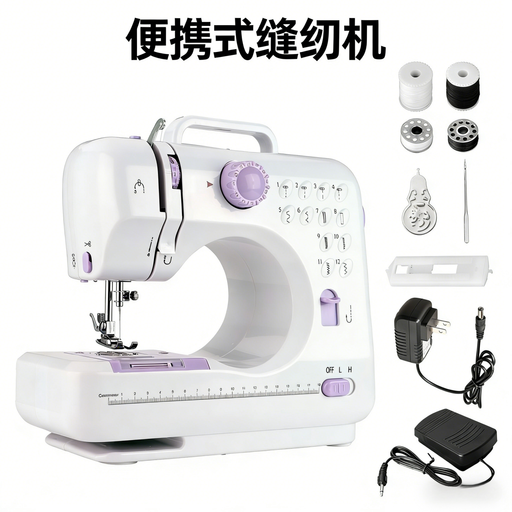
This mini machine is a compact-format option to assess for occasional cover sewing where the setup must be put away. Check its working clearance and zip-sewing accessories against your particular covers before deciding.
 No image available
For occasional cover seams in a setup that needs to be stored after use, assess whether this mini machine leaves enough room to support your fabric.
Its product name specifies an LED light. For zip closures or larger panels, check zipper-foot compatibility, stitch-length adjustment and usable clearance around the needle.
No, a computerised machine is not necessary for standard cushion covers. Start by checking that a machine offers the seam controls and compatible foot your chosen closure needs; consider extra settings if you expect to use them for other projects.
Measure the usable table width and depth and your storage space, then compare them with the exact machine’s dimensions and weight. Allow space to guide cushion fabric around the needle and to position the foot pedal; a machine that fits on the table may still leave too little working room.
It may suit some fabrics, but the full stack at a seam crossing is the important test. Hobbycraft advises considering machine capability and stitch length for thicker home-furnishing materials; check the intended fabric and needle guidance, then test with your chosen thread on scraps before sewing the cover.