For a one-off school project using ordinary woven fabric and simple seams, start by considering a basic mechanical or beginner-focused domestic sewing machine. Consider a stronger domestic model if the cover has bulky layers, thick piping or dense fabric, but check the complete seam stack and suitable needle before deciding. Whichever machine you choose, follow the school's training and supervision arrangements.
Who is the machine for?
First-time school-project sewists
A simple cover lets you concentrate on threading, controlling the pedal and sewing basic seams. Janome and Brother both describe beginner-oriented machine ranges, but check the controls on the particular model you plan to use.
Makers sewing padded or thicker covers
Work out how many layers meet at the thickest seam, including any lining, padding or trim. That stack, rather than the fact that the cover is for a pet bed, should guide whether you consider a stronger domestic machine.
Pupils sewing under school supervision
Ask how the school will provide training, check the machine and manage supervision. The Design and Technology Association's school sewing-machine risk assessment calls for pupils to receive appropriate training before use.
What matters when choosing?
Set out the cover materials and the school's safe-use arrangements before comparing machine controls and stitches.
| Concern |
What to check |
Who this matters to |
| Beginner controls |
Check the threading instructions and whether the available stitches and controls suit the planned seams. |
I need to learn the setup and keep basic seams under control during a short school project; around 42% of consumers put manageable first-use controls first. |
| Fabric-stack handling |
Check the manual's fabric and needle guidance, then test offcuts stacked as they will be at the thickest seam. |
If my cover includes padding or thick seam crossings, I need to sew through the assembled layers; around 33% of consumers put fabric-stack handling first. |
| Supervised use |
Confirm the school's training and supervision arrangements, and check the machine, plug and cable before use. |
Before a pupil starts sewing, I need a trained, supervised setup in which the machine can be used safely; around 25% of consumers prioritise safe school use. |
Mistakes to avoid
-
Choosing heavy-duty solely because it is a pet bed
A simple cover may only need ordinary seams, while a heavy-duty label does not establish that a machine can sew your particular layers. Hampshire Sewing Machines also cautions against treating the SINGER 4411 as an industrial machine.
List the fabrics, padding and trim at each seam crossing. Test the full stack before deciding whether a stronger domestic model is warranted.
-
Choosing a needle before choosing the fabric
The wrong needle can break or produce poor stitches. Sew Essential advises matching the needle to the fabric rather than treating one needle as suitable for every material.
Identify the cover fabric, follow the machine maker's needle guidance and try the combination on offcuts.
A broken needle needs replacing, and damaged fabric may need recutting.
-
Relying on easy-to-use features instead of school procedures
Convenient controls do not remove risks from the needle, moving parts or electrical equipment. The Health and Safety Executive advises removing feet from the treadle when threading or changing needles.
Follow the school's training, equipment-check and supervision procedures; keep loose hair and clothing clear, and switch the machine off for adjustments.
Brands to consider for these machine types
Janome
Janome's UK range includes basic mechanical and more robustly positioned domestic models.
- Janome presents the 224A as an entry-level mechanical starter machine and lists adjustable stitch width and length for the 725S.
- Those descriptions do not establish whether a particular model will handle your padded seam; check its manual and test the proposed layers.
Brother
Brother offers beginner-oriented machines and describes its HF37 as a stronger domestic option.
- Brother identifies machines for starter projects and markets the HF37 around simplicity and power.
- Check the exact model's controls, included accessories and guidance for the intended fabric rather than relying on range descriptions.
SINGER
SINGER's Heavy Duty 4411 is a domestic model to consider when the planned cover has demanding layers.
- SINGER describes the 4411 as having robust heavy-duty stitching power and a top drop-in bobbin.
- A heavy-duty name does not make it necessary for a simple cover or turn it into an industrial machine; test the intended seam stack.
Joybuy machines for simple cover projects
These compact IAGREEA machines are options to assess for basic cover seams and beginner setup. Before choosing either for a padded cover, check the exact machine instructions and test the complete fabric stack; school training and supervision remain necessary.
 No image available
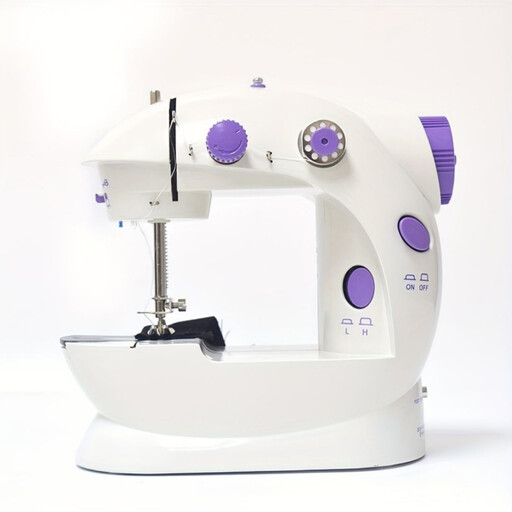
IAGREEA Mini Portable Electric Sewing Machine, 12 stitches, purple
Consider this model for a beginner's basic seams if its controls suit the pupil's training. Its title specifies 12 stitches, dual power and an LED light; check the instructions and test any padded seam stack before choosing it for the cover.
View on Joybuy
 No image available
IAGREEA Portable Mechanical Household Sewing Machine with pedal
Consider this model only if a basic seam meets the cover design. Its title specifies pedal operation, battery or plug-in power, a spare needle and a threading device. The supplied model information describes one fixed stitch and no backstitch, and says the appliance is not for children under 8. Check how the seams will be secured, confirm the pupil's age against the instructions and test the planned layers.
View on Joybuy
Common questions
Does every pet bed cover need a heavy-duty sewing machine?
No. A basic domestic machine may suit a simple woven-fabric cover; consider a stronger domestic model when the actual seams include dense or bulky layers. Test offcuts arranged like the thickest finished seam before committing to the design.
Which needle should I use for a pet bed cover?
Match the needle type and size to the chosen fabric and the machine maker's instructions. The project name alone cannot settle the choice: Sew Essential warns that an unsuitable needle can break, so test the combination on offcuts.
What should happen before a pupil uses the machine?
The pupil should receive appropriate training under the school's supervision arrangements. The Design and Technology Association's school risk assessment calls for training before use; the machine, plug and cable should also be checked, with loose hair and clothing kept clear of moving parts.
How should I handle needle changes during the project?
Follow the exact machine manual and switch the machine off before making adjustments. The Health and Safety Executive advises taking your foot off the treadle while threading or changing needles.


