
24/7 Customer Support

Free returns

Same-day & Next-day Delivery

Quality Guaranteed

Unlock Your Welcome Offers: FREE Delivery | Up to 80% OFF | Free 30-day JoyPlus trial
Download the APP
Choosing shampoo in the UK can feel straightforward until the labels start promising repair, hydration, bond protection and salon-style results. The right choice depends less on attractive packaging and more on your scalp condition, hair texture, washing routine and tolerance for specific ingredients.
This guide from the Joybuy Product Recommendation Officer explains the main buying traps, the specifications worth checking and a selection of shampoos matched to different everyday needs.
A dry scalp may feel tight, itchy or flaky, while dry hair usually feels rough, brittle or difficult to detangle along the lengths. These concerns can occur together, but they are not identical. A moisturising shampoo for dry hair may not address a scalp concern, while a scalp-focused formula may not provide enough conditioning for curls or damaged ends.
If flaking or irritation persists, consider speaking to a pharmacist or GP rather than relying only on cosmetic products.
Terms such as repair shampoo, bond repair shampoo and “strengthening” often describe the way hair looks or feels after washing. Shampoo cannot replace every form of professional colour correction or remove existing split ends. Look at the formula, directions and suitable hair type rather than assuming a higher price guarantees a stronger result.
For example, some products contain conditioning polymers, panthenol, proteins or bond-supporting ingredients. These can help hair feel smoother and easier to manage, but results vary according to hair condition and routine.
A sulphate-free shampoo may be useful for people who prefer a lower-foaming formula, colour-treated hair or curls that become dry with frequent washing. However, “sulphate-free” does not automatically mean fragrance-free, allergy-free or suitable for every scalp. Always check the full ingredient list, especially if you have a known sensitivity.
The ingredient list gives more useful information than front-label wording. If you are avoiding sulphates, check the complete list for common cleansing agents rather than relying on a large “natural” claim.
Fragrance-free products may be preferable for scent-sensitive users, but “vegan” and “cruelty-free” refer to different considerations. Look for recognised certification, such as The Vegan Society or Cruelty-Free International, where applicable. These claims should still be checked against the current packaging.
Common sizes range from around 200ml to 400ml, while larger 930ml or 1,000ml bottles may suit households or frequent users. A larger bottle is not automatically better value: compare the price per 100ml and consider whether the formula suits everyone using it.
A 250ml bottle can be practical for trying a new formula, while a 350ml or 400ml option may reduce replacement trips for regular use. Store shampoo in a cool, dry place and follow the packaging’s use-after-opening guidance.
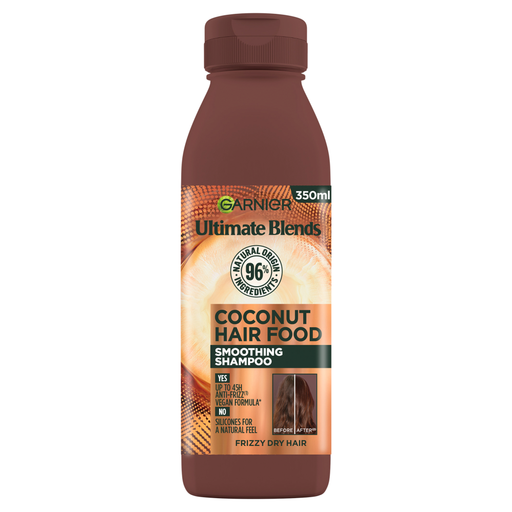
Why This Fits Their Persona: A practical option for shoppers seeking a larger 350ml bottle and a versatile routine for dry, dehydrated hair.
The 3-in-1 directions clearly explain shampoo, conditioner and mask use, so buyers can choose how much care they need rather than assuming one application does everything.
Contains coconut water, coconut oil and glycerin; the listed formula is vegan and contains no silicones.
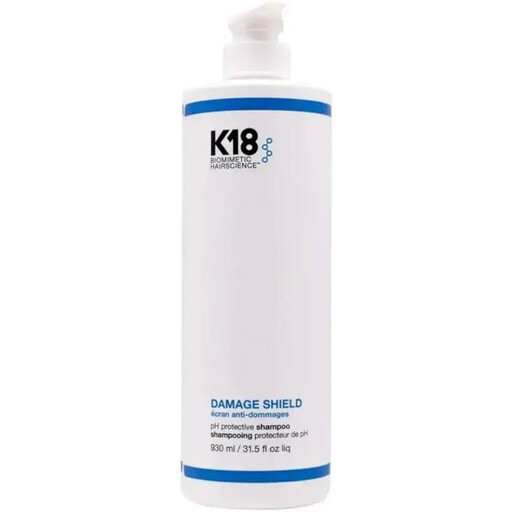
Why This Fits Their Persona: The 930ml format suits regular users who want a high-capacity bottle for ongoing hair maintenance.
Its positioning is maintenance-focused, helping shoppers distinguish a daily cleansing product from a one-use promise of reversing all damage.
The listed ingredients include sh-oligopeptide-78, panthenol and glycerin; the product is presented for mild cleansing and damaged-hair maintenance.
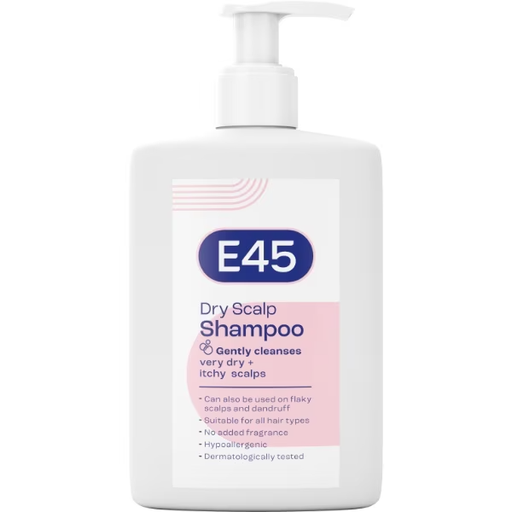
Why This Fits Their Persona: A fragrance-free, soap-free and perfume-free option for shoppers prioritising a simpler scalp-care routine.
The label makes its fragrance-free positioning clear, avoiding the assumption that a scented moisturising shampoo will suit an easily irritated scalp.
Contains panthenol and glycerin; the 250ml size is suitable for regular use without committing to a large bottle.
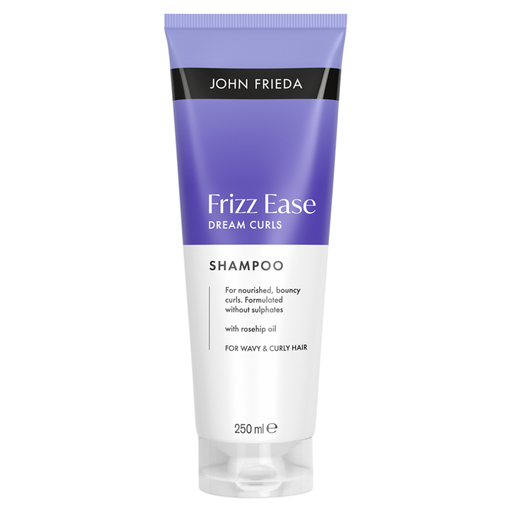
Why This Fits Their Persona: Designed for curly and wavy hair, making it a relevant choice for UK shoppers managing humidity-related frizz and curl definition.
It identifies curly and wavy hair as the intended use, rather than presenting a general shampoo as a universal frizz solution.
The formula is listed as sulphate-free, vegan and colour-safe, with rosehip oil and panthenol among its ingredients.
We have compiled a complete, real-time list of products that fully satisfy these strict selection criteria and UK safety regulations.
There is no single schedule for every scalp. Oily scalps may need more frequent washing, while dry, curly or textured hair may feel more comfortable with less frequent cleansing. Start with the product directions and adjust according to oiliness, build-up, scalp comfort and how the lengths feel.
Usually, purple shampoo is treated as a periodic toning product rather than an automatic daily shampoo. Leave-on time and frequency should follow the packaging. For example, the Aussie SOS Blonde & Hydrate Purple Shampoo directions specify leaving it on for three to five minutes, depending on the desired toning level. Purple pigments may temporarily stain light surfaces, so rinse the shower area after use.
Choose a product specifically labelled for children and check the recommended age. Childs Farm Coco-Nourish Coconut Shampoo is listed for children from 0+ months and is designed for dry, curly, wavy and coily hair. Childs Farm Hair & Body Wash Bluey is also listed for newborns upwards. Keep all shampoo out of children’s reach, avoid eye contact and stop use if irritation develops.