Choose the ecosystem that lets a child use a separate supervised account instead of sharing an adult login. Apple Family Sharing suits Apple households, Google Family Link suits supported Android devices and Chromebooks, and Windows with Microsoft Family Safety suits families needing a more general-purpose laptop with separate profiles. Router filtering can add a home-network layer, but Apple Support, Google, Microsoft and BT all describe controls that depend on the relevant account, device or network setup.
Who this setup suits
Apple-family households sharing an iPad, Mac or other Apple device
Suitable for parents who want shared purchases or subscriptions while keeping the child’s activity, contacts, app requests and Screen Time in a separate Child Account. Apple Support advises against sharing one Apple Account because personal data can become mixed.
Families choosing a Chromebook or Android child device
Suitable for households that want Google-account supervision, Chrome website controls, app approvals and screen-time limits on a supported Android device or Chromebook with sign-in restrictions configured.
Families needing a shared home laptop for broader tasks
Suitable for parents who need a child-friendly Windows profile for web use, keyboard work and desktop software while keeping adult files and administrator settings separate.
What to check before buying
Start with the account system and the child’s intended tasks, then check that the chosen device can keep adult and child access separate.
| Priority |
What to check |
Your needs |
| Separate accounts |
Check that the device supports an individual child account or standard user profile. Confirm that adult files, passwords, purchases and messages remain separate. Apple Support and Microsoft Support describe separate accounts as the basis for person-specific family controls. |
I want the child to have their own requests, settings and supervision without giving them access to adult information or credentials. |
| Device compatibility |
Match the operating system to the control service before choosing hardware. Google states that Family Link does not supervise iPhones, iPads or computers other than Chromebooks; check the parent’s management device and required software versions too. |
The controls I rely on need to work on the child’s actual tablet or computer, rather than only on another device in the household. |
| Bypass protection |
Check guest mode, additional-user access, app installation permissions and reset options. On Windows, keep the child profile as a standard account; Microsoft warns that administrator access can change or break Family Safety settings. |
I need the shared device to stay in the child’s supervised profile instead of making it easy to switch to an unmonitored account. |
| Privacy and visibility |
Review what activity, usage or location information the family-control service can show. Check how monitoring is indicated and discuss it in a way the child can understand; the ICO notes that parental controls can involve activity monitoring or location tracking. |
I want supervision that is proportionate for the child’s age, with a clear understanding of what information a parent can see. |
Setup pitfalls to avoid
-
Buying hardware first and assuming controls work across every operating system
Google Family Link does not supervise iPhones, iPads or non-Chromebook computers, while Apple and Microsoft controls also rely on their own accounts and family-group arrangements.
Choose the supervision ecosystem before the model. Confirm the child’s device type, operating system, account type and the parent’s management device.
-
Letting the child use an adult account because the device is shared
An adult login combines personal data and makes child-specific restrictions harder to manage. Apple Support warns that account sharing can expose personal information, messages and call history to another family member.
Create a separate child account or standard user profile, then use family management to share eligible purchases or subscriptions without sharing credentials.
-
Leaving guest access, extra users or administrator rights available
Google says guest mode or added users may allow Chromebook use outside Family Link settings. Microsoft says an administrator child account can change or break Family Safety settings.
Test the child profile during setup: try adding a user, opening guest mode, installing an app and changing time limits. Keep the child account standard and protect adult credentials.
-
Treating router filtering as complete supervision
Router and broadband controls apply to a particular home-network setup. BT says its filtering applies to devices connected to a BT Hub, while non-BT-router use requires BT DNS configuration.
Use router filtering as an additional household layer, while keeping account-based controls on the child’s device and considering use on mobile data or other Wi-Fi networks.
Relevant ecosystem options
Apple
An Apple-device family ecosystem for households using iPad, iPhone or Mac hardware that want Family Sharing, individual Apple Accounts and Screen Time controls.
- Apple Support says Family Sharing can manage a child’s device with Screen Time, parental controls, app-download approval and communication-related controls.
- Each family member should have a separate Apple Account; UK child-account rules and some safety features are age- and region-dependent.
Google
A Google-account and Chromebook or Android route for families that want Family Link supervision.
- Google documents app controls, screen-time limits, Chrome website settings and managed child accounts through Family Link.
- Family Link cannot supervise iPhones, iPads or computers other than Chromebooks, and Chromebook guest or additional-user settings need to be controlled.
Microsoft
A Windows-focused route for households needing a general-purpose shared laptop with separate adult and child profiles plus Microsoft Family Safety.
- Microsoft supports multiple Windows user accounts with separate files, settings and applications, alongside a parent administrator and child standard account arrangement.
- Family Safety depends on the relevant accounts and devices being added, and administrator privileges can allow a child to alter settings.
BT
A supplementary home-network route for BT Broadband households that want web-content filtering for devices connected at home.
- BT says its parental controls filter devices connected to a BT Hub and are free for BT Broadband customers.
- The service is network-dependent: non-BT-router use requires BT DNS settings, and activation or changes can take up to two hours.
Joybuy product options
Joybuy product options for supervised child tablet use at home.
 No image available
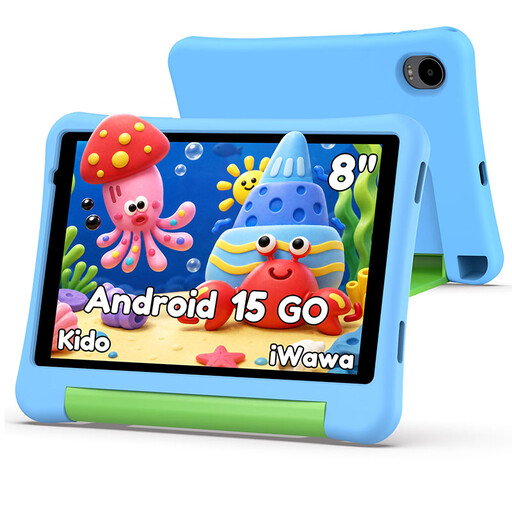
Alldocube Kido Children’s Tablet, 8-inch Android 15, 3GB+32GB
For child-led home use, the stated Child Lock manages content and screen time.
Stated features include an 8-inch display, Android 15, 3GB+32GB storage and memory, a blue protective case, 5G WiFi, a 3.5 mm socket and two speakers.
Before choosing it for a shared adult-and-child arrangement, confirm whether Child Lock supports separate accounts and whether Google Family Link works on this software build. No power adapter is included.
Joybuy
Frequently asked questions
Should a child use the same Apple Account as a parent on a shared iPad?
No, if you need reliable separation and child-specific controls. Apple Support says Family Sharing works with an Apple Account for each family member and warns that sharing one account can mix data and expose personal information, messages and call history. Set up a Child Account and add it to Family Sharing instead.
Can Google Family Link supervise any tablet, laptop or computer?
No. Google states that Family Link cannot supervise iPhones, iPads or computers other than Chromebooks. It can supervise a child’s Google Account on supported Android devices and Chromebooks, subject to the relevant device and account requirements.
How can I stop a child bypassing Family Link on a shared Chromebook?
Use the child’s supervised Google Account and configure the Chromebook owner settings to disable guest mode and control who can sign in. Google warns that allowing guest mode or new users can let a child use a Chromebook without Family Link settings.
What Windows account setup suits a shared family laptop?
Keep an adult administrator account for installs and settings, then set the child up with a standard account in the Microsoft family group. Microsoft says that a child with administrator access may be able to change or break Family Safety settings.
Do router-level parental controls cover every place a child uses the device?
Not necessarily. BT says its published controls apply to devices connected to its BT Hub and that use with a non-BT router requires BT DNS settings. Treat router controls as a home-network layer and check how account-level controls work on mobile data, public Wi-Fi and other home networks.


