Households focused on online safety
For families concerned about strangers, chat, multiplayer access or unsuitable content, the important distinction is whether restrictions apply to each child’s account or to everyone using the console.


Choose a console whose controls address your household’s main concern through an arrangement you can maintain, rather than assuming a console PIN will cover purchases, communication and play time. PlayStation and Xbox centre many controls on managed child accounts or family groups, while Nintendo’s console-wide controls and supervised-account store restrictions require separate attention. Before choosing hardware, check how each child will sign in, how spending works and whether their intended online games require a membership.
For families concerned about strangers, chat, multiplayer access or unsuitable content, the important distinction is whether restrictions apply to each child’s account or to everyone using the console.
These families need to understand purchase approvals, account balances and store restrictions before a child can buy games, add-ons or in-game items. A purchase request setting does not necessarily cover money already held in an account.
When children share a console, daily limits, activity information and a practical way to respond to extra-time requests may matter as much as the initial limit setting.
Start with the control structure: decide whether each child needs their own restrictions and whether the family will use a phone app. An existing console may also be sufficient if its available settings cover the household’s needs.
Consider it when: You want to manage a child’s play time, spending and communication through a separate family account and the PlayStation Family app.
Bear in mind: PlayStation says a child using an adult account bypasses its parental controls.
Consider it when: A Microsoft family group with screen-time, content, communication and multiplayer settings fits how you will manage the console.
Bear in mind: Microsoft says purchase approval does not prevent a child from using gift cards or funds already in their account.
Consider it when: App-managed play-time limits and restrictions shared across the console suit your household.
Bear in mind: Nintendo says console parental controls apply to everyone using it; supervised-account eShop restrictions are managed separately.
Consider it when: The console you already own can provide the child-account and content, spending, communication and time settings your family needs.
Bear in mind: Check the controls available on that particular device before treating a new console as necessary for parental controls.
| Concern | What to check | Who this matters to |
|---|---|---|
| Content and online contact | Check age-based content, chat and multiplayer restrictions, and whether they apply per child or across the console. | If my child plays online, I want to limit unsuitable content and unwanted contact without losing track of which account they use. Roughly 33% of consumers would put content and online-contact controls first. |
| Digital spending | Check purchase approvals or limits alongside gift cards, stored account funds and subscription settings. | I need to know whether my child can buy games or add-ons using credit that is already available to them. For roughly 27% of consumers, controlling digital spending would be the primary concern. |
| Play-time routine | Check scheduling, activity information and how a parent handles requests for more time. | When play has to fit around our daily routine, I need limits I can manage and a way to see how the console is used. Around 27% of consumers would prioritise play-time management. |
| Account and membership arrangements | Identify the family organiser, required child accounts and app setup; check membership requirements for intended online games. | Before changing consoles, I want to be sure our family can maintain the account setup and access the online games the children expect to play. Roughly 13% of consumers would make that practical fit their first priority. |
PlayStation and Xbox use child-account or family-group structures for many settings, but Nintendo says its console parental controls apply to everyone using the console. That difference matters when adults and children share a device.
Before buying, decide who will use each account and whether shared restrictions would suit everyone. Check store purchasing and online chat separately.
Microsoft says a child can still spend gift cards or funds in their Microsoft account when purchase approval is enabled.
Review the child’s existing balance, access to gift cards and any recurring memberships alongside the approval setting.
According to Microsoft Xbox Support, Xbox Game Pass is generally required for online multiplayer except for free-to-play titles. Nintendo says Nintendo Switch Online is required for many online games, although its parental controls do not require that membership.
Check the online-play requirement for the games your children intend to use before deciding on a console or membership.
Ofcom advises families to use a child’s correct age when setting up their account and to consider risks such as contact with strangers and upsetting interactions. Technical restrictions cannot address every exchange during play.
Check game age ratings and agree household rules for chat, friend requests, spending and reporting uncomfortable interactions.
For PS5 and PS4, PlayStation’s family-management approach uses a family manager, child family accounts and the PlayStation Family app.
Xbox One and Xbox Series X|S use Microsoft family groups and the Xbox Family Settings app for family controls.
Nintendo Switch 2 and Nintendo Switch combine console parental controls, a smart-device app and supervised Nintendo Account settings.
These PlayStation and Xbox consoles are options for families considering managed child accounts and family settings. Compare the account setup and digital-game format with your household’s needs before choosing a model.
 No image available
Consider this PS5 if you can set up a separate child family account and want to manage play time, spending and communication through PlayStation’s family tools.
This is a digital-only console without a disc drive. PlayStation says a child using an adult account bypasses parental controls.
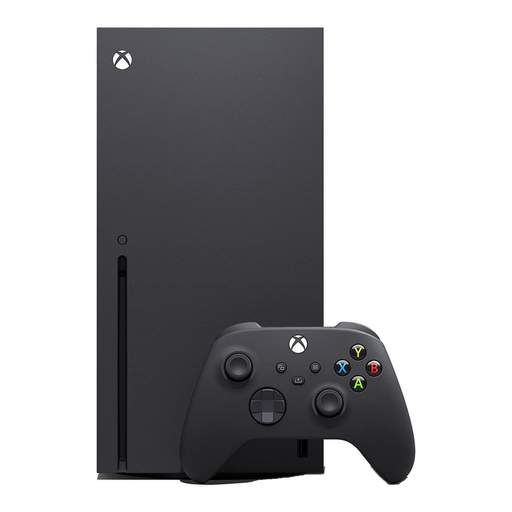 No image available
Consider this Xbox Series X if your family will use Microsoft family settings for screen time, content, communication and multiplayer access.
It is the 1TB black model. Microsoft says purchase approval does not prevent spending from gift cards or funds already in a child’s account; check the intended games’ online membership requirements too.
 No image available
Consider this Xbox Series X if Microsoft family settings suit your household and you want a digital-only console.
This white 1TB Digital Edition has no disc drive. Microsoft says child-account gift cards and existing funds remain spending routes even when purchase approval is enabled.
No: PlayStation says a child using an adult account can use its services without parental controls. Set up a separate child account within the family structure if you intend to rely on those protections.
Check each ecosystem’s payment paths rather than relying on one approval switch. PlayStation says child accounts have a default monthly spending limit of zero; Microsoft says Xbox child accounts can still use gift cards or existing account funds when approval is enabled; Nintendo provides eShop purchase restrictions for supervised accounts.
Nintendo says its console parental controls apply to the console, not an individual user. If children need different arrangements, check whether that console-wide approach works for your household; supervised-account eShop restrictions are managed separately.
Not for the Nintendo Switch Parental Controls app or PlayStation Family app, which their respective makers describe as free. Online multiplayer is a separate consideration: Microsoft Xbox Support says Game Pass is generally required except for free-to-play titles, while Nintendo Switch Online is required for many online games. Check the games your child intends to play.
No. Check a game’s PEGI rating when deciding whether it is appropriate for your child, and use console restrictions as an additional safeguard. UK government online-safety guidance also recommends paying attention to who children interact with during online play.