Flatmates short on fridge space
If the kitchen is cramped, consider whether a compact additional fridge will hold everyone’s containers without crowding them. Measure the available space before choosing its format.


Choose a fridge around the number of people sharing it and the shelf space their sealed, labelled containers need. An under-counter larder fridge can work where space is tight or as an extra appliance; a larger tall larder fridge offers more fridge-only room, while a fridge-freezer suits a group that also needs frozen storage. Whichever format you choose, keep cooked food separate from raw food and check the fridge temperature rather than relying on its dial setting.
If the kitchen is cramped, consider whether a compact additional fridge will hold everyone’s containers without crowding them. Measure the available space before choosing its format.
Regularly stored portions need enough chilled shelf space for several users, with a clear place for labelled, closed containers.
A crisper or humidity-controlled drawer may help organise uncooked produce. Assess shelf space for cooked portions separately: a produce drawer does not replace protected leftover storage.
Choose when: Floor space is tight or the group needs an additional fridge for chilled food.
Trade-off: A compact compartment may be crowded by several users’ meal containers.
Choose when: Several people need more fridge-only storage and frozen storage is available elsewhere or unnecessary.
Trade-off: It needs sufficient height and does not provide freezer space.
Choose when: The same group routinely needs both chilled storage and freezing.
Trade-off: Check the fridge compartment’s usable space separately from the appliance’s total capacity.
| Concern | What to check | Who this matters to |
|---|---|---|
| Organised chilled space | Compare fridge-compartment capacity and shelf positions against the containers the group uses. | When several people store cooked portions, I need an allocated place for each person’s containers rather than a crowded shelf. Around 42% of consumers put organised chilled space first. |
| Temperature and separation | Allow for a fridge thermometer and enough shelving to keep closed, ready-to-eat containers apart from raw food. | If cooked vegetables share a fridge with raw ingredients, I want to check that food stays chilled and protected from contamination. For around 33% of consumers, temperature and separation are the primary concern. |
| Fit, noise and energy use | Measure the installation space and door swing; compare each exact model’s annual kWh and declared noise. | In a tight shared kitchen, I need the door to open properly and want to assess the appliance’s sound and electricity use. Physical fit and running considerations come first for around 25% of consumers. |
A fridge can fit the kitchen yet leave too little usable shelf space for everyone’s containers. Beko UK lists 128L of fresh-food space for its UL4584 under-counter model and 309L for its LSP4579 tall larder model; those figures describe those particular appliances, not every fridge in either format.
Measure the kitchen, then compare fridge-compartment capacity, adjustable shelf positions and the footprint of the containers you intend to store.
Produce-storage features address a different need from protecting cooked, ready-to-eat vegetables from contamination.
Keep cooked portions in closed, labelled containers in an agreed ready-to-eat area. Check the fridge temperature and keep raw food separate.
Annual electricity consumption and declared noise relate to the exact model. An energy class alone does not show how much electricity an appliance uses.
Compare the annual kWh figure, fridge capacity and declared dB(A) for the models under consideration.
A fridge runs continuously, so electricity use remains a practical consideration after installation.
Beko UK offers under-counter and tall larder models relevant to a choice between compact placement and more fridge-only space.
Bosch describes VitaFresh models with humidity-controlled drawers for uncooked fruit and vegetables.
Hotpoint UK lists the H55R1 112W UK as a 128L freestanding under-counter larder fridge.
These fridge-freezer, tall larder and under-counter models offer different ways to provide chilled space in a shared kitchen. Compare the room available for cooked-food containers with the group’s need for frozen storage, then check installation clearances and temperature with the appliance in use.
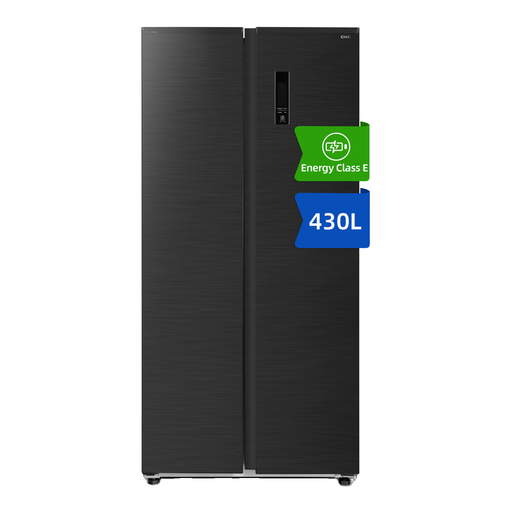 Image unavailable
Consider this format when the shared kitchen needs freezing as well as chilled storage for cooked portions.
The product name specifies an 84cm-wide, No Frost model. Measure the installation space and door-opening clearance, and compare the fridge compartment’s capacity rather than relying on the 430L total alone.
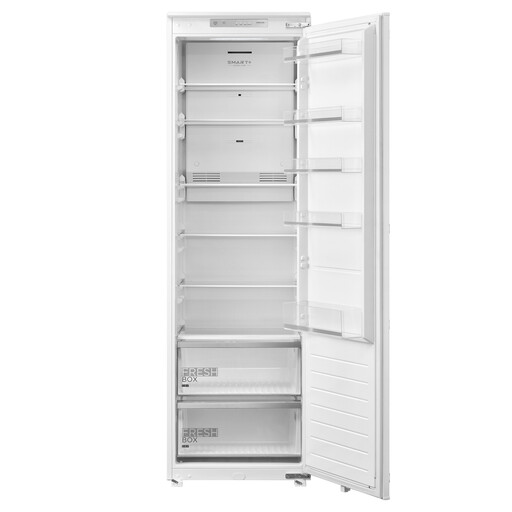 Image unavailable
Consider a fridge-only appliance when several sharers need chilled space and freezing is handled separately or is unnecessary.
This 304L model is built in. Confirm the cabinetry, ventilation and installation requirements before choosing it for a shared kitchen.
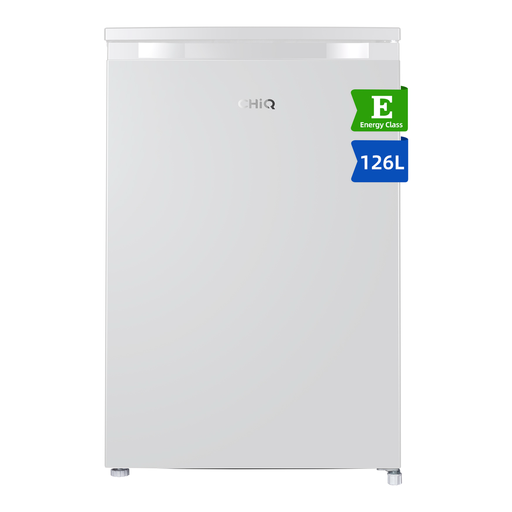 Image unavailable
This freestanding model is worth considering as an additional shared fridge or where kitchen space is limited.
Its stated capacity is 126L and its name gives a 55cm width. Check whether everyone’s labelled containers will fit, along with the required ventilation and door clearance.
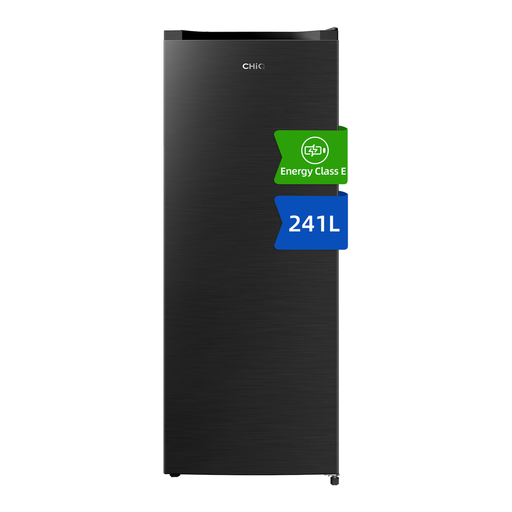 Image unavailable
Consider this fridge-only format if the group needs more chilled room than a compact under-counter appliance provides.
The freestanding model is listed as 54cm wide and 1.44m tall. Check the available height, ventilation clearance and door-opening space before ordering.
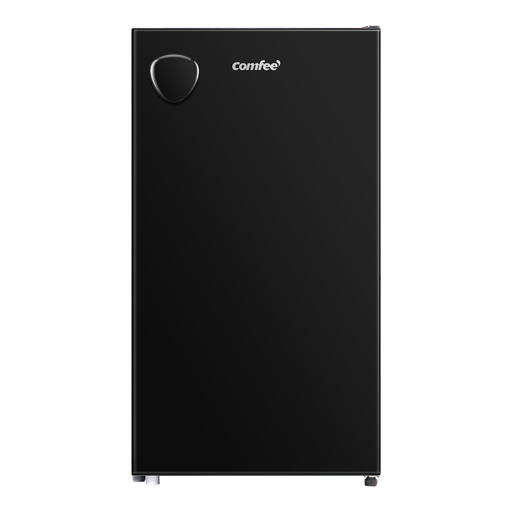 Image unavailable
Consider this compact model as an extra fridge, provided its 88L capacity accommodates the intended containers.
The product name lists removable glass shelves, an adjustable thermostat and a reversible door. Its cooler zone is described for short-term use only, so use the main fridge space for cooked leftovers and check the temperature with a thermometer.
For a domestic fridge, aim for the 1°C to 5°C operating range recommended in a Food Standards Agency research review. Use a fridge thermometer if the appliance’s setting does not tell you the temperature inside.
Put cooked portions in closed, food-safe containers, label them with the owner and preparation date, and agree an allocated ready-to-eat area. Keep raw food physically separate so that a crowded shelf does not undermine the arrangement.
Choose a larder fridge when chilled storage is the main shortage and freezing is available elsewhere or unnecessary. If the group also freezes food regularly, consider a fridge-freezer, but compare its fridge compartment with the space needed for everyone’s containers.
Compare the exact models’ annual kWh figures alongside their capacities, rather than using energy class alone. Check declared noise as well if the fridge will stand near a shared living area.