What matters when choosing?
Decide whether mugs can be washed in batches or need to return quickly, then measure the site and compare machines that suit that workflow. A food business also needs to check the wash process against its cleaning procedures.
Slimline or compact household dishwasher
Consider when: The kitchen has limited space and mug loads are modest.
Trade-off: A smaller machine may require more batches; confirm that its racks fit the mugs you use.
Full-size household dishwasher
Consider when: There is room to collect mugs and run a batch without delaying users.
Trade-off: Programmes that use fewer resources can take longer, so capacity alone will not settle turnaround.
Professional dishwasher or glasswasher
Consider when: Repeated, time-sensitive loads or a food-business cleaning process call for a planned washing workflow.
Trade-off: Check the site utilities, chemicals, maintenance and staff procedures as well as the machine.
| Concern | What to check | Who this matters to |
|---|
| Wash process |
For a food-business kitchen, check the machine’s documented wash performance and how it will be operated and maintained. For other shared kitchens, use a suitable programme for the dishwasher-safe mugs. |
If I run a food-business kitchen, I need a wash process staff can follow consistently, not just a machine described as commercial. Around 31% of consumers would put process suitability first. |
| Mug turnaround |
Check how the actual mugs fit in the racks and compare programme durations for the loads you expect. |
When several people need clean mugs close together, I cannot rely on place settings alone to tell me when another batch will be ready. Roughly 31% of consumers would make turnaround their primary concern. |
| Space and installation |
Measure height, width and depth, allowing for pipework, connections and a fully open door; check cabinet compatibility for an integrated model. |
In a cramped shared kitchen, I need the dishwasher to fit and remain easy to load before its other features matter. About 23% of consumers would prioritise installation fit. |
| Resource use and noise |
For household models, compare the UK energy-label figures for eco-cycle energy and water use, duration and noise on the exact models. |
If a cycle runs while others work nearby, I want to weigh noise against the resources used by the programme we can realistically run. Around 15% of consumers would put resource use and noise first. |
Household dishwasher options on Joybuy
These household models offer full-size and slimline choices for kitchens washing dishwasher-safe mugs in batches. Compare installation type and mug fit before choosing; a food-business wash process needs its own assessment.
 No image available
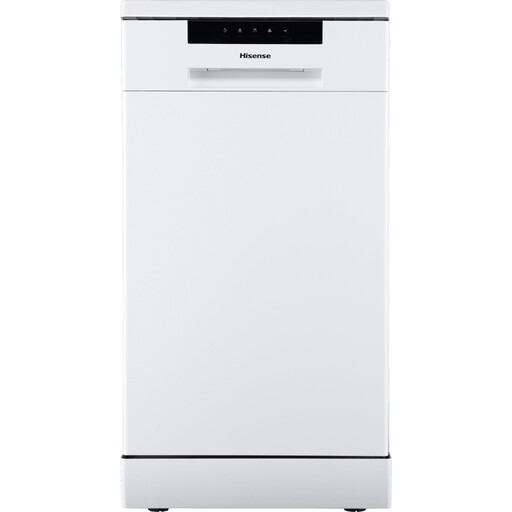
Hisense HS642D90WUK 60 cm freestanding dishwasher, 14 place settings, D rated
Consider this full-size model if the kitchen can collect mugs into batches and accommodate a freestanding machine.
Place settings indicate general crockery capacity, not how many mugs fit. Check rack clearance, connections and the space needed to open the door.
View on Joybuy
 No image available
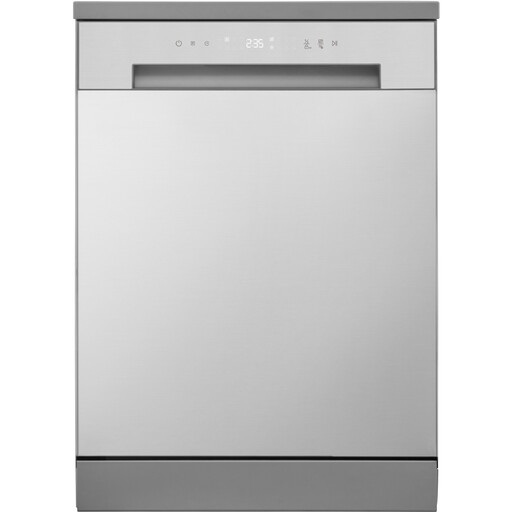
Hisense HS523E15WUK 45 cm freestanding slimline dishwasher, 9 place settings, E rated
Consider this slimline format when a narrower freestanding appliance suits modest mug batches.
The stated width does not establish the full installation fit. Check depth, pipework, door clearance and usable space for your mugs.
View on Joybuy
 No image available
LG DF030FL dishwasher, 13 place settings, E rated
Consider this model for batch-washing where the available space accommodates the appliance.
Check its full dimensions, rack clearance and UK energy-label programme figures if turnaround and resource use will influence the choice.
View on Joybuy
 No image available
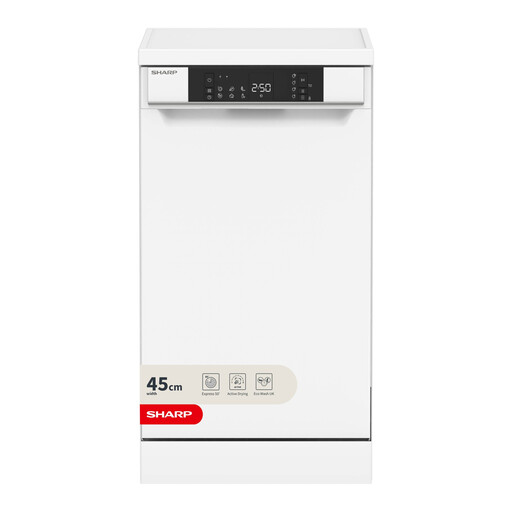
Sharp QW-NS1EF49E0W-EN 45 cm dishwasher, 49 dB, E rated
Consider this narrower model where both installation space and noise around other kitchen users matter.
The stated 49 dB figure does not describe every programme or the sound in your room. Check full installation dimensions and mug clearance.
View on Joybuy
 No image available
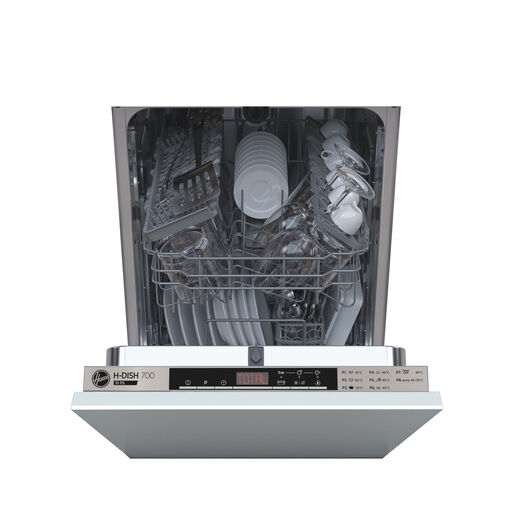
Hoover HDIH 2T1047-80 H-Dish 500 integrated slimline dishwasher, 10 place settings, E rated
Consider this model when the shared kitchen has a suitable cabinet space for an integrated slimline dishwasher.
Confirm cabinet compatibility, connections and door clearance, then check how the intended mugs fit in the racks.
View on Joybuy
Common questions
Does every shared kitchen need a commercial dishwasher?
No: sharing a kitchen does not, by itself, settle which type of dishwasher to buy. For a food business, assess the machine against the operation’s cleaning procedures, wash performance and workload; GOV.UK says a cleaning schedule should cover what needs cleaning, how often and which products to use.
Which energy-label figures help compare household dishwashers?
Compare the figures for the exact models, including energy consumption per 100 eco cycles, water use and duration per eco cycle, capacity and noise. GOV.UK’s dishwasher energy-label specification lists these fields; also check the programme you expect the shared kitchen to use.
Should we use Eco or a shorter programme for mugs?
Use a suitable Eco programme when clean mugs are not needed quickly, and compare shorter programmes when turnaround is more important. Which? says Eco generally uses less energy and water than normal or automatic programmes but takes longer; follow the appliance instructions for the load and programme chosen.
What upkeep matters in a food-business kitchen?
Keep the dishwasher and its loading process within the business’s cleaning and maintenance procedures. Check the machine’s instructions for rack loading, filters, wash components and servicing, and ensure staff know the procedure they are expected to follow.
How should a shared kitchen handle dishwasher chemicals?
Follow the detergent and rinse-aid safety information and make sure relevant users know how to handle and store the products. The Health and Safety Executive identifies these products among cleaning substances that hospitality employers need to manage to prevent accidental harm.


