Space-limited shared-kitchen bakers
You make modest batches and need a plug-in oven that can occupy a safe worktop position without permanent cabinet installation.


For modest batches of savoury crackers, consider a countertop fan-assisted or convection oven if it can sit safely on the shared worktop. A built-in fan oven makes more sense when repeat batches justify fixed installation and the kitchen can accommodate it. If the crackers are produced for a food business, check the appliance’s intended use and the kitchen’s food-safety arrangements before choosing either format.
You make modest batches and need a plug-in oven that can occupy a safe worktop position without permanent cabinet installation.
You regularly need more usable tray space and are considering a fixed oven, provided the kitchen has compatible housing and installation arrangements.
You produce crackers for sale or regular public supply, so appliance choice must fit the kitchen’s cleaning, separation and food-business arrangements.
Decide whether the kitchen can accommodate a movable countertop appliance or a permanently installed oven, then compare usable tray space for the batches you intend to make. For food-business use, intended-use instructions and kitchen controls are part of that decision.
Consider when: Batches are modest and a plug-in oven has a safe, permitted worktop position.
Trade-off: It occupies shared preparation space, and domestic models must not be assumed suitable for food-business production.
Consider when: Repeat batches warrant a fixed appliance and the kitchen can support its installation.
Trade-off: It cannot be moved aside when someone else needs the space; housing, services and permission must be settled before purchase.
| Concern | What to check | Who this matters to |
|---|---|---|
| Safe worktop fit | Measure the appliance and its required clearance; confirm that its position and electrical arrangement are permitted. | When preparation space is shared, I need an oven that can sit safely without crowding other users. For around 33% of consumers, worktop fit would be the primary concern. |
| Repeatable batches | Compare supplied tray dimensions and rack positions, then check the exact model’s fan or convection modes. | If I bake several trays regularly, usable tray space and repeatable heating matter more to me than cavity litres alone. Roughly 42% of consumers would put batch baking first. |
| Food-business suitability | Check the appliance’s intended use and how trays and surrounding work areas fit cleaning and separation procedures. | For crackers made for sale or regular public supply, I need equipment that fits the kitchen’s food-safety controls. That would be the deciding concern for about 25% of consumers. |
Cavity volume does not tell you how many cracker trays fit, how much space separates them or whether the model supports cooking on several levels.
Compare supplied tray sizes, rack positions and cooking modes with your intended batch layout. Treat multi-level claims as specific to the model.
The Russell Hobbs 22780 instructions designate it for household use only. A food business also needs controls for cleaning and cross-contamination that an oven choice cannot provide by itself.
Before buying for business use, check the exact appliance instructions, the kitchen operator’s requirements and the controls appropriate to your activity.
A countertop oven needs more room than its casing dimensions alone suggest. The Russell Hobbs 22780 manual, for example, requires at least 50 mm of space around the appliance.
Measure the intended position against the model’s instructions and agree where it can be used without obstructing other preparation work. In a workplace, follow an electrical inspection and maintenance approach appropriate to the setting.
Trays, utensils and shared preparation surfaces can bring raw-food and ready-to-eat work into contact outside the oven.
For a food business, establish how those activities will be separated and how shared equipment and surfaces will be cleaned and disinfected. Food Standards Agency guidance calls for adequate separation of work areas, surfaces and equipment used for raw and ready-to-eat food.
The HHF113BR0B illustrates the fixed, built-in route for a kitchen that can accommodate installation.
The 22780 Mini Kitchen and 26680 illustrate compact countertop choices for domestic use.
The DT200UK is a larger multifunction countertop model to consider where a built-in oven is not an option.
These models cover the fixed-installation route for shared kitchens that can accommodate a built-in oven. Compare their cooking modes and usable trays for your cracker batches; a built-in format alone does not establish food-business suitability.
 No image available
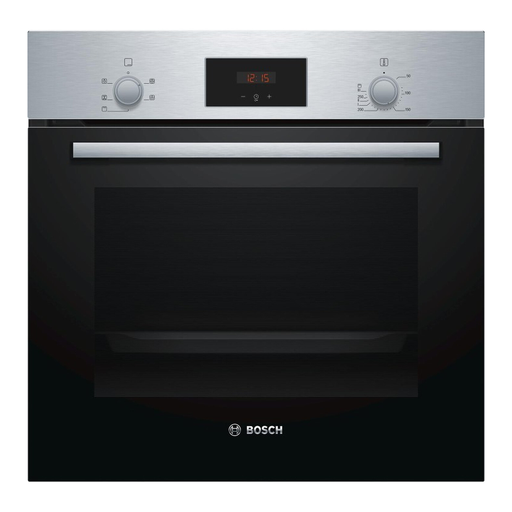
Consider this fixed-installation model if repeat batches make multi-level cooking useful. Bosch specifies 3D Hotair for up to three levels and dimensions of 595 × 594 × 548 mm; the Joybuy listing identifies a 66 L cavity. Confirm cabinet fit, the electrical arrangement, kitchen permission and the tray dimensions needed for your crackers.
 No image available
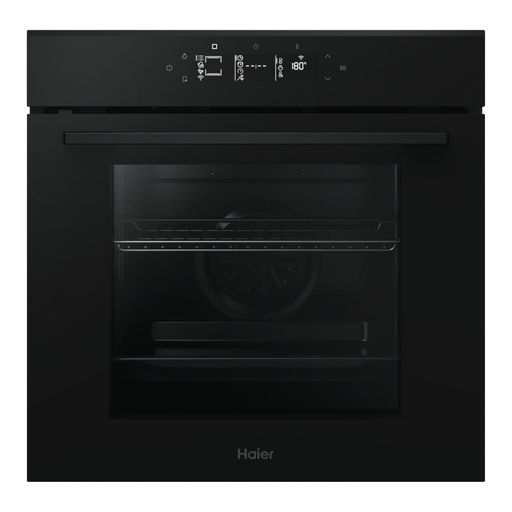
Consider this built-in option if cavity space is important, but assess usable tray layout separately from its 70 L capacity. Before relying on a temperature setting for repeated batches, confirm the applicable maximum temperature because the product information conflicts. Check housing fit and the electrical installation requirements.
 No image available
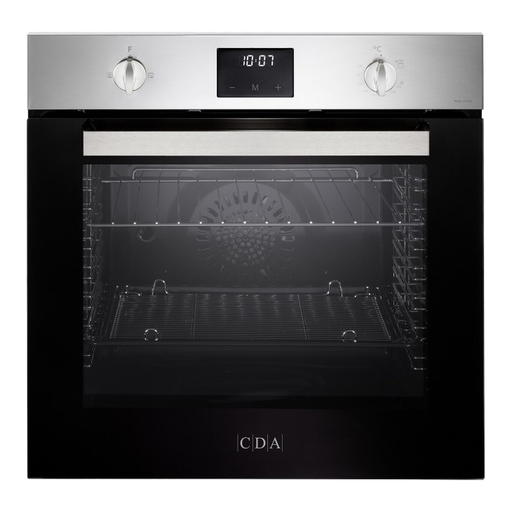
This gas fan model is a route to consider only if the shared kitchen can support its installation and gas requirements. Its title identifies a 70 L cavity; confirm the gas type, usable tray dimensions and temperature controls before choosing it for cracker batches.
 No image available
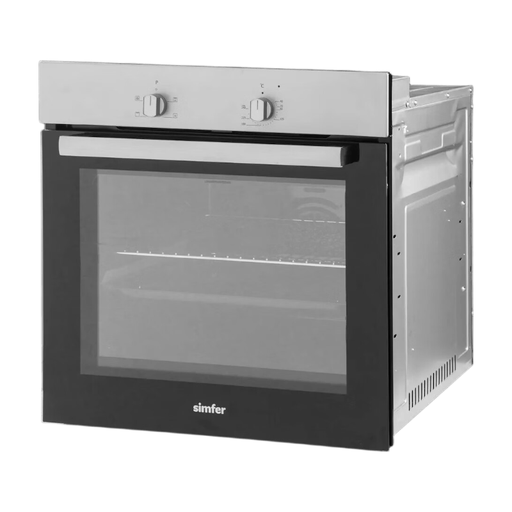
Consider this fan-oven format where permanent installation is feasible. Reconcile the product and installation dimensions with the actual cabinet before buying, and check tray sizes and temperature controls against your intended batches.
 No image available
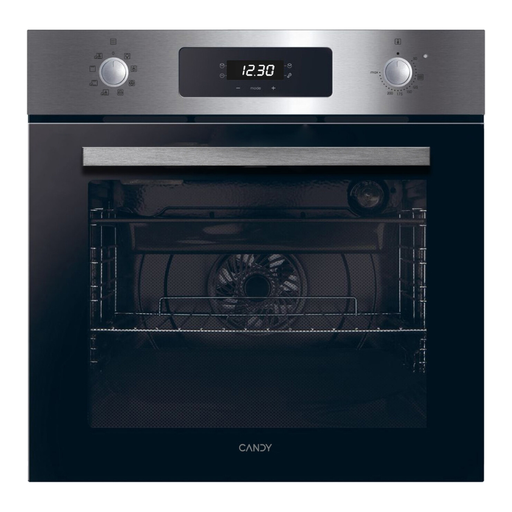
The 70 L built-in cavity is worth considering if the kitchen has suitable housing, but volume alone does not establish how many cracker trays you can bake. Confirm the cooking modes, temperature range, supplied tray size and installation requirements before deciding.
If the activity is a food business, registration with the relevant local authority is required; using a shared kitchen does not remove that requirement. GOV.UK provides food-business registration guidance, while Food Standards Scotland says businesses in Scotland must register at least 28 days before opening. If you are unsure whether your activity counts as a food business, ask the local authority before starting.
Do not assume a household mini oven is suitable for that use. The Russell Hobbs 22780 instructions specify household use only; check the instructions for the exact appliance and the kitchen operator’s food-safety requirements before buying for a business.
Annual portable appliance testing is not a blanket legal requirement. The Health and Safety Executive says electrical equipment that could cause injury must be maintained in a safe condition; suitable inspection and testing depend on the equipment and where it is used.
Include trays and surrounding preparation surfaces in the business’s cleaning and separation procedures. Food Standards Agency guidance calls for adequate separation of areas, surfaces and equipment used for raw and ready-to-eat food; plan how shared items will be cleaned and disinfected before they are used for crackers.
No: its position must meet the exact model’s placement and clearance instructions as well as the kitchen’s rules. The Russell Hobbs 22780 manual requires a stable, level, heat-resistant surface and at least 50 mm of space around the appliance, so measure the usable position rather than the oven casing alone.