Choose a laptop around the archive software, storage plan and equipment at the shared desk, rather than the processor name alone. Adobe recommends at least 16GB of memory and a fast SSD for Lightroom Classic, but that is an application-specific recommendation. If the archive contains personal information, plan for encryption, separate authorised accounts and clear recovery-key ownership before putting the laptop into shared use.
Who is the laptop for?
Archive custodians with growing libraries
If you maintain the master archive and import new batches, decide where the working files and backups will live as the collection grows. The fitted laptop SSD is only one part of that plan; external or network storage may also be relevant.
Shared-workspace coordinators
If several authorised people use the desk, check the laptop against its displays, drives and sign-in arrangements. Where the archive contains personal information, the Information Commissioner's Office advises enabling laptop storage encryption; separate accounts and recovery-key ownership also need a clear plan.
Photo reviewers and occasional editors
If your work is mainly searching, tagging, comparing and light editing, start with the requirements of your actual application. Adobe recommends at least 16GB of memory and a fast SSD for Lightroom Classic; that recommendation does not automatically apply to every photo organiser.
What matters when choosing?
Start with the software and working archive, then check how the laptop will connect to the shared desk and how access to the files will be managed.
| Concern |
What to check |
Who this matters to |
| Archive storage and growth |
Check the fitted SSD capacity and whether the exact configuration allows storage expansion. Plan where working files and backups will live. |
I maintain a growing master archive, so I need room for new imports without treating the laptop's SSD as the whole storage plan. Roughly 29% of consumers put archive capacity and growth first. |
| Security and shared access |
If files contain personal information, check that encryption is available and enabled, and agree who manages authorised accounts and the recovery key. |
When other people use the workspace, I need to control access to personal information and keep a way to recover the laptop. For roughly 29% of consumers, that protection is the primary concern. |
| Searching, tagging and editing |
Compare your application's minimum and recommended requirements. Adobe recommends at least 16GB of memory and a fast SSD for Lightroom Classic. |
I spend my time browsing, tagging and sometimes editing photos, so the application needs to feel workable during those tasks. Around 24% of consumers prioritise this workflow. |
| Displays and media connections |
List the monitor inputs, drives and camera-card formats at the desk; check the exact laptop's ports and any compatible dock or reader. |
I regularly connect shared displays and import camera media, and I do not want each session to depend on the wrong adapter. Connectivity comes first for around 18% of consumers. |
What is easy to overlook?
-
Treating an application's minimum as the target specification
Adobe lists 8GB of memory as the Lightroom Classic minimum but recommends at least 16GB and a fast SSD. Meeting the minimum alone does not settle what you need for your catalogue and other open applications.
Check the requirements for the software you will use, and distinguish routine searching and tagging from more demanding editing.
-
Assuming Windows encryption is already active
Microsoft says Device Encryption depends on device and setup prerequisites. In shared use, an unknown recovery-key owner can also make access difficult when recovery is needed.
Before loading personal information, check encryption on the chosen laptop, set up separate authorised accounts and agree who holds the recovery key.
-
Overlooking the desk's adapters and card formats
A USB-C-focused laptop and one with built-in HDMI or USB-A connections may need different equipment at the same desk. A microSD slot also does not take every camera card.
Check the existing monitors, drives and cards against the exact laptop before choosing a dock, display adapter or card reader.
A compatible dock or separate card reader may need to be kept with the shared workstation.
Relevant brands to consider
Apple
The MacBook Air M5 line is relevant if the archive software works with macOS and the desk can use compatible USB-C or Thunderbolt connections. Apple's UK specifications list 16GB unified memory, SSD options starting at 512GB and support for up to two external displays.
- Apple lists two Thunderbolt 4/USB-C ports for connecting compatible equipment and displays.
- The listed connections do not include built-in HDMI, USB-A or a card reader, so check which adapters the desk needs.
Dell
A cited UK Inspiron 14 Plus 7440 configuration combines 16GB memory and a 1TB SSD with HDMI, Thunderbolt 4, USB-A and a microSD slot. Those details apply to that configuration, not every Inspiron laptop.
- Its listed connections may let the shared desk use some existing displays, USB-A drives and microSD media directly.
- Check the exact memory configuration and expansion options before relying on a later upgrade; a microSD slot is not a full-size SD slot.
Lenovo
The ThinkPad E14 Gen 6 line is relevant if the archive owner values a Windows laptop with a potential memory and storage upgrade path. Lenovo describes both as upgradeable on this product line.
- Lenovo's stated upgrade options are worth examining for a collection expected to grow.
- Check the exact machine type, fitted components, available slots and support terms before planning an upgrade.
Joybuy laptops for this workflow
These laptops offer different starting configurations for organising a photo archive. Compare their stated memory and SSD capacity with your software and storage plan, then check the exact model against the shared desk's connections and access requirements.
 No image available
ASUS Zenbook DUO UX8406CA-QL135W, 14-inch Dual OLED Touch, 16GB, 1TB SSD
Consider this configuration if you want two built-in work areas while sorting and reviewing photos. Its stated memory is 16GB and its SSD is 1TB; confirm the exact screen resolution before using it to judge the display, and check the desk's connection needs separately.
View on Joybuy
 No image available
Lenovo LOQ Essential 15ARP11, Ryzen 7 170, 16GB, 1TB SSD, RTX 5050
Consider this 15.6-inch configuration if its stated 16GB of memory and 1TB SSD fit your working archive. It has an FHD 144Hz display; check whether its memory limit suits your software and whether you need a separate reader for your camera cards.
View on Joybuy
 No image available
HP OmniBook Ultra Flip 14-fh0006na, 2-in-1, 16GB, 1TB SSD
This 2-in-1 configuration may suit someone who moves between work areas while organising photos. The name specifies 16GB of memory, a 1TB SSD and Windows 11 Home; confirm the exact ports and graphics configuration before relying on either for your workflow.
View on Joybuy
 No image available
Apple 13-inch MacBook Air M5, 10-core CPU, 10-core GPU, 16GB, 1TB SSD, Sky Blue
Consider this macOS configuration if your archive application is compatible and you want the stated 1TB of local SSD storage. It has 16GB unified memory; check whether the shared desk's HDMI, USB-A or card-reader equipment needs a compatible adapter or dock.
View on Joybuy
 No image available
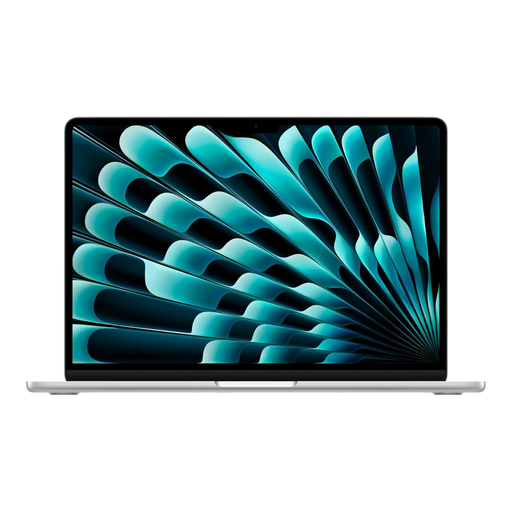
Apple 13-inch MacBook Air M5, 10-core CPU, 8-core GPU, 16GB, 512GB SSD, Silver
Consider this macOS configuration if a 512GB internal SSD fits your working files and wider archive-storage plan. It has 16GB unified memory; confirm software compatibility and the adapters needed for the shared desk before choosing it.
View on Joybuy
Common questions
Do I need 16GB of memory to organise a photo archive?
Not for every application: choose memory against the software you will actually use. For Lightroom Classic, Adobe lists 8GB as the minimum and recommends at least 16GB, alongside a fast SSD; simpler file management may have different requirements.
Should a shared-workspace laptop use encryption?
If the laptop stores personal information, the Information Commissioner's Office advises enabling storage encryption. It does not replace separate authorised accounts or physical access controls; on a Windows laptop, check whether Microsoft Device Encryption is available and enabled on the chosen device.
Who should hold the device-encryption recovery key?
Agree an authorised recovery-key owner before the laptop enters shared use. Microsoft says a key is attached to the Microsoft, work or school account used when Device Encryption is enabled, so the team needs a recovery arrangement that remains workable when users change.
Can I use a built-in card reader for every camera import?
Only if the slot matches the camera's card format. For example, the cited Dell Inspiron 14 Plus 7440 configuration has a microSD slot, not a full-size SD slot; check your cards and arrange a compatible reader if needed.


