Choose a tablet whose child account, controls and everyday supervision fit your household, rather than choosing by child-focused branding alone. A Fire tablet offers Amazon Kids profiles and routine controls; an iPad or Android tablet may fit a household already using its account system. Before handing down an older device, check its software and profile options, and use parental controls alongside household rules rather than in place of supervision.
Who is this for?
Parents managing a child account
For households choosing around app approvals, content restrictions and time routines, the account setup matters as much as the tablet. Apple’s child setup uses Family Sharing and a separate Child Account; Google Family Link controls apply when the child signs in with a supervised Google Account.
Families using one household tablet
When adults also use the device, keeping the child away from adult accounts, purchases and messages becomes a practical concern. Separate user profiles depend on the Android model, while Apple’s formal Shared iPad arrangement is intended for organisation-managed devices, not ordinary home account switching.
Families considering a hand-me-down
An older family tablet is worth considering if its exact model and software can run the child-account features the household needs. Google specifies Android 5.1 or later for supervised child-account sign-in and Android 7 or later for Family Link screen-time limits.
What matters when choosing a shared tablet?
Start with the child’s account and the activities the tablet must support, then decide whether it also needs to keep adult use separate. A child-oriented model, a standard iPad or Android tablet, and a handed-down device all need their own setup checks; Wi-Fi-only use is a household boundary, not a parental control.
| Concern |
What to check |
Who this matters to |
| Child account and controls |
Check how to create the child’s account, who manages approvals and whether the parent can use the required management tools. |
If I need to approve apps and set content and time boundaries, I want a setup I can manage after the tablet is handed over. Around 36% of consumers would put parent-managed controls first. |
| Separation on a shared device |
Check the exact model’s user-profile options and which profile holds the child’s account. Do not assume a home iPad offers Apple’s organisation-managed Shared iPad setup. |
When adults also use the tablet, I need the child’s activity kept apart from their accounts and settings. Roughly 29% of consumers would make that separation their primary concern. |
| Homework, games and communication |
List the required services and check that each works with the intended child account and app-approval settings. |
If the tablet is for school activities and family contact as well as games, I need those particular services to work within the child’s setup. Around 21% of consumers would prioritise activity and app fit. |
| Supervised home use |
For a hand-me-down, check the model and software version. Agree where the tablet will be used and charged, regardless of its connectivity. |
If use will mainly be at home, I may prefer to reuse a family device and keep it in a shared space. About 14% of consumers would put that supervised-home arrangement first. |
Shared-tablet mistakes to avoid
-
Letting a child use an adult’s main account
Adult purchases, settings and personal information can become mixed with the child’s use, while controls intended for a child account will not be set up as designed.
Create the child’s own account before adding apps: use a Child Account in Apple Family Sharing or sign the child into a supervised Google Account on Android.
-
Treating filters as complete protection
Google says restricted Play content can still appear in search results or through direct links, and Amazon says Fire controls do not remove all mature content. Which? also cautions that tablet parental controls are not foolproof.
Try the settings with the apps and services your child will use, agree where the tablet can be used and continue supervising its use.
-
Assuming an older tablet has every child-profile feature
Google’s supervised-account and screen-time features have different Android version requirements, and multiple user profiles depend on the device. Apple’s Shared iPad configuration requires an organisation-managed setup.
Identify the exact model, installed software and available profiles before resetting a hand-me-down or choosing it for shared use.
-
Forgetting a Fire tablet’s parental-controls password
Losing the password can prevent a parent from changing the controls when the household needs to.
Keep the password securely and retain the account details needed to set the tablet up again.
Amazon says restoring full access after a forgotten parental-controls password requires a factory reset, which means repeating setup.
Relevant tablet ecosystems and brands
Apple
An iPad route for households prepared to set up Family Sharing, a Child Account and Screen Time.
- Apple says Screen Time can manage apps, content, communications and usage timing for a child account.
- Apple’s formal Shared iPad setup requires supervised, organisation-owned devices, Managed Apple Accounts and device management; it is not ordinary home account switching.
Google / Android
A standard-tablet route for households using a supervised Google Account and Family Link.
- Google documents controls for Play, Search, Chrome websites, apps and screen time when the child is signed in to the supervised account.
- Google requires Android 5.1 or later for supervised-account sign-in and Android 7 or later for Family Link screen-time limits. Separate user profiles depend on the tablet model.
Amazon Fire
A child-oriented route for households considering Amazon Kids profiles and parent-managed routines.
- Amazon describes age filters, activity limits, pauses and bedtime settings in Amazon Kids.
- Amazon warns that Fire parental controls do not remove all mature or adult-rated material from the device or store search results.
Child-oriented tablets on Joybuy
These child-oriented tablets are options for a first device used under household supervision. Before choosing either one, check how its child controls work with the accounts and services your family intends to use.
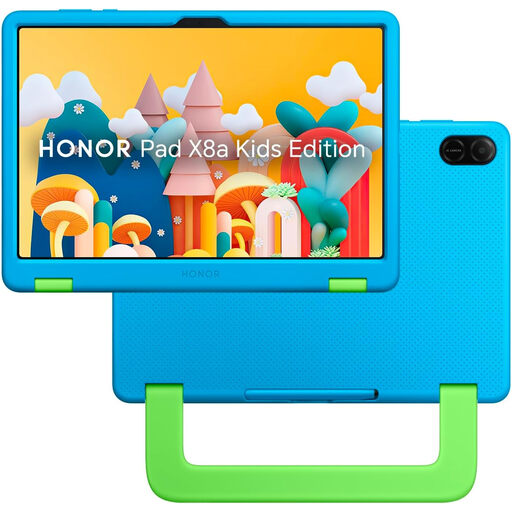 Image unavailable
HONOR X8A Kids 11-inch Wi-Fi, 128GB, Space Grey
Consider this child-oriented model if its account setup will accommodate the child’s supervised use.
The product name specifies an 11-inch tablet with Wi-Fi and 128GB of storage. Check the exact software version, child-account options and required app compatibility before choosing it for your household.
View on Joybuy
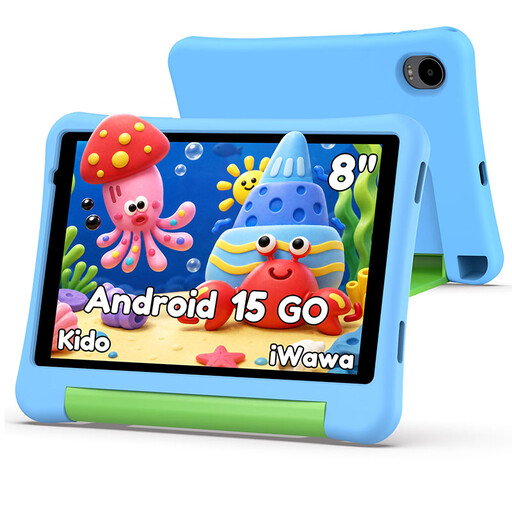 Image unavailable
Alldocube Kido 8-inch Android 15 tablet with blue case, 3GB+32GB
Consider this smaller child-oriented tablet if its stated Child Lock can be configured for the supervision your household needs.
The product name specifies Android 15, an 8-inch display, 3GB of memory, 32GB of storage and a protective case. Check whether it supports a separate child account or user profile and which controls Child Lock provides. The title states that no power adapter is included.
View on Joybuy
Questions about a child’s shared tablet
Does my child need a separate account on a shared tablet?
Use a separate child account for the managed setup rather than signing the child in with an adult’s account. Apple directs families to give each member their own Apple Account in Family Sharing; Google’s supervised controls apply when the child signs in with their supervised Google Account. If adults will also use the device, check its user-profile options separately.
Can parental controls replace supervision?
No: use them alongside agreed household rules and supervision. Which? cautions that controls are not foolproof, while Google and Amazon each describe ways restricted or mature material may remain visible in particular searches or device contexts.
Can an old Android tablet use Family Link?
It may, depending on its Android version and the features you need. Google says supervised child-account sign-in requires Android 5.1 or later, while Family Link screen-time limits require Android 7 or later; check the exact model separately if multiple user profiles matter.
What should I do before handing down a family tablet?
Check the tablet’s software and account options, then remove the previous user’s account before setting up the child’s own account or profile. Removing an account can also remove its related information from the device, so deal with anything the previous user needs to keep first. Test the child’s app approvals and content settings before use.


