Households keeping a working TV
If the screen still suits everyone, an available HDMI input and support for your must-have apps are the main checks before adding a streaming player.


Keep a working TV if its screen still suits the room and it has a free HDMI input: a compatible streaming player can add the apps your household needs. Replace the TV when the screen or inputs also need changing; if live broadcast or recording matters most, choose equipment around the home's aerial or satellite dish. Check exact app support, connections and network needs before buying.
If the screen still suits everyone, an available HDMI input and support for your must-have apps are the main checks before adding a streaming player.
Your choice of broadcast equipment depends on the home's aerial or satellite dish, whether you want to record programmes and how you will connect for catch-up viewing.
If the screen is too small for the seating arrangement or the room is difficult to hear, assess display size, available connections and audio equipment as part of the same decision.
Decide whether the current screen needs replacing, then check the viewing services and live-TV reception you want to keep. A streaming player adds app access to a suitable TV; Freeview Play and Freesat involve different reception equipment.
| Concern | What to check | Who this matters to |
|---|---|---|
| App compatibility | Check each must-have service against the exact device model and its current software. ITV Help lists platform and model-year conditions for ITVX. | If my TV still works, I want the broadcaster and streaming apps we actually use without replacing the screen. Around 31% of consumers put app compatibility first. |
| Live-TV reception | Check the aerial for Freeview live TV or the dish and cable for Freesat. If recording matters, check that the chosen equipment includes it. | When live channels are central to our shared viewing, I need equipment that fits the reception available at home. For around 25% of consumers, that broadcast route is the primary concern. |
| Network and connections | Count free HDMI inputs and check the network near the TV. For 4K or HDR, confirm the display, player, content and relevant HDMI connection are compatible. | I want streams to work at our TV's position and existing devices to stay connected, rather than finding that a port or connection prevents the intended setup. Connection reliability comes first for around 25% of consumers. |
| Screen and sound | Measure seating distance and furniture space; check the TV's audio connections before choosing separate speakers or a soundbar. | If everyone shares one room, I need a screen we can comfortably view and sound we can hear from our seats. Around 19% of consumers make screen or audio suitability their first priority. |
ITV Help sets platform and model conditions for ITVX; Netflix and Channel 4 also require their respective apps on the TV or connected device.
List the household's essential services and check each provider's current device guidance against the exact model and software version before ordering.
Roku says 4K viewing needs a compatible TV and content. The intended HDMI input and other parts of the connection can also affect supported playback.
Check the TV, player, HDMI input and service together if 4K or HDR is a reason for choosing the device.
You may need a different HDMI input or suitable cable, or have to use a lower-resolution output.
Freeview says live TV through its TV Guide needs an aerial. Freesat requires a suitable satellite dish and cable, as well as an HDMI connection to the TV.
Check the property's existing connections and reception first. For a new dish, Freesat advises checking applicable permissions, particularly in rented, listed or conservation-area properties.
Aerial work, dish installation or additional cabling may be needed.
TV Licensing says TV Licence coverage is required for watching or recording live TV across services and devices, and for using BBC iPlayer.
Check what the household will watch before setting up live services or BBC iPlayer; buying hardware or a subscription does not replace a required TV Licence.
An external-player route when you want to keep an HDMI-equipped TV.
Apple TV 4K is an external-box option, including a Wi-Fi + Ethernet variant for a wired network.
Chromecast with Google TV is a way to add a separate streaming interface to an existing display.
A satellite set-top-box route for a household choosing dish-based live-TV reception.
A smart-TV route when replacing the display is part of the household's plan.
These choices include replacement smart TVs in several screen sizes and a streaming player for keeping an existing HDMI-equipped TV. Choose between them by the screen, apps and connections your household needs; assess aerial- or dish-based reception separately where live TV is important.
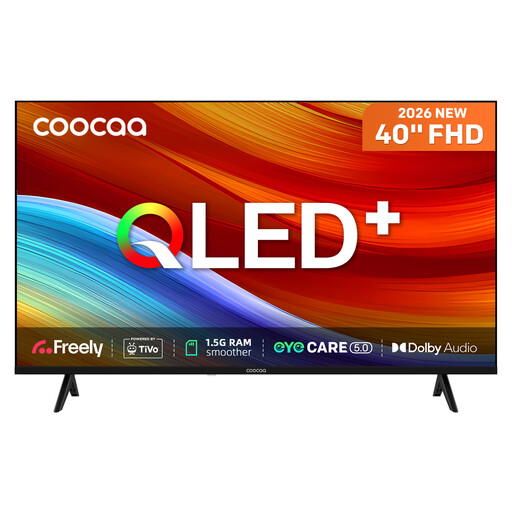 No image available
Consider this replacement TV if a 40-inch screen fits your shared viewing space. Its title specifies Full HD, HDR10 and Dolby Audio; check the exact model's essential apps and the home requirements for the live-TV service you intend to use.
 No image available
This is a replacement-screen option if a 55-inch TV fits the seating distance and furniture. The title identifies an ONKYO 2.1 sound system; check required broadcaster apps and confirm any gaming refresh-rate condition that matters to you.
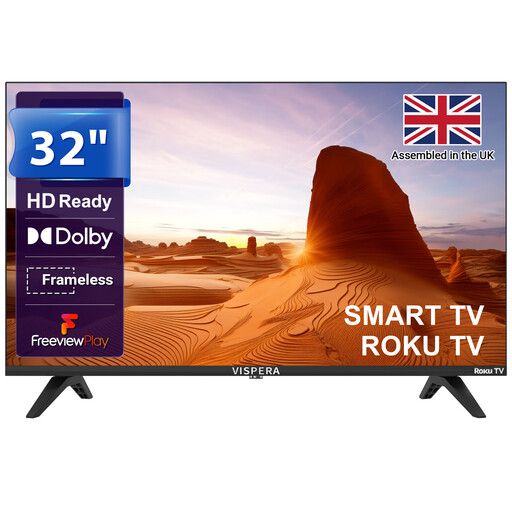 No image available
Consider this smaller replacement screen where 32 inches suits the viewing distance. The title identifies Freeview HD; check the exact operating system and desired apps, and confirm that the home has suitable aerial reception for Freeview live TV.
 No image available
This replacement TV offers a 43-inch screen if that size suits your shared room. Check the exact model's required apps and live-TV reception arrangements; its Game Accelerator wording is qualified as FHD rather than establishing a native 4K refresh rate.
 No image available
Consider this player when you want streaming access without replacing a TV that has a free HDMI input. Check its current support for your essential apps and the network connection; 4K output also requires a compatible display and HDMI path.
Yes, if the TV has a free HDMI input and the player supports the apps you need. Roku says its players connect to HDMI-equipped TVs; check each broadcaster's current device support before choosing a particular stick.
No: support depends on the exact TV or connected device. ITV Help lists platform and model conditions for ITVX, while Netflix and Channel 4 require their respective apps to be available on the device you use.
Choose around the reception available at home: Freeview says live TV through its TV Guide needs an aerial, while Freesat requires a suitable satellite dish and cable. If recording is essential, check the functions of the particular TV or box as well as its reception route.
Match the connection to the services and picture quality you intend to use. Netflix recommends at least 3 Mbps for HD, 5 Mbps for Full HD and 15 Mbps for UHD; test the connection where the TV will be, and check whether your chosen device supports Ethernet if you plan to use it.
TV Licensing says you need TV Licence coverage to watch or record live TV on any service or device, or to watch or download BBC iPlayer. Watching only on-demand programmes on other services does not, by itself, require one, provided no one watches live TV or uses BBC iPlayer.