Planners working beside colleagues
If nearby people may hear every keystroke, look for an explicit quiet-key description. A keyboard you can put away easily may also suit a desk that changes hands during the day.


Choose a compact keyboard with an explicit quiet-key claim if you type near colleagues and need to clear the desk after use. A full-size model with a number pad makes more sense if entering marks or other figures is a frequent part of planning, provided it fits your workspace. In either case, check the exact key layout and device compatibility; the keyboard is only one part of a comfortable desk setup.
The right layout depends on what you do at the shared desk, not just how small a keyboard looks.
If nearby people may hear every keystroke, look for an explicit quiet-key description. A keyboard you can put away easily may also suit a desk that changes hands during the day.
If lesson plans move between a laptop, desktop or tablet, check how the exact keyboard switches between compatible devices and whether your work device permits its connection method.
If marks, timetables or budgets make number entry a regular task, consider whether a dedicated number pad matters more to you than the space saved by a smaller layout.
Start with the constraint that affects your planning most: typing near others, making room for materials, or working across devices and numerical records. Check the exact layout and connection method before settling on a size.
| Concern | What to check | Who this matters to |
|---|---|---|
| Typing noise | Look for an explicit quiet-key claim for the exact model; wireless connectivity alone says nothing about key noise. | If I write plans beside colleagues, I want to avoid distracting them with keystrokes. Around 42% of consumers put quieter typing first. |
| Desk space and storage | Check the dimensions and whether you can do without a number pad or separate navigation keys. | When papers need the same desk space, I want a keyboard I can move or put away between sessions; around 33% of consumers prioritise that space and storage need. |
| Device and number-entry workflow | Confirm connection and operating-system compatibility, then decide whether frequent number entry calls for a dedicated number pad. | If I switch planning devices or regularly enter marks, I need the keyboard to fit that workflow. Around 25% of consumers put switching or number entry first. |
Connection type and keyboard size do not establish how the keys sound. That distinction matters when colleagues work close by.
Look for a quiet-key statement for the exact model, then check its layout and the applicable return terms before buying.
A different localisation can change the key legends and placement you rely on for punctuation, symbols and shortcuts in lesson materials.
Check that the exact variant is described as UK QWERTY or UK ISO if that is the layout you need; do not rely on a generic series name.
A compact keyboard may leave more room for papers but omit a dedicated number pad, which matters if numerical entry is a regular task.
Decide how often you enter marks or timetable figures before trading a number pad for a smaller footprint.
Health and Safety Executive guidance covers the wider display-screen setup, including workspace, furniture and posture. A keyboard change alone does not arrange the screen or make room for documents.
Set up the desk so you can work without awkward reach and keep your forearms approximately horizontal where possible. If you use display-screen equipment daily for continuous periods of an hour or more as part of your normal work, ask your employer about a workstation assessment.
These product lines illustrate different layout and connection choices; check the specification of the exact model rather than treating a feature as common to every keyboard from a brand.
Logitech offers compact keyboards relevant to quieter typing, desk clearance and switching between devices.
Keychron’s compact mechanical models may interest planners comparing connection options and programmable layouts.
Microsoft’s Surface Keyboard for Business is a full-size Bluetooth option for a setup where a number pad matters more than a small footprint.
These choices cover different ways to plan at a shared desk: a split-layout keyboard, a full-size keyboard-and-mouse set, and two smaller mechanical layouts. Pay particular attention to the stated US layouts where familiar UK key placement matters.
 No image available
Consider this for planning beside colleagues if its stated quiet-key design suits your needs; that description is a listing claim, not an independent noise test.
The split-layout keyboard has a padded wrist rest. Its numeric keypad is separate, so allow space for it when in use.
Confirm the exact key layout and that its connection method is permitted on each device you intend to use.
 No image available
This full-size set is worth considering if number entry is frequent and you have room for the keyboard. Its quiet-typing description is a listing claim rather than an independent test result.
The name specifies a 2.4 GHz wireless connection and US layout. Check that the required USB receiver works with your device and that US key placement suits your lesson materials.
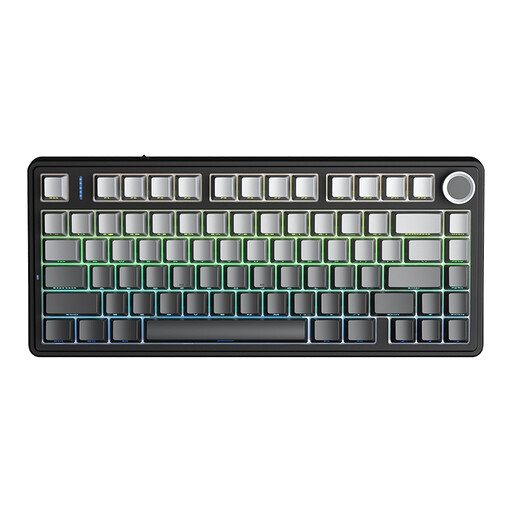 No image available
The 75% layout may suit a desk where papers compete for space. The description claims muted keypresses, but that is not an independent measure of typing noise.
The product name specifies Bluetooth, 2.4 GHz and wired modes, plus a US QWERTY layout. Check desk fit, key placement and whether you need a separate number pad.
 No image available
Consider the 80% layout if you want a smaller keyboard at a shared desk. Its reduced-noise description is a listing claim, so do not assume it will be quiet enough for every nearby colleague.
The stated connections are Bluetooth, 2.4 GHz and wired. Check its dimensions against the desk and make sure the US QWERTY key placement works for your writing.
Choose UK QWERTY or UK ISO if that is the punctuation and key placement you are accustomed to. Check the exact variant in the listing: similar-looking keyboards can have different symbol positions or key legends.
No: the wireless connection does not establish how much noise the keys make. For a shared desk, look for a quiet-key description for the exact model rather than inferring quietness from Bluetooth or a compact shape.
Some models can switch between paired devices: Logitech states that Pebble Keys 2 K380s supports switching among three. Check the exact model’s operating-system requirements and whether your school laptop permits its Bluetooth or receiver connection.
The Health and Safety Executive says employers must assess workstations for workers who use display-screen equipment daily as part of normal work for continuous periods of an hour or more; its guidance includes hot-desking. If that describes your work, raise the shared-desk setup with your employer rather than assuming a particular keyboard resolves it.
Not by itself. Health and Safety Executive guidance addresses the wider workstation, including room for equipment and documents and keeping forearms approximately horizontal; consider the chair, screen and desk arrangement alongside the keyboard.