Groups dividing a snack
Check the bag weight and number of stated servings against your group size. A bag described as sharing-size is not necessarily one serving per walker.


A sharing bag of crisps can be an extra snack to divide at a hiking break, but it should not be the whole food and water plan; Mountain Rescue England and Wales advises eating throughout the day. Choose a pack size you can divide as intended, compare salt using the same nutrition basis, and check the exact flavour’s ingredients and allergen label for everyone sharing it.
A sharing bag makes most sense when several walkers want a savoury snack at a break and have planned other food and water for the route.
Check the bag weight and number of stated servings against your group size. A bag described as sharing-size is not necessarily one serving per walker.
Look at salt per 100g as well as per serving, then consider how much of the bag each person is likely to eat. A no-salt recipe is a different choice from a lightly salted one.
Choose by the exact flavour and current pack label, rather than the brand alone. Check ingredient and allergen information with the people who will share the bag.
Start with how the bag will be shared, then compare nutrition on a consistent basis and check whether the recipe suits the group.
| Priority | What to check | Your needs |
|---|---|---|
| Portions | Check the total bag weight, stated serving size and number of servings. Tyrrells lists its 150g Naked (no salt) bag as five 30g servings. | We want a bag we can divide at a break without treating the whole pack as one portion. |
| Food for the route | Plan water and other food separately from the crisps. Mountain Rescue England and Wales advises eating throughout the day. | I want a savoury extra, while making sure the group has food and water for the walk itself. |
| Salt | Compare salt per 100g across packs, then check the amount per stated serving. KETTLE® Lightly Salted declares 0.7g per 100g; Tyrrells Naked (no salt) declares 0.02g per 30g serving. | If I am limiting salt, the amount I expect to eat matters more than a flavour name such as “lightly salted”. |
| Dietary suitability | Read the current ingredients, allergen statement and any recipe-specific vegan or gluten-free declaration. Check these for the exact flavour, not just the brand. | Everyone sharing needs to be able to check the pack against their own dietary requirements. |
| Nutrition comparisons | Compare per 100g figures before comparing differently sized servings; use per-serving figures to assess the portion you plan to eat. Read any “baked” or similar claim with its stated comparison. | I want to understand the difference between two bags without mistaking a smaller serving for a like-for-like comparison. |
A sharing pack may contain several stated servings: Tyrrells describes its 150g Naked (no salt) bag as five 30g servings. Eating more than one serving changes the amount represented by the per-serving nutrition figures.
Decide how many people will share the bag, and compare the label’s serving size with the portion you expect to eat.
A bag of crisps does not replace a plan for food and water throughout a hike. Mountain Rescue England and Wales advises eating well through the day.
Pack water and other food for the route separately; treat crisps as an additional snack if the group wants them.
“Lightly salted” and “baked” describe different aspects of a product. For example, KETTLE® Lightly Salted declares 0.7g salt per 100g, while Walkers Oven Baked Sea Salt declares 13g fat per 100g; those figures measure different things.
Compare the same nutrient on the same per 100g basis, then check the stated serving size.
Recipes differ. McCoy's Cheddar & Onion lists milk ingredients, so a brand-level impression cannot settle whether that flavour suits a particular group.
Check the current ingredients, allergen wording and dietary declarations on the exact bag before packing it for others.
These product examples show why pack format and recipe-level labels matter; a figure for one flavour should not be applied to a whole range.
KETTLE® lists Lightly Salted as a 130g sharing-bag option.
Tyrrells lists Naked (no salt) in a 150g bag containing five stated servings.
Walkers’ Ready Salted and Oven Baked Sea Salt examples use different single-pack serving sizes, rather than demonstrating a sharing-bag format.
McCoy's product labels offer flavour-specific figures for comparing salt.
REAL describes its range as vegetarian and gluten-free.
Seabrook is a crinkle-cut crisp brand to consider if that texture appeals to the group.
These crisp bags offer 130g and 150g formats to consider for a group hiking break. Choose among them by the flavour and pack label your group needs, alongside your separate food and water plan.
 No image available
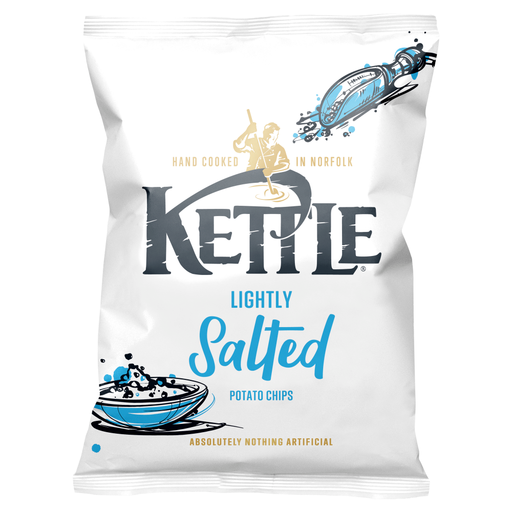
The 130g bag is a sharing format to divide at a group break. KETTLE® declares 0.7g salt per 100g for Lightly Salted and says the recipe is suitable for vegans and vegetarians; check the current pack’s allergen information for the people sharing it.
 No image available
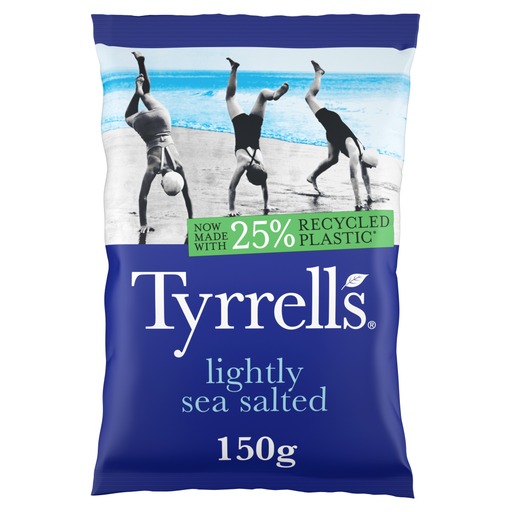
This 150g lightly sea salted bag is an option when the group wants to divide one pack. It is a different recipe from Tyrrells Naked (no salt), so use this bag’s own nutrition and allergen label when comparing them.
 No image available
This 150g bag offers a Thai Sweet Chilli flavour for a shared break. If anyone in the group has a dietary restriction, check this flavour’s full ingredients and allergen statement before packing it.
 No image available
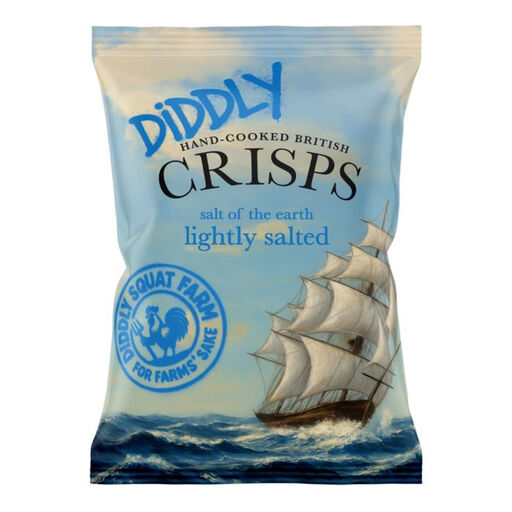
The 150g ready salted bag gives a group another pack size to divide. Compare its salt per 100g and stated serving with other bags if salt matters to your choice.
 No image available
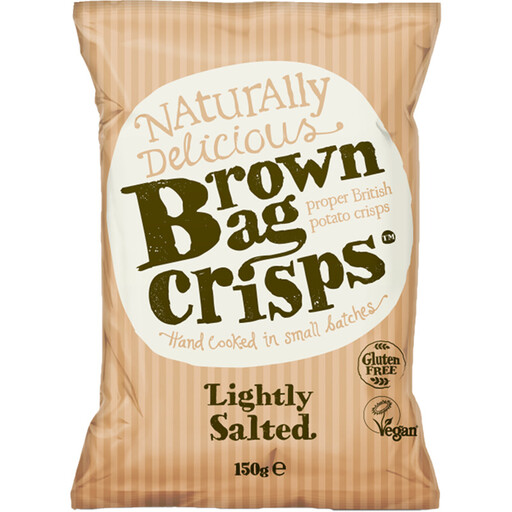
This 150g lightly salted bag can be divided at a hiking break. Check its salt figure rather than relying on “lightly salted” alone, and read the current allergen statement if others will share it.
Do not plan on crisps as the only food for the route. Mountain Rescue England and Wales advises eating well through the day; take other food and water suited to the walk, with crisps as an optional extra snack.
Use salt per 100g for a like-for-like comparison, then look at salt per serving and the portion you expect to eat. NHS guidance sets a limit of no more than 6g salt a day for adults, so a crisp serving is only one part of the day’s total.
No. Department of Health and Social Care guidance describes England’s rules as restrictions on certain retail promotions and placements of qualifying foods, not a prohibition on packing crisps for a hike. Do not assume that every crisp product has the same regulatory classification.