
24/7 Customer Support

Free returns

Same-day & Next-day Delivery

Quality Guaranteed

Unlock Your Welcome Offers: FREE Delivery | Up to 80% OFF | Free 30-day JoyPlus trial
Download the APP
Hello, I'm Joybuy, your Product Recommendation Officer. When it comes to markers, the Sharpie name is often the first that comes to mind. Yet, with a growing range of options, from the classic permanent pen to specialised chalk and acrylic versions, choosing the right one can feel surprisingly complex. Are you an artist needing opaque coverage on canvas, a teacher preparing a blackboard display, or an office manager labelling equipment? The marker you need will be different for each task.
This guide is designed to cut through the confusion. We'll look at the key differences between the main types of Sharpie markers and help you identify which one is the right fit for your specific project. Let's find the perfect tool to bring your ideas to life.
Selecting the correct marker comes down to a few key considerations. By thinking through these points, you can ensure you get the performance and finish you expect.
The single most important factor is the surface you'll be writing on. Surfaces can be broadly categorised as porous (like paper, wood and canvas) or non-porous (like glass, metal and plastic).
Not all Sharpie markers are permanent. Understanding the ink type is crucial for avoiding mistakes.
The marker's tip determines the kind of line you can create. A fine tip marker is ideal for detailed writing, outlining and precise drawing. Broader tips, like the bullet tip found on many acrylic and chalk markers, are better suited for filling in larger areas, creating bold lettering and making a bigger visual impact.
Based on common user needs and project types, here are our recommendations from the current Sharpie range.
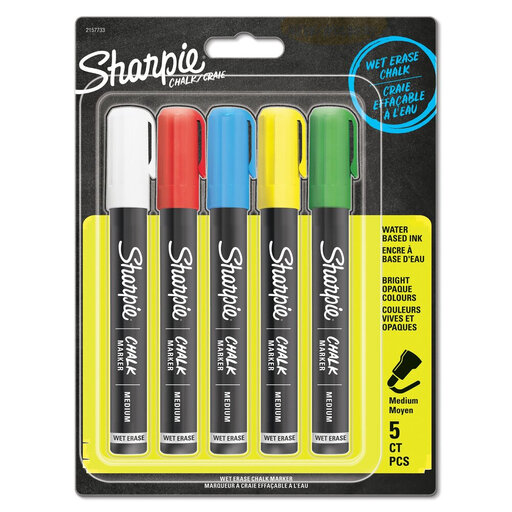
Why It Stands Out: These markers offer the vibrancy of chalk in a clean, convenient pen format. The wet-erase formula makes them perfect for dynamic displays and messages that need to be updated regularly, providing bright, standout colour without the dust and mess of traditional chalk.
Pros:
Who is it for? This Sharpie marker set is ideal for small business owners creating daily specials boards, teachers decorating their classrooms, or families looking for a fun way to leave notes or draw on windows.
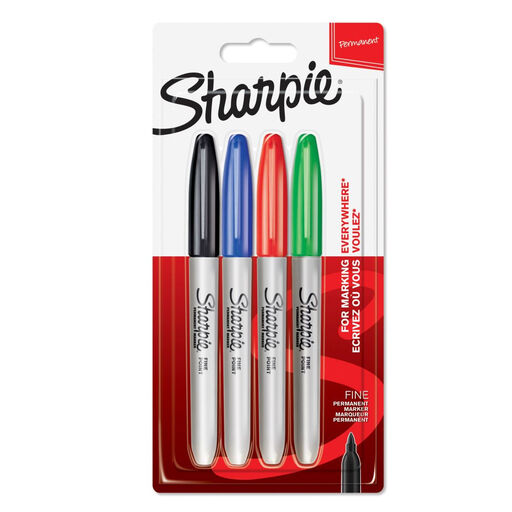
Why It Stands Out: This is the quintessential permanent marker, trusted for decades for its reliability and performance. The ink is engineered to be permanent on most surfaces, and the fine tip allows for a balance of clear, legible writing and bold lines. It's the go-to tool for countless tasks at home, in the office or on a job site.
Pros:
Who is it for? A must-have for office professionals, warehouse staff, students and anyone needing to label items permanently. It's the ultimate multi-purpose marker for everyday tasks.
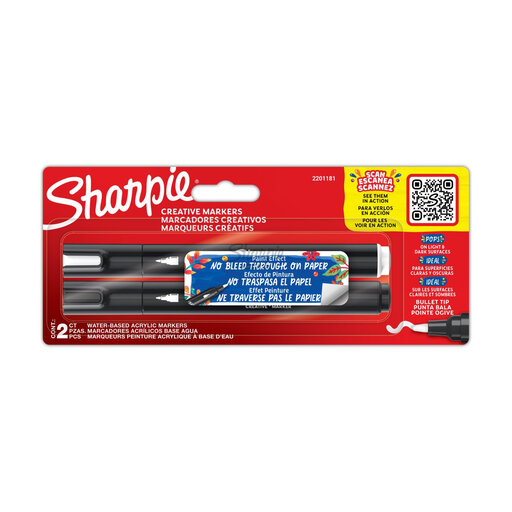
Why It Stands Out: These markers bridge the gap between drawing and painting. They deliver opaque, water-based acrylic paint with the control and precision of a marker. A key feature is that the ink doesn't bleed through paper, and it layers beautifully, making it a superior choice for multi-surface creative work.
Pros:
Who is it for? These are excellent craft markers for artists, illustrators and hobbyists. If you're looking for paint pens for canvas, rock painting, or customising objects, this Sharpie acrylic paint marker set offers professional-looking results with ease.
While these three selections cover a wide range of common uses, the world of markers is vast. If you're searching for a different tip size, a broader colour palette or a specific type of pen for your work, there are many other choices available.
To see a wider selection, we invite you to explore our full collection of permanent pens and find the perfect tool for your needs.
1. Can you use Sharpie markers on glass? Yes, but the type of marker matters. A classic Sharpie permanent marker will write on glass, but the ink can be difficult to remove completely. For temporary designs, signs or labels on glass, Sharpie chalk markers are the recommended choice as they are designed to be wiped off non-porous surfaces with a damp cloth.
2. What is the difference between a Sharpie permanent marker and an acrylic paint marker? A Sharpie permanent marker uses a fast-drying, translucent ink that is water-resistant and adheres to most surfaces. A Sharpie acrylic paint marker contains opaque, water-based acrylic paint. This provides a thicker, more solid colour finish, similar to painting with a brush. Acrylic markers are particularly effective on porous surfaces like canvas and wood and are great for layering colours.
3. Are all Sharpie markers permanent? No. While the brand is most famous for its permanent ink, the range has expanded to include non-permanent options. The Sharpie chalk markers, for example, are water-based and designed for easy removal from non-porous surfaces. Always check the product description to ensure the marker's properties match your project's requirements.