Small-desk score readers
You need light across the music you have open, but a large lamp base would compete with the space used by your score and other essentials.


Choose a compact clip-on lamp when desk space is tight and you usually read a single page or narrow score; for an open music book, check whether a wider lamp can light both pages without taking over the desk. Whichever form you choose, make sure you can direct the light onto the notation rather than into your eyes, and check that the base or attachment fits your setup.
You need light across the music you have open, but a large lamp base would compete with the space used by your score and other essentials.
You want to aim the lamp at the notation without seeing the light source directly. RNIB advises avoiding direct glare and notes that brightness and positioning can both matter.
You move between reading locations, so a clip-on or rechargeable lamp may be more practical than one that stays in a fixed position.
Consider it when: Free desk surface is scarce, you usually read a narrow score, or you move the lamp between locations.
Trade-off: A compact lamp may not light both pages of an open book evenly; a clip also needs a suitable attachment point.
Consider it when: You regularly read an open music book or annotate pages and want to illuminate a broader area without repeatedly moving the lamp.
Trade-off: Check its physical dimensions and mounting arrangement against the space available on your desk.
Consider it when: Mechanical positioning and the option to replace the bulb matter more to you than integrated lighting controls.
Trade-off: Check the supplied bulb, any requirements for dimming and whether the mounting method suits your desk.
For consumers choosing a lamp to read sheet music at a small desk, the main priorities are coverage, usable desk space and control of direct glare.
| Concern | What to check | Who this matters to |
|---|---|---|
| Even score coverage | Compare stated coverage width and lux at the specified distance with the size of your open score. | If I read two pages side by side, I need to see the far page without continually moving the lamp. Around 42% of consumers put even score coverage first. |
| Usable desk space | Check the base footprint or mounting method, and whether the desk edge suits a clip or clamp. | When my score already occupies most of the desk, I need a lamp that leaves room to use it. Preserving desk space comes first for around 33% of consumers. |
| Glare control | Look for brightness adjustment and a head or arm you can position away from your direct line of sight. | If the light shines towards my eyes, I need to change its direction or level while keeping the notation clear. Around 25% of consumers prioritise glare control. |
Lumens describe total light output, not how evenly light reaches both sides of an open score. A compact lamp can leave the far page dim even when the nearby page is bright.
Compare the stated lux at its measurement distance and any coverage width with the music you actually read.
A clip saves surface space only if it attaches securely and still lets you position the light over the score.
Measure the available edge and check the clip opening, reach and cable arrangement before ordering.
RNIB notes that glare can arise when light is too bright or comes from the wrong place. Increasing brightness without changing the lamp position may not help you read comfortably.
Aim the light at the score rather than your eyes, then adjust it to a comfortable level that keeps the notation clear.
Its task-lighting range includes compact clip-on and larger desk-lamp formats worth comparing when surface space and score width pull in different directions.
Its e-Reading Intelligent lamp is a wider integrated-LED option to consider for an open score and an adjustable lighting setup.
The Type 75 Lamp with Desk Insert offers an articulated, replaceable-bulb alternative to an integrated-LED lamp.
These compact, rechargeable desk lamps are options to assess when surface space or moving between practice spots matters. Check each lamp against the width of your sheet music and the position from which you need to light it.
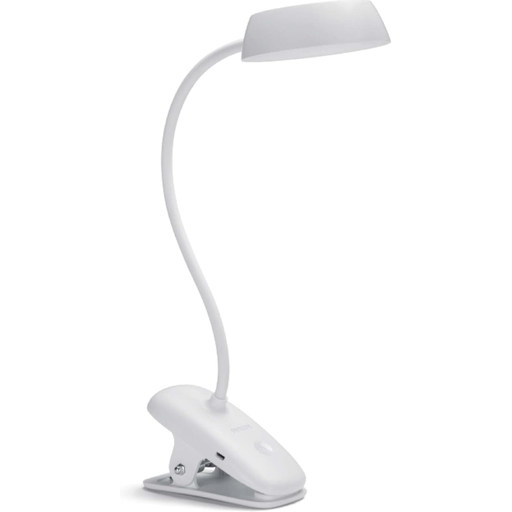 No image available
The desk clip may suit a crowded surface if it fits your desk edge. Check whether you can aim the lamp across your score and whether its reach covers the pages you use.
USB rechargeable; 3W.
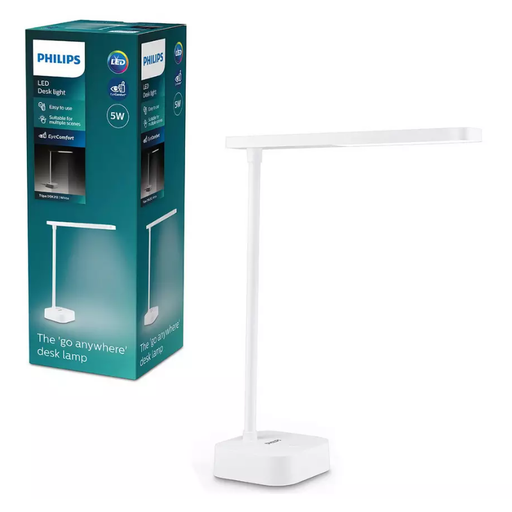 No image available
This rechargeable desk lamp may suit a practice spot where you want to move the light between locations. Check its coverage across your score and whether its position can keep the light out of your eyes.
Three brightness settings; 18W.
Aim it at the score rather than towards your eyes, and reposition it if your hands or page turns cast distracting shadows. RNIB advises avoiding direct glare from lamps and notes that excessive brightness or poor positioning can cause glare.
It may work for a narrow score, but do not assume that a compact lamp will illuminate both pages evenly. Compare the maker’s stated lighting distance and coverage with your open book, then check whether the arm can reach a useful position.
Check the seller and product information for the delivery destination before buying. GOV.UK’s guidance on the Electrical Equipment (Safety) Regulations 2016 concerns equipment placed on the Great Britain market; if the lamp is being delivered to Northern Ireland, check the applicable Northern Ireland requirements rather than assuming the Great Britain guidance covers them.